Bhutan: A Journey of Prayer Flags, Mountain Passes and Pure Happiness
I am still processing everything we experienced in the remarkable Kingdom of Bhutan, where happiness is part of national policy and ancient traditions are still very much alive. From calm, car‑horn free streets to sky‑high monasteries clinging to cliffs, every day felt like a blend of adventure, culture and quiet spirituality.
Thimphu: Bhutan’s Capital of Calm
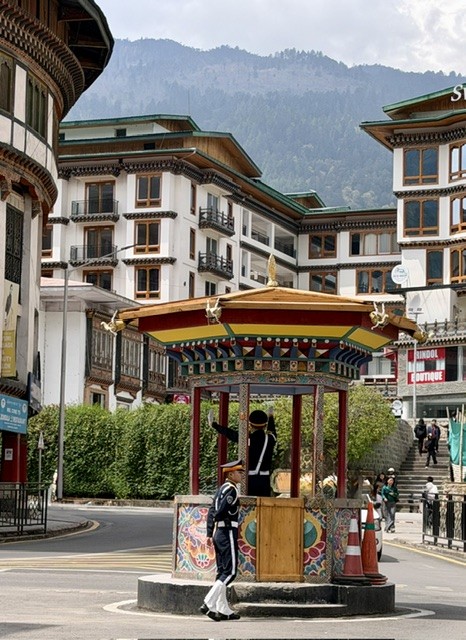
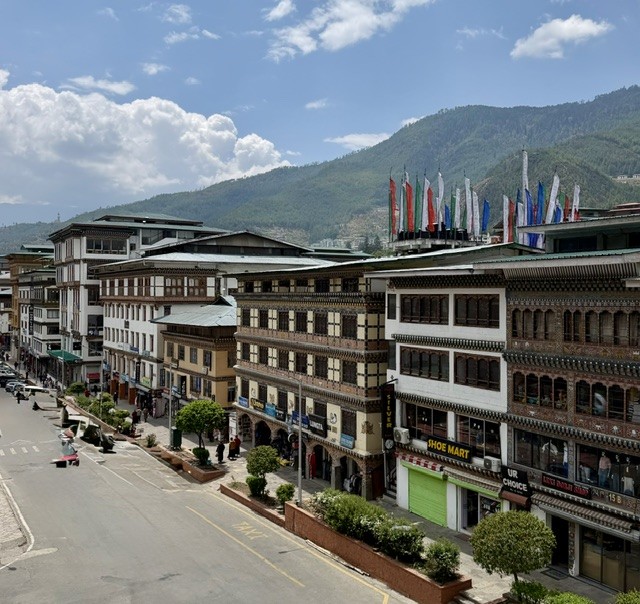
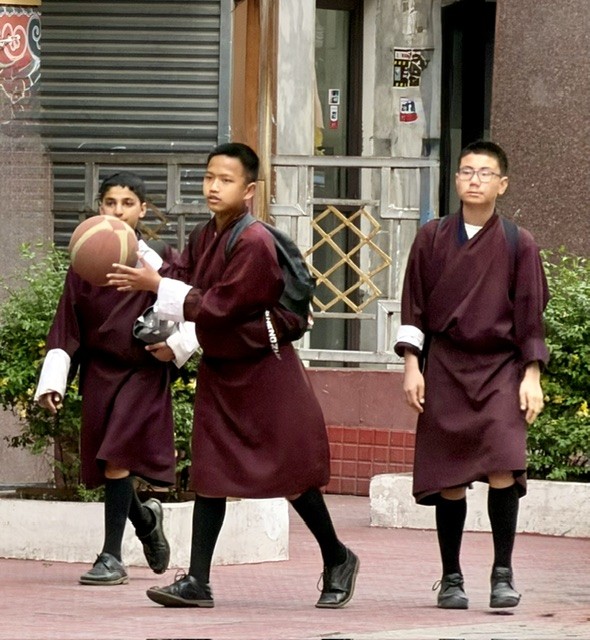
After a warm welcome from our smiling guide, Sangay, we drove for around an hour to Thimphu, sitting at roughly 2,330 metres. For a capital city, it feels astonishingly serene. There are no blaring horns, no frantic rush, just gentle smiles, cars stopping to let people cross, and life moving at an unhurried pace.
Thimphu is the only capital in the world without traffic lights, yet it feels ordered and safe. Despite being Bhutan’s largest city, it has the soul of a village, with prayer flags fluttering, traditional wooden architecture and mountains framing it on all sides. I have never experienced a capital like this: tranquil, heartfelt and quietly joyful. Bhutan really does live up to its title as the Land of Happiness.
Travel tip: Arrive with an open mind and a slower pace. Thimphu is not about big‑city “sights” in the usual sense. It is about soaking up the atmosphere, wandering between temples and markets, and easing gently into the altitude.
First Steps on the Trans Bhutan Trail
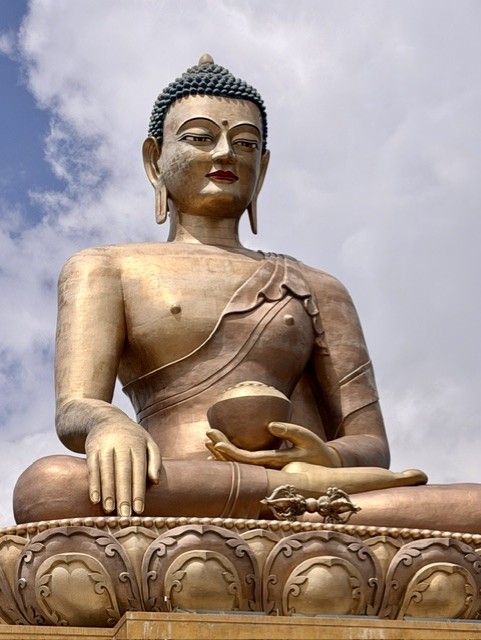
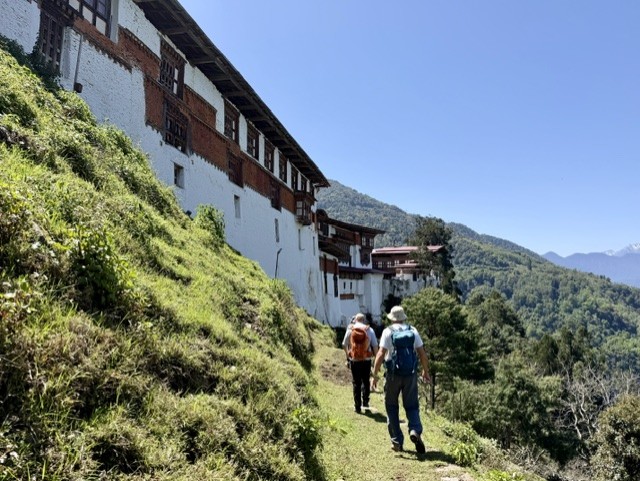
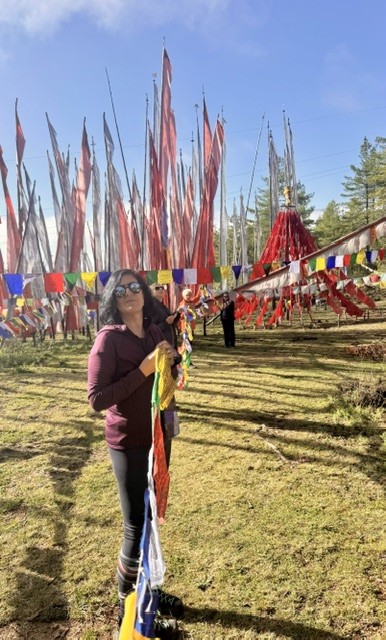
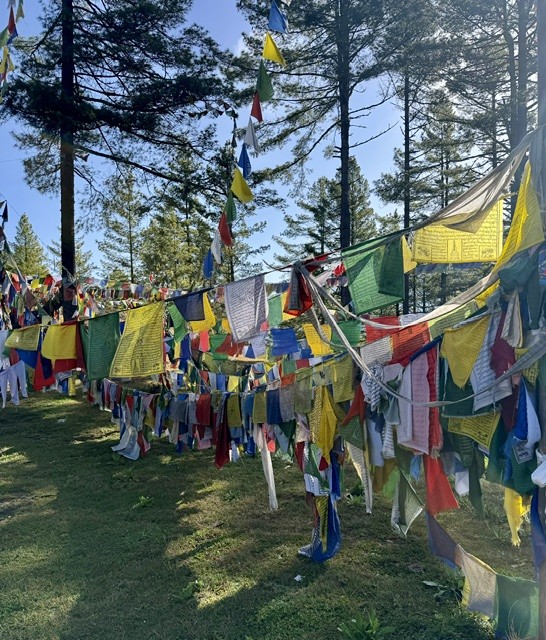
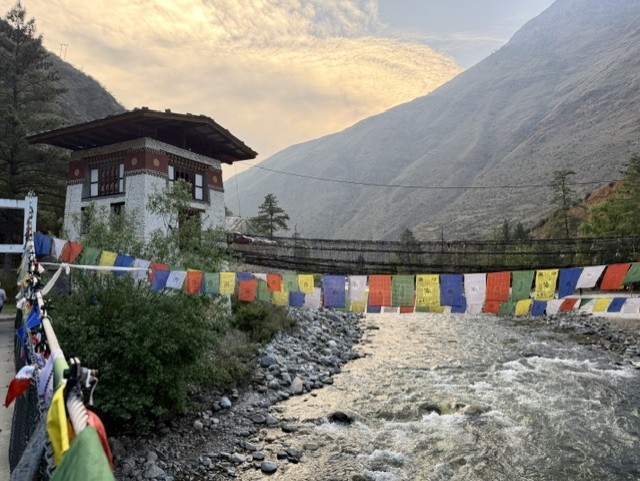
As the morning mist lifted, we took our first steps on the Trans Bhutan Trail with a hike to Kuensel Phodrang, home to the impressive Buddha Dordenma, the largest Buddha statue in Bhutan. The steady incline rewarded us with sweeping views over the Thimphu Valley, colourful prayer flags lining the paths and fluttering against the sky.
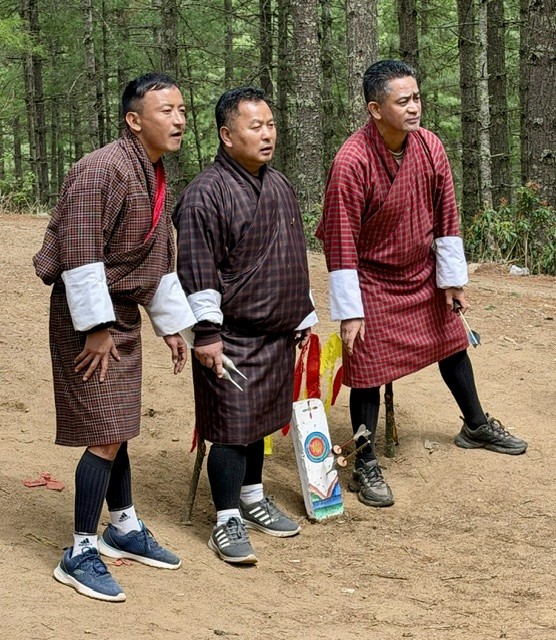
On the way, we were lucky enough to pass men playing Khuru, Bhutan’s traditional dart game, a lively and social sport that often takes centre stage at festivals.
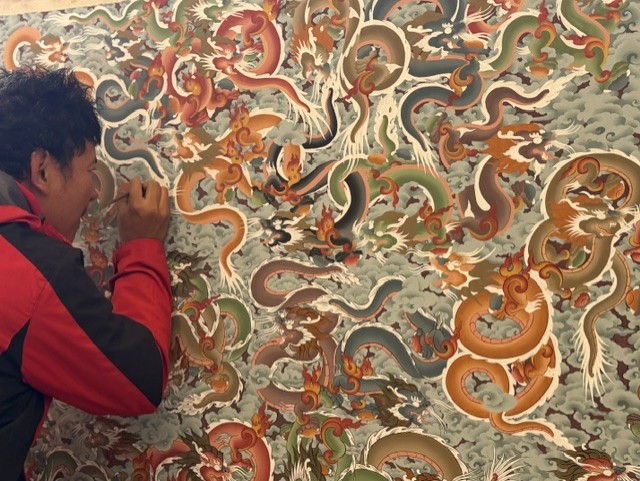
The afternoon was devoted to Bhutan’s artistry and craftsmanship. At the Institute for Zorig Chusum, students were painstakingly learning traditional crafts such as painting and woodcarving. At the Paper Making Factory, artisans transformed natural fibres into exquisite handmade paper, preserving skills passed down through generations.
We covered 9.5km on foot, and every step added another layer of insight into Bhutanese life.
Travel tip: Build in time for these cultural stops. Watching young artists and craftspeople at work is one of the best ways to understand how deeply tradition is woven into daily life here.
Dochula Pass and the Divine Madman Trail
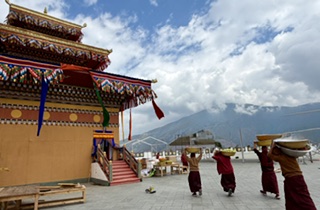
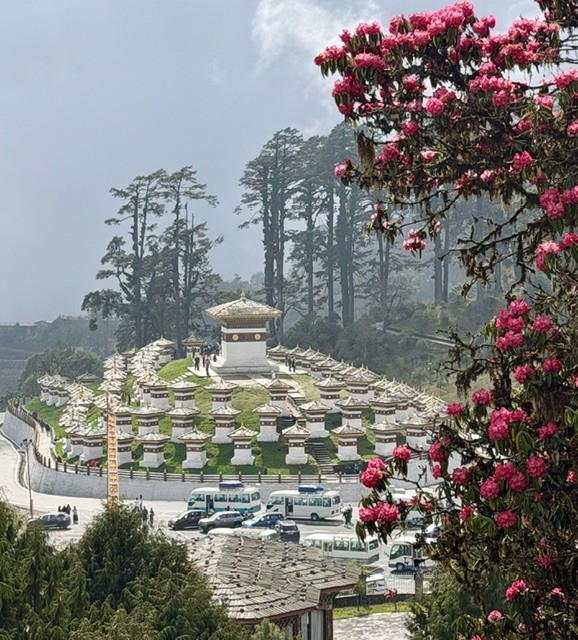
Climbing up to Dochula Pass at over 3,150 metres, we passed lots of different coloured, blooming rhododendrons (Bhutan has 46 native species), arriving at the 108 Druk Wangyal Chortens. Even without perfectly clear skies, the Himalayas felt close, powerful and almost sentient.
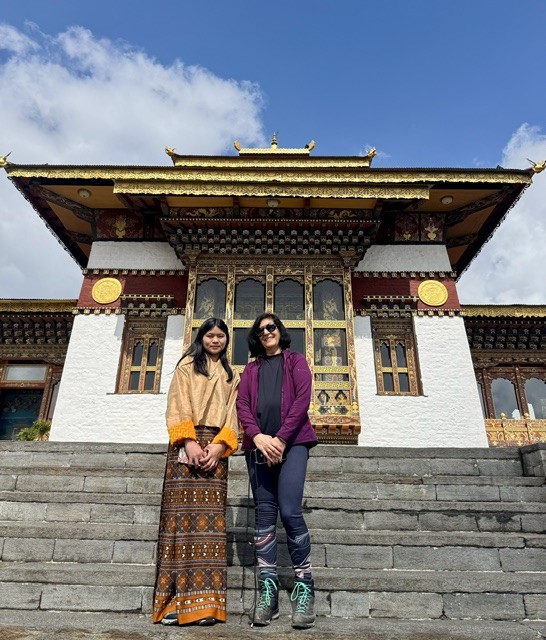
At Druk Wangyal Lhakhang, a beautiful monastery at the pass, our guide offered blessings and quietly chanted as we listened and learned more about local Buddhist practices. No photography was allowed inside, which somehow made the experience feel more intimate and sacred.
After lunch in the pretty village of Lumitsawa, we took on the Divine Madman Trail, a 10.5km descent through ancient forests into lush Punakha, the lowest altitude of the trip. The changing vegetation and rising humidity were a tangible reminder of just how varied Bhutan’s landscapes can be.
Travel tip: Do not underestimate the descents. Downhill days can be harder on knees and quads than you expect! Trekking poles and well fitted boots are invaluable on long, rocky sections. Read up about the "Divine Madman" who was a 15th century Buddhist sain who was celebrated for his "crazy wisdom"!
West Meets Central Bhutan
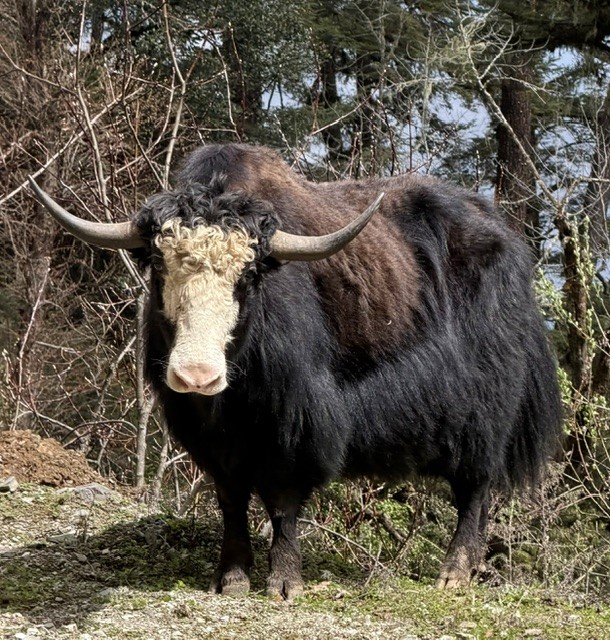
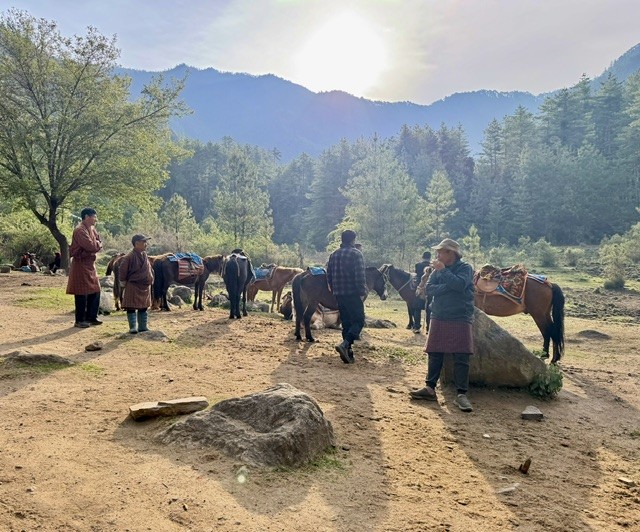
The journey west to central Bhutan felt like travelling through a living postcard. After a scenic two hour drive to Pelela Pass, we rejoined the Trans Bhutan Trail, hiking 10.5 km across broad green pastures dotted with farmhouses, grazing ponies and yaks with their young. Flowering rhododendrons and prayer flags, continued to add splashes of colour, and the air was scented with resin from the surround forests. It was warm enough for t‑shirts: perfect hiking weather, even if my legs were still protesting from the previous day!
Lunch was a highlight: Kewa Datshi, a traditional dish of red skinned potatoes in a rich, cheesy sauce. Simple, hearty and utterly delicious.
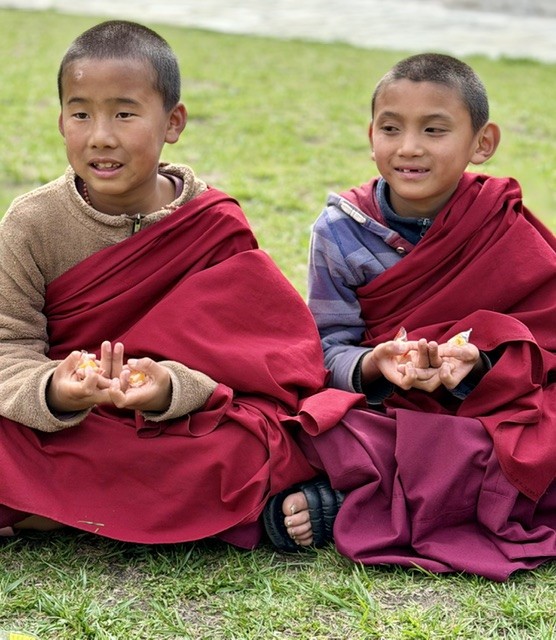
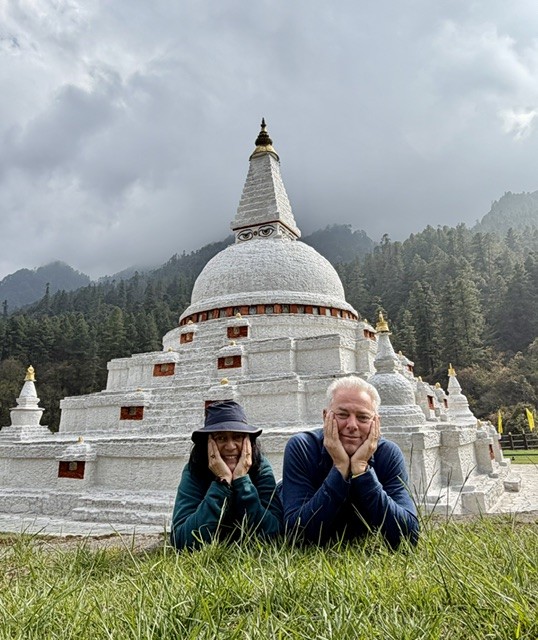
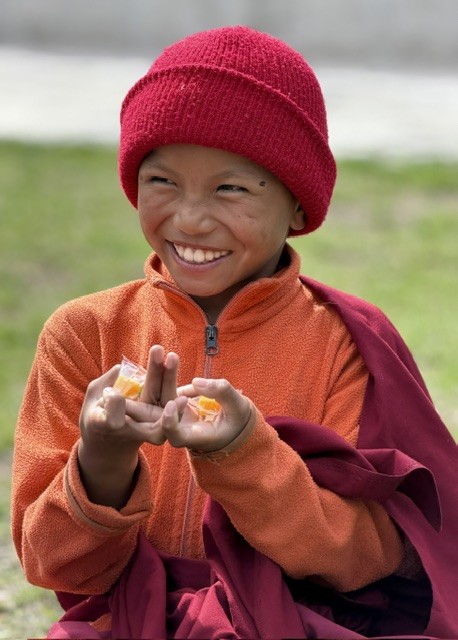
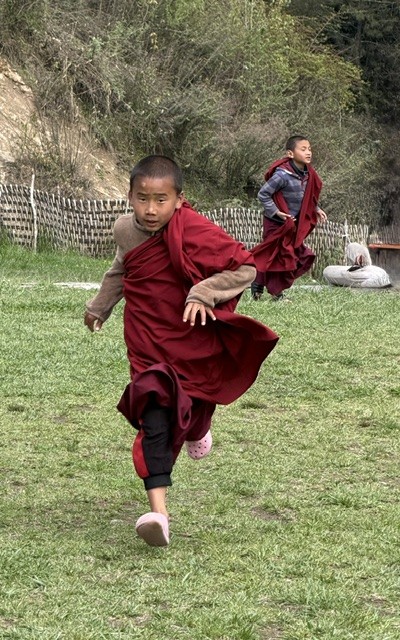
We paused at Chendebji Chorten, a striking white stupa with a small shedra, or training monastery, attached. Around 30 novice monks live and study here, and a few wandered over to chat with us via Sangay, who produced mango treats to their delight. These small human connections are where travelling with a local guide really comes into its own.
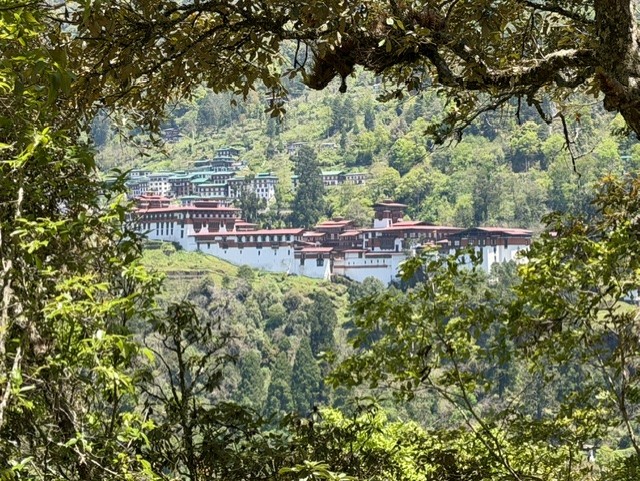
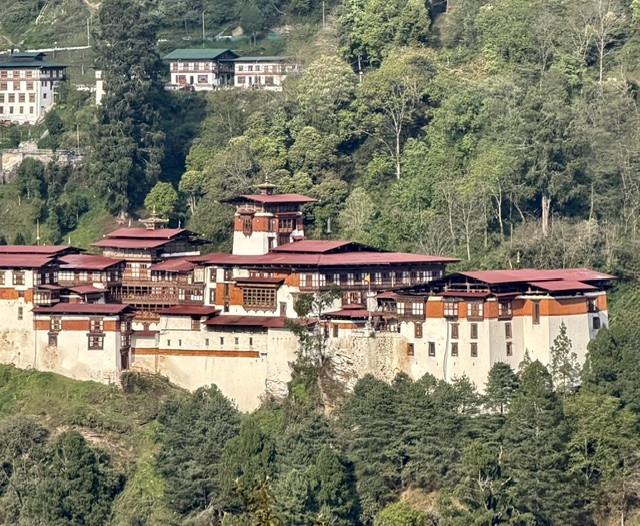
Driving on through forests of blue pine, fir, cypress and spruce, their tops cloaked in mist, we eventually reached the remote village of Rukubji. Here, 200‑year‑old wooden houses cluster around terraced fields, and a 300‑year‑old temple with fading murals and butter lamps speaks of centuries of quiet devotion. We ended the day in Trongsa, our hotel balcony looking straight out over the majestic Trongsa Dzong.
Travel tip: Embrace the slower travel days. Long drives and village stops are not just “transit”. They are where you really see rural Bhutan, from children playing by stupas to monks laughing between lessons.
Sunshine, Yak Traffic Jams and Red Panda Beer
We left Trongsa in bright sunshine, following mountain roads up to Yotongla Pass before setting off on a 9.5 km walk into Bumthang. We were a well travelled group, and there was something very special about sharing stories and reasons for coming to Bhutan as we walked together.
After checking into our hotel, we explored one of Bumthang’s quirkiest highlights: Bumthang Brewery, home of Bhutan’s much loved 'Red Panda' beer, and the country’s only commercial cheese factory. Both trace their roots back to the Swiss Farm project, which brought European farming techniques to this peaceful valley.
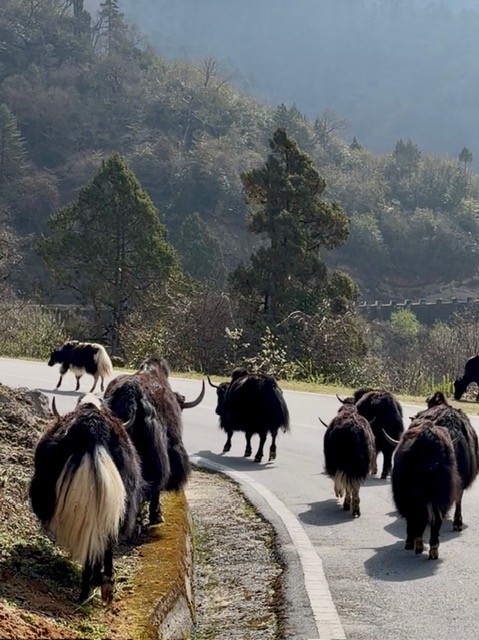
At one point we encountered a yak “road block”, which felt completely on brand for rural Bhutan. Later, the skies opened and we had our first encounter with torrential Himalayan rain, dramatic against the backdrop of wooden houses and misty hills.
Travel tip: Pack for all seasons, sometimes in one day. Layers, a light waterproof and quick drying clothes will make you far more comfortable when the weather shifts from sunshine to sudden downpour.
Culture and Quiet in Tang Valley
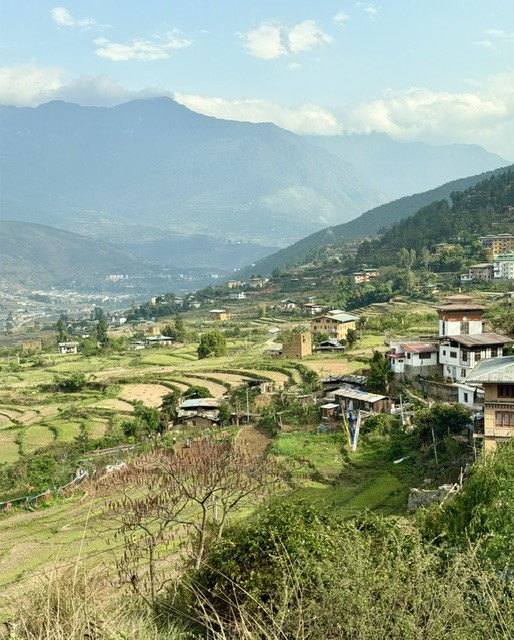
This was a shorter walking day, but emotionally one of the richest. After breakfast, we headed into Tang Valley, a tranquil area of sacred shrines, yak herds and gently rolling hillsides.
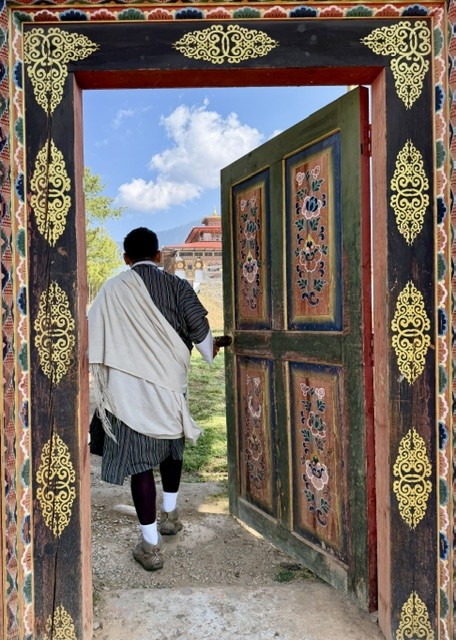
Crossing a suspension bridge into Tang Village, we visited the century old Ugyensholing Heritage Museum, which offers a fascinating glimpse into Bhutanese domestic life and history.
We then followed the Trans Bhutan Trail to Mebar Tsho, the Burning Lake, where the treasure revealer Pema Lingpa is said to have discovered hidden teachings of Guru Rinpoche. The peaceful setting invited quiet reflection before we continued through the forest to the small village of Phomrong, welcomed by smiling locals and waving schoolchildren.
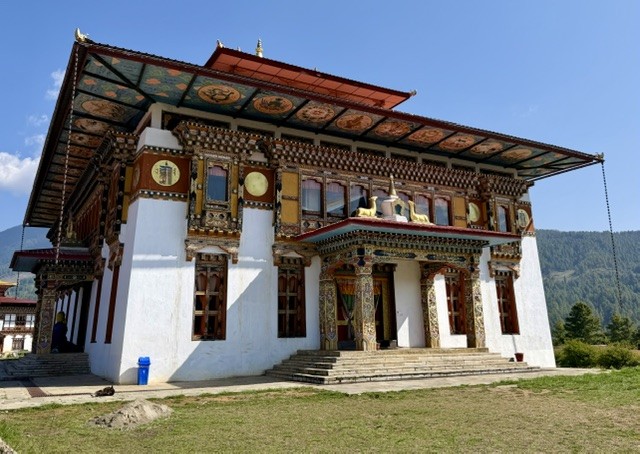
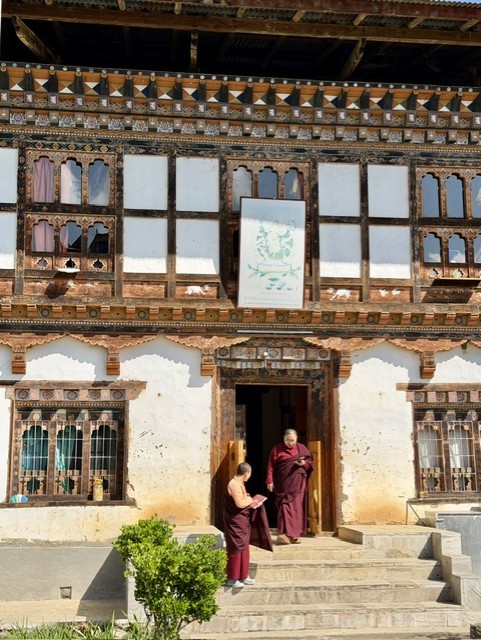
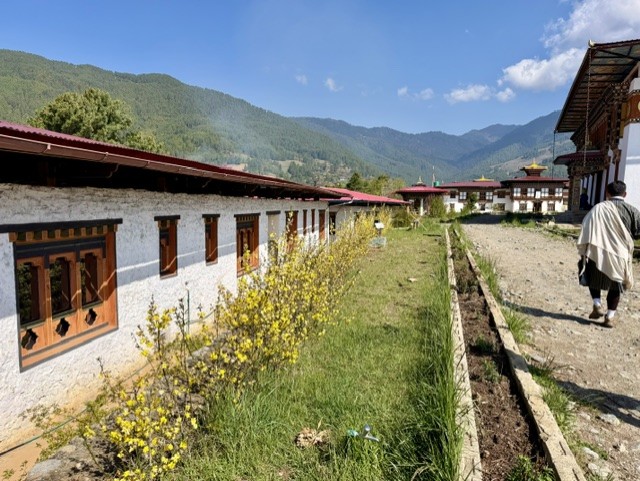
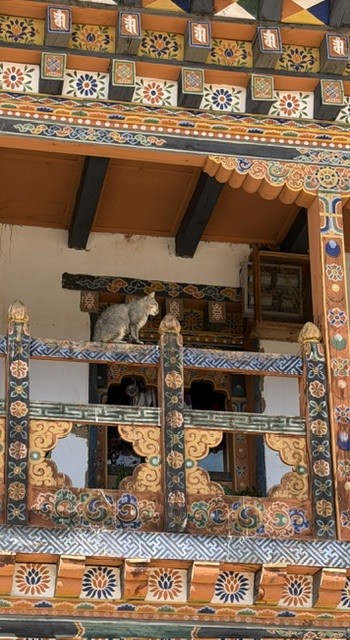
The true highlight came at Pema Choling Nunnery, home to around 130 women and girls undertaking a nine year course in the Nyingma Peling tradition. Meeting the nuns, hearing about their routines and walking around the nunnery was deeply moving. We were given a personal spiritual ceremony and had our prayer flags blessed by a senior nun, a moment of pure kindness and connection.
Travel tip: Bring respectful clothing for monastery and nunnery visits, with shoulders and knees covered, and be ready to put cameras away when asked. Some of the most powerful moments are the ones you simply experience rather than photograph.
Prayer Flags and a Historic Homecoming
We then journeyed back towards Punakha via Trongsa, walking one of the Trans Bhutan Trail’s most iconic stretches. From Trongsa Dzong we descended into the valley, crossed the old cantilever bridge over the Mangde River, then climbed steeply through forest to the Trongsa Viewpoint.
This was our toughest hike so far: high elevation, warm temperatures and a sustained uphill climb. Yet it was also one of the most rewarding. Along the way we stopped to hang the prayer flags we had previously had blessed by the nuns, each one carrying our names. Leaving them fluttering in the mountain wind felt like leaving a small piece of ourselves on the trail.
From the viewpoint, we took time to rest and absorb the sweeping views before relaxing into the drive on to Punakha for the night. Despite all the warnings, we managed to complete the day with no encounters with leeches!
Travel tip: Fitness helps, but mental pacing is just as important. Take steady, shorter steps on the climbs, drink often and do not be shy about pausing to catch your breath, especially at altitude.
Paddy Fields, Grey Monkeys and Old Bridges
Our longest hike of the trip, around 15 km, started back at Dochula Pass and wound towards Simtokha, through rural landscapes where paddy fields were being prepared for the next season. We passed streams, a remote Tibetan settlement and, to much excitement, spotted our first grey monkeys!
From Simtokha we continued by road to Paro, stopping at a weaving factory and a 400‑year‑old bridge along the way. Our hotel in Paro sat high above the valley, with magnificent views of Paro Dzong. This would be our base for the next three nights as we geared up for Bhutan’s most famous hike......
Travel tip: Use these pre‑Paro days to stretch, hydrate and rest in the evenings. Tiger’s Nest is wonderful but demanding, and you will enjoy it more if you arrive feeling as fresh as possible.
Tiger’s Nest and an Unforgettable Anniversary
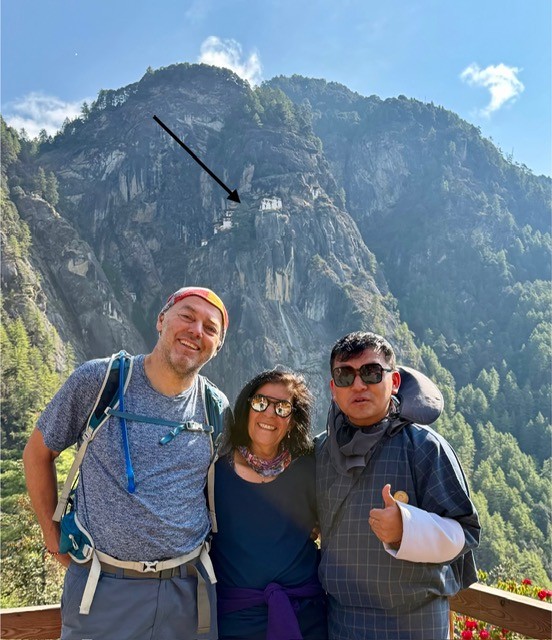
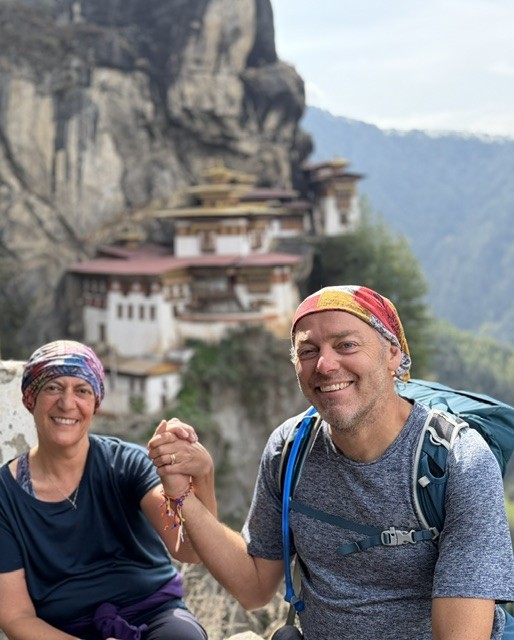
This was the day we had all been waiting for: the iconic hike to Tiger’s Nest Monastery, Paro Taktsang. By happy coincidence, it fell on both an auspicious day in Bhutan and my 29th wedding anniversary, a truly special way to celebrate!
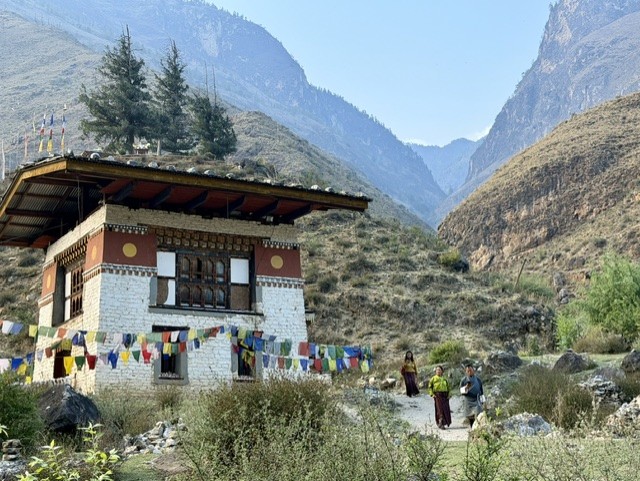
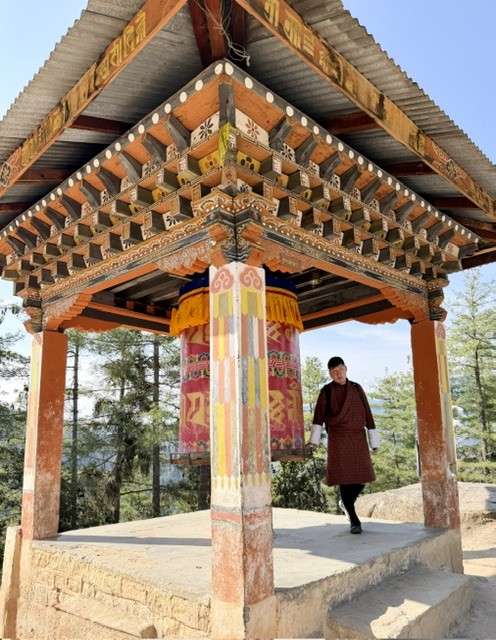
We set off at 6.30am for the steep climb to around 3,120 metres. The trail wound through fragrant pine forest, lined with prayer flags, before reaching carved stone steps clinging to the cliffside.
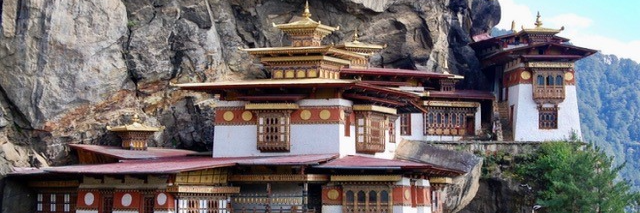
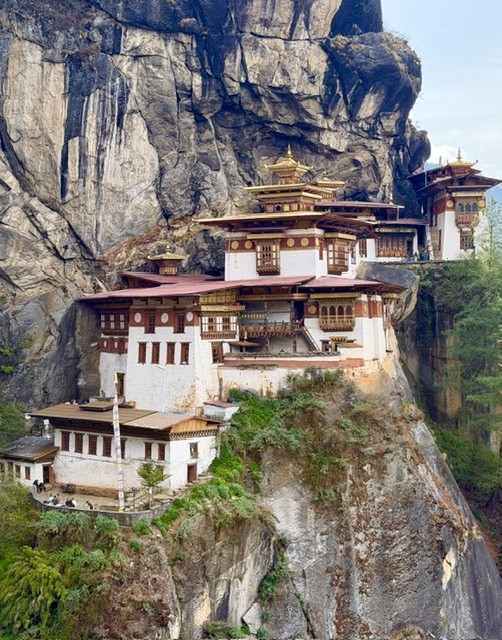
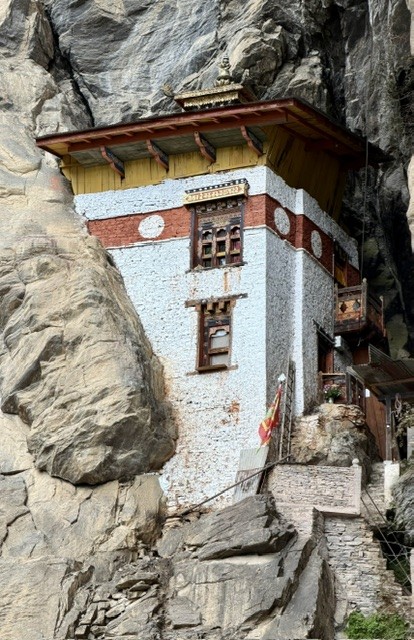
Tiger’s Nest more than lived up to its legend. First used as a meditation site in the 9th century and later built into a monastery in 1692, it clings improbably to the granite cliffs above the valley. The complex houses eight temples and remains an active monastery, its whitewashed walls and golden roofs gleaming against the rock.
Inside, we threaded our way through richly decorated shrines and were extraordinarily fortunate to arrive at one of the highest temples just as a Buddhist ceremony began. Long horns, clarinets and drums created a hypnotic soundscape. With our eyes closed, James and I were invited to receive a blessing from the presiding head monk, who placed ceremonial scarves over our shoulders in honour of our anniversary. Earlier I had been spontaneously offered holy water by one of the monks. Both gestures were profoundly moving and unforgettable. No photographs were allowed, which preserved the intimacy of the moment.
Standing outside afterwards, gazing back at the monastery perched impossibly high on the cliffs, it was hard to comprehend how it was ever built, let alone sustained, for so many centuries.
Travel tip: Start early to avoid the heat and the busiest crowds. Allow plenty of time, wear proper hiking footwear and consider taking a walking pole, especially for the downhill sections, which can be tough on the legs after a long ascent.
Planning Your Own Trans Bhutan Trail Adventure
Bhutan is a destination that rewards, and needs thoughtful planning and the right pacing. A few practical pointers:
When to go: April or May are ideal for relatively stable weather, clear views and valleys full of spring blossom, perfect for trekking and photography.
Getting there: Currently, only two airlines operate into Bhutan: Drukair (the national airline) and Bhutan Airlines. You will need to change planes, with enough time to collect your bags and re‑check in. Bangkok, Dubai, Delhi and Kathmandu are currently among the main hubs.
Sustainable Development Fee (SDF): Is a daily levy paid with your tourist visa that funds the country’s infrastructure, free education and environmental initiatives. Collected by the government as part of the visa process, it helps keep visitor numbers sustainable while ensuring tourism revenue directly benefits Bhutanese people. As of 2023 the SDF is US$100 per person per night (subject to change), with 50% off for children aged 6–12 and no charge for under‑6s. More often than not, like us, the cost is added into the cost of your tour and all processes are completed by your operator.
Guides and logistics: A knowledgeable local guide is mandatory in Bhutan and you must be escorted by an official guide at all times. Beyond the regulations, travelling with a local guide is invaluable for stories, translations and spontaneous interactions you would simply miss on your own.
Money: The local currency is closed, so you can only obtain it within Bhutan. There are ATMs in the main cities, but it is always sensible to carry a small amount of cash for rural areas.
Pacing the hikes (if exploring this way): Distances of 9 to 15 kilometres sound manageable on paper, but altitude and terrain add an extra layer of challenge. Build in rest days or lighter cultural days between the bigger hikes.
What to pack: Sturdy hiking boots, layered clothing, a light waterproof, hat, sunscreen, reusable water bottle and a small daypack are essentials. Trekking poles are highly recommended if you have sensitive knees.
Mindset: Perhaps most importantly, come ready to slow down, be present and say yes to unexpected moments, from chatting to novice monks to receiving a quiet blessing in a remote nunnery. Observe the countries ancient traditions and be prepared to cover elbows and knees in active Bhuddhist locations.