Stepping Into Japan: Temples, Trains, Tea Ceremonies and Tranquil Onsens
Japan had long been on my wish list: a country where ancient traditions sit comfortably alongside ultra-modern skylines, where tiny rituals of daily life feel deeply meaningful, and where every meal seems to be a work of art. On this trip I wanted to experience a little of everything: the neon and energy, the peaceful gardens, the food culture, and those very special moments of insight you only get when you slow down and connect with local people. What unfolded was a journey that began in Tokyo and took me through the Japanese Alps, historic Kanazawa, atmospheric Kyoto, a storybook onsen town and finally vibrant Osaka, before returning to Tokyo for a final flourish.
Tokyo: A Gentle Landing in Asakusa
After landing in Tokyo, I chose Asakusa for my first two nights: a wonderful introduction to the city and a softer landing than diving straight into the busiest districts.
Asakusa blends the charm of old Tokyo with easy access to the rest of the city. Narrow streets, traditional shopfronts and the comforting glow of lanterns in the evenings gave me an immediate sense that I had arrived in “real” Japan rather than just another big city.
That first evening we wandered along the river, pausing for a lovely dinner overlooking the water, the Azumabashi Bridge and the Tokyo skyline. Watching the city lights flicker into life as the sky faded to deep blue was one of those quietly magical travel moments: jet lag forgotten, chopsticks in hand, and the gentle murmur of the river below.
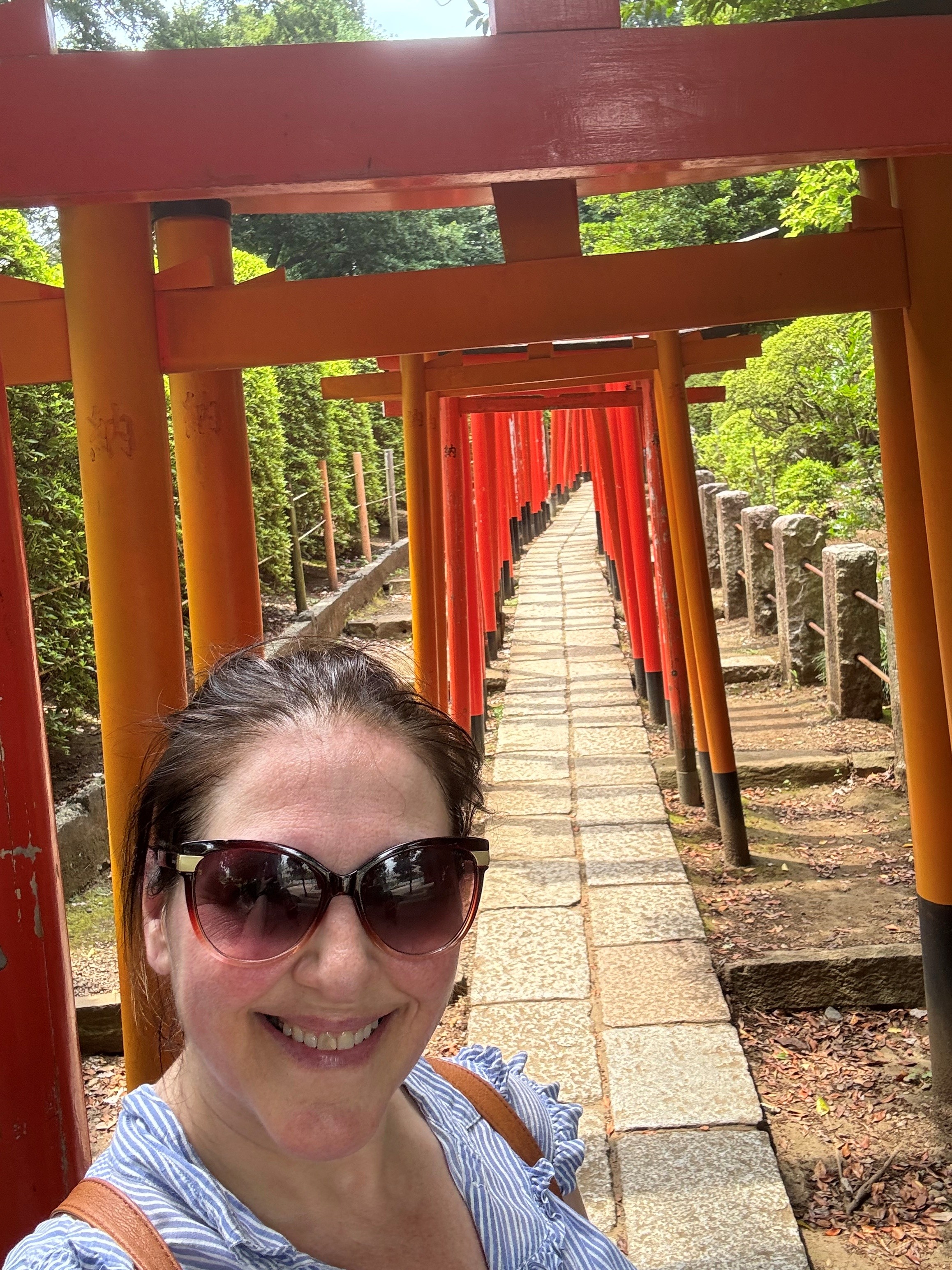
On the walk back to our hotel we stopped at Senso-ji Temple. Seeing it illuminated at night, lanterns glowing and the crowds much thinner than in the daytime, was breathtaking. The vermilion gates, the incense drifting on the breeze and the soft hum of visitors created an almost cinematic atmosphere. It felt like the perfect welcome to Japan.
Discovering Tokyo With an Insider
The following morning we met our insider guide for a sightseeing tour, and this turned out to be one of the most valuable parts of the entire trip.
Rather than just being shown the “sights”, our guide became our cultural compass. They helped us understand the subtleties of Japanese etiquette, shared invaluable hints and tips, and perhaps most importantly, demystified the train system. Learning how to navigate stations, read the signs and use our passes gave us the confidence to explore independently for the rest of the journey.
Our day took us through different sides of Tokyo:
Rikugien Gardens: A serene oasis in the city, where sculpted pines, ponds and winding paths offered a peaceful pause from the urban buzz. It was a reminder that in Japan, even in the largest metropolis, tranquillity is never far away.
Lunch in Taito: A simple, local meal that underlined how good everyday food is in Japan. Even a casual lunch felt carefully prepared and beautifully presented.
Shibuya Crossing and district: The iconic scramble crossing was every bit as energetic as I had imagined. Watching the organised chaos from above, then diving into it ourselves, was a brilliant contrast to the calm of the gardens.
Later in the day we headed to the Tokyo Skytree, the perfect vantage point for understanding just how vast Tokyo really is. From the observation deck the city stretched endlessly in every direction: rivers, clusters of skyscrapers, tiny pockets of green and snaking train lines.
That evening we embraced another Tokyo essential: sushi on a conveyor belt. It was light-hearted, fun and delicious, with plate after plate gliding past. Choosing dishes by sight rather than by name became part of the adventure, and the informal setting was a great way to ease into Japanese dining culture.
Riding the Shinkansen to the Japanese Alps
The next day brought our first experience of the legendary Shinkansen. Sleek, punctual and wonderfully efficient, it turned travel into an event in its own right. Watching the scenery change as we sped away from Tokyo towards the Japanese Alps was a joy: city towers giving way to smaller towns, rice paddies and mountains.
Our destination: Kanazawa, a charming city that offers a quieter, more traditional side of Japan without ever feeling sleepy.
Kanazawa: Gardens, Gold and Castles
Kanazawa instantly won me over. It is known for its beautiful gardens and historic districts, but also has a relaxed, welcoming feel that makes it easy to explore.
We wandered through its famously beautiful gardens, where every turn revealed carefully composed scenes of ponds, bridges and greenery. On a hot day, we cooled down with a refreshing shaved ice, a simple pleasure that felt perfectly suited to the setting. Kanazawa is also famed for its gold leaf, even adorning ice cream, and you will notice shimmering touches of gold everywhere.
A visit to Kanazawa Castle gave us a sense of the city’s samurai history, the white walls and sweeping roofs standing proudly against the sky. In the Samurai district we strolled along atmospheric streets lined with traditional houses. It felt a world away from Tokyo.
That evening we rounded off the day with a traditional yakiniku dinner. Grilling our own cuts of meat at the table was both interactive and delicious, and the warm, cosy atmosphere made it feel very local and authentic.
Kyoto: Culture, Food and a Very Special Tea Ceremony
Another smooth Shinkansen journey took us on to Kyoto, with lovely scenery rolling by the window. Arriving in Kyoto always feels like stepping into the cultural heart of Japan: temples, shrines, wooden machiya houses and gently winding lanes.
Here we met another knowledgeable guide whose insight was invaluable. Exploring Gion with an expert meant we could really understand the history and etiquette of Kyoto’s geisha districts rather than just admiring the pretty streets.
That evening, a walking food tour of Kyoto became one of the unexpected highlights of the trip. It took me into little places I would never have found alone, introducing me to local specialities and hidden corners. There is something very special about following a local down a side street, ducking under noren curtains and discovering a tiny restaurant that feels like a secret.
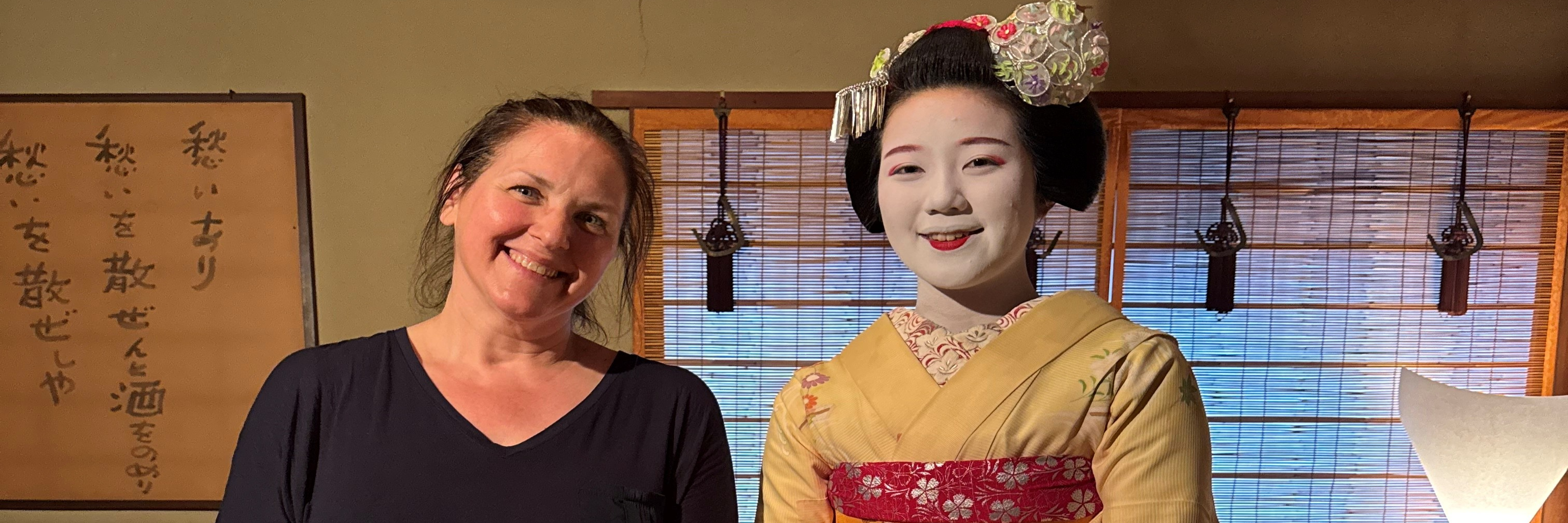
The most memorable experience of all was a tea ceremony with a Meiko, a trainee geisha. The ceremony itself was elegant, precise and steeped in tradition, reflecting years of training and discipline. Yet there was also warmth and humour. When we played a game together, her fun personality shone through, reminding me that behind the immaculate kimono and perfect posture is a young woman pursuing a demanding, respected career. It felt like a real privilege to share that space and moment.
The following day, another guide tailored the day completely to us. We wanted to go a little more off the beaten track, and they delivered. We visited quieter corners of Kyoto, including a rugby shrine that gave a quirky, personal twist to the day, and the beautifully serene Silver Pavilion. Away from the crowds, it was easier to absorb the gentle rhythm of Kyoto life.
Later we dived into the energy of Nishiki Market, Kyoto’s famous food market, where stalls brim with everything from pickles and fresh seafood to sweets and snacks. It is a fantastic place to graze, shop and soak up the city’s culinary culture.
Kinosaki Onsen: Yukata, Kaiseki and the Art of Slowing Down
From Kyoto we took the Shinkansen again, this time travelling to Kinosaki Onsen, a beautiful hot spring town that feels like stepping straight into a postcard.
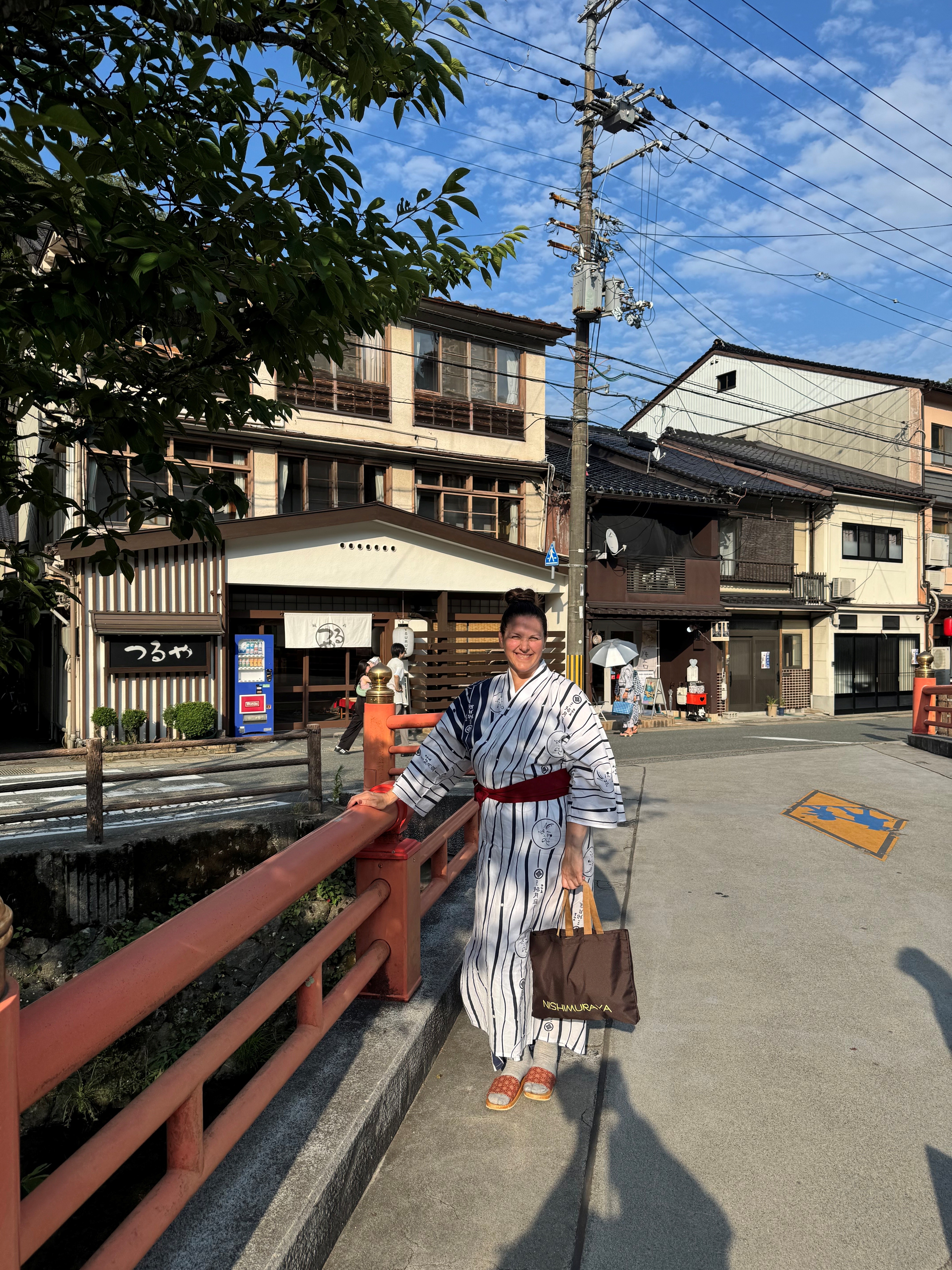
Here we stayed in a traditional ryokan, a Japanese inn where hospitality is elevated to an art form. Shortly after arrival we changed into our yukata, a lightweight cotton kimono. This is not just loungewear: in Kinosaki, it is the official dress code for strolling between the town’s many bathhouses. Wooden clogs on our feet, yukata wrapped and tied, we joined other visitors wandering the streets in this relaxed, timeless attire.
The onsen experience itself was both soothing and liberating. There is a moment of vulnerability, of course, as you leave all your clothes in the locker and step into the steaming baths, but it quickly gives way to a sense of freedom and calm. We tried the onsen in our ryokan, then swapped to our outdoor clogs to visit a nearby public onsen, each with its own character and charm.
Afterwards, we enjoyed a traditional kaiseki meal: a beautiful multi-course showcase of seasonal dishes, with meat and fish prepared for us to cook at our own personal table. It felt almost like theatre, with each course arriving like a carefully composed work of art, yet it remained wonderfully intimate and relaxed.
The next day we had time to simply wander this hot spring town at our own pace, following the willow-lined canals, dipping into little shops to pick up souvenirs and gifts, and pausing to watch everyday life unfold around us. Kinosaki encouraged us to slow right down: to appreciate small rituals, to listen to the sound of clogs on the pavement, to feel the evening air on our skin after a hot bath, and to simply be present.
Osaka: Neon, Castles and Karaoke
Next stop was Osaka, a real contrast to the serene onsen town we had just left, with a vibrant, energetic atmosphere.
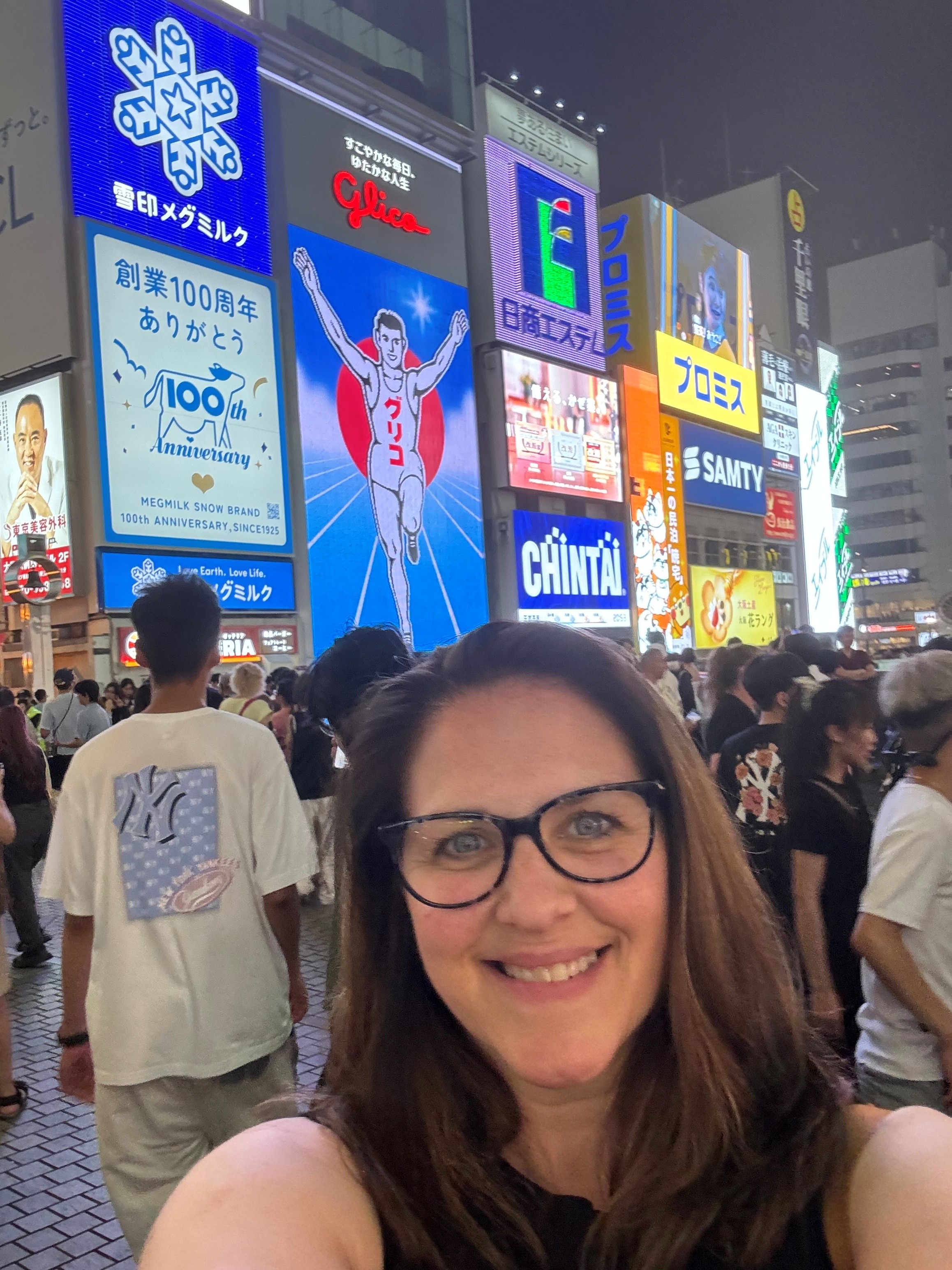
We headed to Dotonbori, famous for its bright signs and buzzing nightlife, and of course stopped to take a photo with the iconic Glico running man. Osaka feels like a city that never quite sits still, and it was infectious.
A walking tour of the city helped us uncover different layers of Osaka: weaving through backstreets, passing through the oldest alleyway in Osaka, and taking in the impressive Osaka Castle, rising above its surrounding parkland. The mix of history and modernity felt distinctly different to Tokyo and Kyoto, with its own proud identity.
That evening we embraced one of Japan’s most joyful pastimes: karaoke. Hiring a private booth in the centre of the city, we spent the night singing our hearts out. It was silly, fun and the perfect way to connect with the playful side of Japanese culture.
A Final Flourish in Tokyo: Shinjuku Nights
Today we travelled by Shinkansen back to Tokyo, our longest bullet train ride yet. On a clear day this route can reward you with views of Mount Fuji from the window, a reminder of Japan’s natural beauty beyond its cities.
For our final stay we based ourselves in Shinjuku, a complete contrast to traditional Asakusa. Here the bright neon lights, giant screens and constant buzz create that classic “future city” feel that many people associate with Tokyo.
We stayed at Hotel Groove, which was a fantastic base: close to the famous Godzilla head peering over the rooftops, central to everything we wanted to see, and ideal for wandering out into Shinjuku’s nightlife. With our guide we also visited the famous 3D cat sign, watching the giant feline spring to life high above the crossroads.
Our last evening in Japan was exactly what I had hoped for: a lovely meal, followed by a stop at a tachinomi, a standing bar, for some relaxed evening drinks. Surrounded by locals unwinding after work, it felt like the perfect, authentic farewell to our time in Japan.
Flying in Comfort: The Journey With British Airways
The trip began in comfort with British Airways in business class. On such a long flight, having a seat that converts to a fully flat bed is a huge benefit. Being able to stretch out properly, dine well and then truly sleep meant I arrived into Japan feeling surprisingly refreshed and ready to explore from day one, rather than losing that precious first day to jet lag.
If a business class cabin or an upgraded service is within your budget, it can transform a long-haul journey from something to endure into a genuinely enjoyable part of the holiday. It is a conversation I always encourage clients to have with me: sometimes a well-timed upgrade can make all the difference to how you start and end your trip.
Reflections on Japan
Looking back, this journey through Japan was a beautiful blend of structure and spontaneity:
Big-city energy in Tokyo and Osaka, balanced by peaceful gardens and river views.
Historic charm in Kanazawa and Kyoto, brought to life by local guides who shared their knowledge and passion.
Deeply personal experiences like the tea ceremony with a Meiko, bathing in onsens in Kinosaki, and singing karaoke in Osaka.
The thrill of Shinkansen journeys, stitching everything together with ease and efficiency.
What made it particularly special was the chance to learn from locals at every stage: insider guides, food tour hosts, our Meiko, and the gentle guidance of ryokan staff. They helped us navigate not just the physical landscape, but the cultural one too: how to ride the trains, how to behave at temples and shrines, how to enjoy the onsen respectfully, and how to slow down and savour each moment.
Japan has a way of staying with you long after you return home: in the memory of lanterns glowing at Senso-ji at night, the first glimpse of Tokyo from the Skytree, the quiet of a Kyoto garden, the click of wooden clogs in an onsen town, the neon reflections in an Osaka canal, and the comfort of that flat-bed seat taking you home.
If you are dreaming of a journey that combines culture, comfort and a touch of adventure, Japan might just be the place where everything comes together. If you would like me to help you plan a similar Japanese adventure, tailored to your pace, style and budget, I would be delighted to design it with you from start to finish.