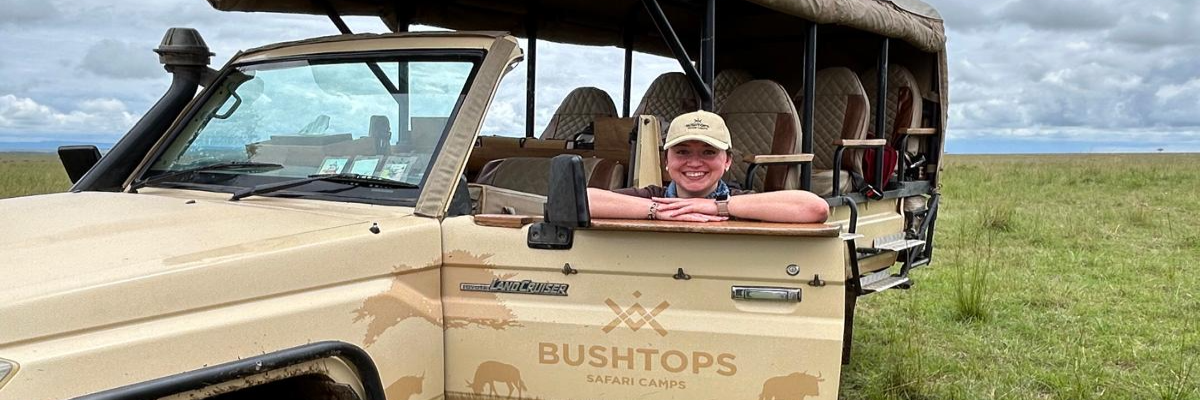
Why Kenya Should Be Your Next Big Adventure
Sunrise game drives, sweeping savannahs, and moments I’ll never forget
When I landed in Kenya this March, it was my first time in the country. I was there on an educational, visiting three different camps, and I expected to come home with a notebook full of useful insights for my clients. What I didn’t expect was how much Kenya would give me in return. It was far beyond anything I had imagined. But it was something less tangible that has stayed with me: a real pull at my heart that I still can’t quite explain. Somewhere between the first game drive and the last evening at camp, Kenya found its way in, and it hasn’t let go. In this blog, I’ll share what I saw, where I stayed, and why I believe Kenya deserves a place at the top of your travel list.
Getting there
Our journey began at Heathrow, where we boarded a British Airways flight to Nairobi. After a late arrival, we checked into an airport hotel for a few hours of shut-eye. The next morning we headed to Wilson Airport, Nairobi’s domestic airport, to board a tiny 16-seater plane bound for Lewa Conservancy and Sirikoi Lodge.
Here’s something that surprises many first-time safari-goers: you don’t need to be on a game drive to see wildlife. On the way from the airstrip to the lodge, we were already spotting giraffes and zebras. The magic starts the moment you touch down, and so does the warmth of the people. Within minutes you feel like you’ve known them for years, and your holiday has already begun.
Sirikoi Lodge, Lewa Conservancy
Our first stop was Sirikoi Lodge, which the owners told us translates to “the place where the zebras drink”. It was built beside a watering hole, and it has a lovely backstory. A British woman fell in love with a Kenyan man and moved to be with him, and building this lodge became their shared project. The lodge was created in 2001 by Willie and Sue Roberts, who have been part of Kenya’s safari scene since the 1970s.
Sirikoi sits in a private 7,000-acre section of the wider Lewa Wildlife Conservancy, in south-eastern Laikipia. It looks out over a waterhole, with views towards Mount Kenya, and the conservancy is home to endangered species including black and white rhino and Grevy’s zebra.
The accommodation is deliberately small and intimate. There are tented rooms for the classic camp experience, plus hotel-style rooms in the main building. There is also a private house with separate bedrooms, a shared living space and its own outdoor area, completely apart from the rest of the lodge, which makes it ideal for families or groups wanting privacy. Sirikoi runs on solar power, grows its own organic fruit and vegetables, and takes its water from a mountain spring. It was named Ecotourism Kenya’s Eco-rated Lodge of the Year in 2015.
It’s hard to compare guides in Kenya, because they are all incredible, but at Sirikoi they stood head and shoulders. Their knowledge of everything around us was remarkable. The lodge even has a resident giraffe who wanders the grounds, named Nditu, which is as magical as it sounds. When you’re not out on a drive, there’s a beautiful spa, a lovely outdoor dining area and a semi-outdoor lounge. We went on every game drive we possibly could, and saw a wonderful variety of wildlife.
Pack layers. If I could give one piece of advice for any Kenyan safari, this is it. Evenings and early mornings can be cold, which many people forget. You’ll be given hot drinks, hot water bottles and blankets first thing, but as the sun comes up it warms quickly and you’ll want to peel layers off. In the evening we sat around the fire with the owners and a local drink in hand, getting to know them. It was a real highlight.
Breakfast in the bush. Halfway through a game drive, the vehicles stop and the guides set up hot drinks. Sometimes they lay out tables and chairs so you can have breakfast in the middle of the bush. One of our guides even walked off to pick wildflowers and put a bouquet on the table. It’s a small touch, but it was so thoughtful. Likewise, in the evening they come prepared for sunset drinks overlooking the incredible scenery.
A safety note worth bearing in mind; you can’t walk around outdoors in the dark by yourself. For an early-morning game drive, or for heading back to your tent after dinner and drinks, you call or signal with a torch and a guide will escort you. The lodges are very safe, but you are in nature and in the animals’ territory, and this is simply how guests are protected.
Ol Lentille: a different kind of safari
Ol Lentille was a completely different style of stay. At Sirikoi we were low down in the bush, but here we were high up on a rocky outcrop. The lodge is perched on a hilltop overlooking a vast private conservancy, with Mount Kenya and the Samburu sacred mountain of Ololokwe as a backdrop. The views over the valley are extraordinary. One morning I was in the shower, which has a completely glass front, and watched an elephant and her calf wander between the trees below.
We were welcomed in a beautifully modern, artistic communal space before being shown to our villas. Ol Lentille has four private villas, each with its own house staff, private guide and vehicle. That privacy shapes everything, including a private entrance for guests who want a low-key arrival without being seen by anyone else. It also has a beautiful infinity pool with lounge chairs and sweeping views. The lodge is so intimate that it has no communal dining area at all, so they created one for our educational group. We had our first lunch at a big table by the pool, and one night a candlelit dinner in the library and chill-out zone.
You still need a guide to escort you after dark, but the feel is very different. Because you’re high up, the paths are gravel walkways rather than bush tracks, and there’s no tented “in the wilderness” feeling here.
The wildlife was like nothing I’ve experienced. We were lucky enough to see a pack of wild dogs, which is rare in itself, and then we watched them hunt. As an animal lover, it was truly unforgettable.
What sets Ol Lentille apart is the community. The lodge is community owned, and the Maasai and Samburu people are the custodians of the land. Guest fees have funded schools, scholarships, healthcare and wildlife conservation for the local community. Walks here are guided by Samburu and Maasai warriors. On our bush walk we tried throwing traditional spears, then visited a local market far from any tourist route. We saw goats being sold, along with clothes, shoes and jewellery. It was an honest, wonderfully overstimulating experience. We also visited a school funded by the Ol Lentille foundation and saw how the children learn, which brought home how much a stay here gives back.
Mara Bushtops: the finale
After saying goodbye to Ol Lentille, we headed to our final camp, Mara Bushtops. If I had to compare, I’d say Mara Bushtops and Sirikoi are the most similar, because both are tented and Ol Lentille is so different, higher up and much drier. In the tents you hear everything around you and get the full bush experience. Mara Bushtops feels more luxurious than Sirikoi, though, with incredible food and views. When we visited it was lush and green, and the gym and spa are open-tented areas, so you feel connected to nature even while being pampered.
The camp has twelve luxury tents set on a hillside, with wooden decks overlooking the Siana Hills, each with a sunken hot tub. A large natural salt lick sits right in front of the restaurant and the Amani Spa, drawing wildlife throughout the day. The Amani spa includes a heated pool, cold pool, Jacuzzi, sauna, steam room and gym, though treatments cost extra.
The camp has its own private conservancy, which means night game drives are possible and included in the price. The main gate of the Maasai Mara National Reserve is only 4.5 km away, so you can also head into the reserve and towards the Mara River, where the migration crossings take place. I also loved the Swarovski binoculars in the safari vehicles, a small touch that makes a big difference when you’re searching the horizon.
As at the other camps, we were treated to beautiful Maasai performances, dancing and rituals by the men. One was a jumping competition, where tradition says the man who jumps highest wins the hand of the finest lady in the tribe.
Heading home
Then it was back to Wilson Airport and the flight home to Heathrow. Three camps, three completely different experiences, and one very clear conclusion: Kenya is an extraordinary place, and it’s one I can’t wait to send my clients to.