Guide to Motorhoming the Alaska Highway from Vancouver
Hiring a C21 Cruise Canada motorhome in Vancouver and heading up the Alaska Highway to Dawson City, then looping back via the Cassiar Highway, was one of the most memorable trips we have ever done. The landscapes were huge, the roads felt endless and there was a real sense of freedom. It was also a learning curve. There are things we would happily do again in a heartbeat and a few lessons we learned along the way. If you are thinking about a similar motorhome adventure, I hope these tips from our own experience help you feel prepared and a bit more confident before you set off.
Choosing the right size RV
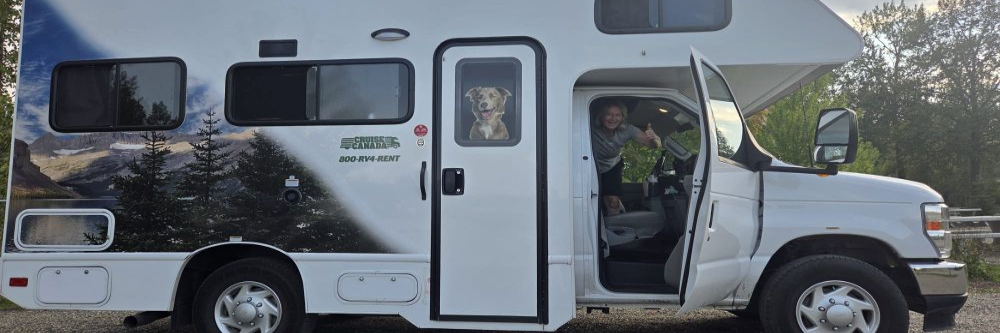
We travelled in a C21 (21ft) Cruise Canada motorhome, which is a compact coach built model. It is sold as suitable for 4 people, but in reality I would say it is not big enough for four adults. Two adults is ideal and at a push I could see it working for two adults and two small children if you are organised and happy to live quite cosily.
The upside of the smaller size is that it’s very manageable. It is easier park and to manoeuvre into pitches than some of the larger RVs we saw.
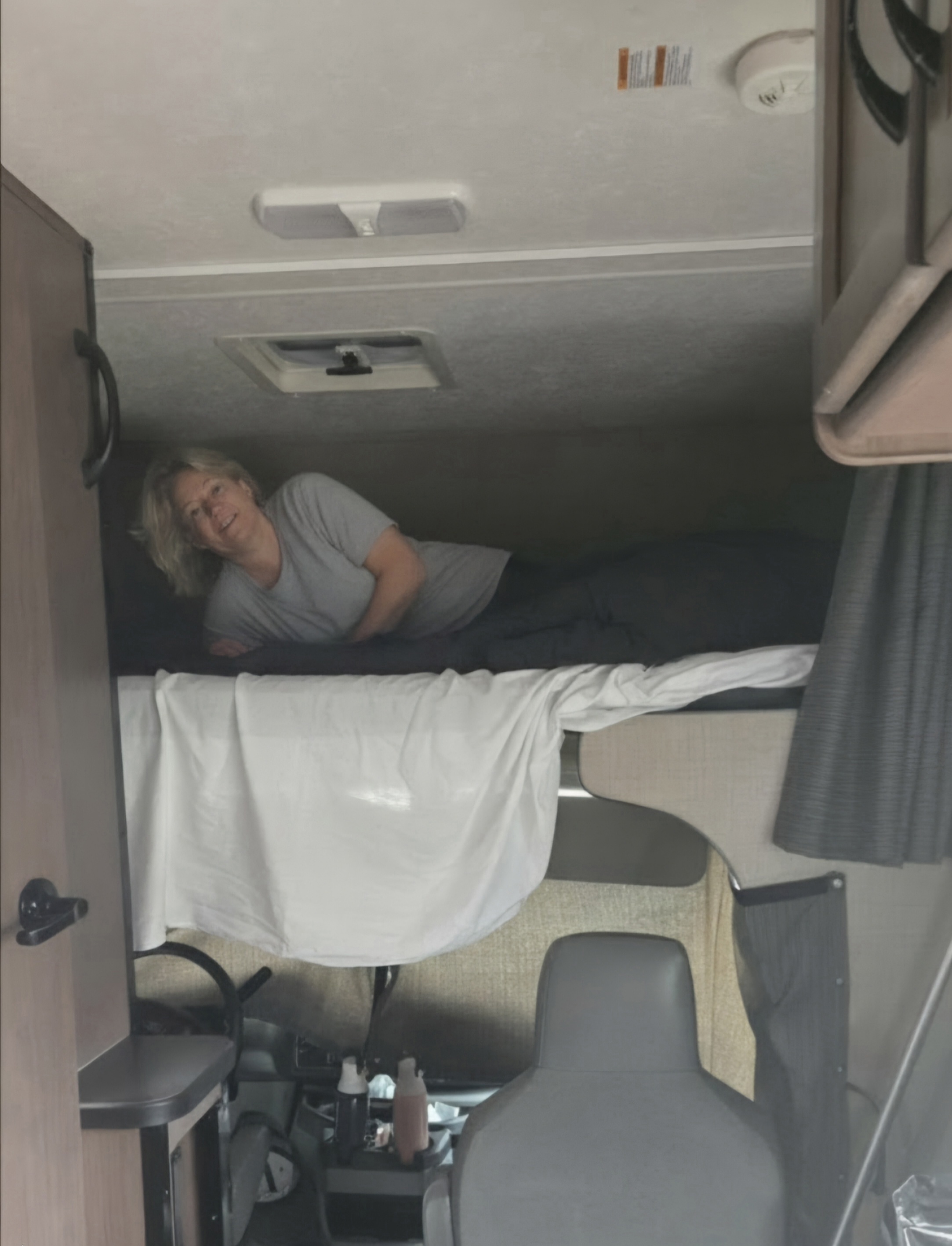
The next size up is the C25 (25ft) with a permanent bed at the back and a little more space and this is their most rented model. I can see why it is popular with the permanent bed set up and a little more space, but for us, the C21 was great as we were happy to climb up above the cab and use that bed, leaving the table at the back permanently in place. If you used the bed at the back you would be making the bead each night.
I have to say that bed was an unexpected bonus. It was so comfortable, much more so than I expected from a motorhome. It felt like a proper, snug sleeping space. After a full day, climbing up there to sleep was a genuine treat.
We actually put our suitcases at the end of this bed (bed was very long and we are short) and left them there for the whole trip, You cannot get suitcases in the outside storage as the compartments doors are too small, you do have to think about where your empty suitcases will be stored. On that note of us being short, we did have to buy a step to reach the top cupboards and the microwave (we are both 5ft). We also put a spare pillow behind our back in the drivers seat just to push us forward a little more, for comfort. The height of the seat and steering wheel were absolutely fine.
I also wouldn't be too sure about six footers in the C21 as the leg space in the drivers cab is not very big plus not much manoeuvrability around the dining table. The height of the RV is fine though.
Tip: Take earplugs, some campgrounds are next to train stations that honk their horns each time they come through during the night! I didnt use my sleep mask at all.
Book your campgrounds in advance
One big stress we managed to avoid was hunting for somewhere to stay at the end of the day. We pre‑booked 98% of our campgrounds before we travelled and I would absolutely recommend doing the same if driving this route.
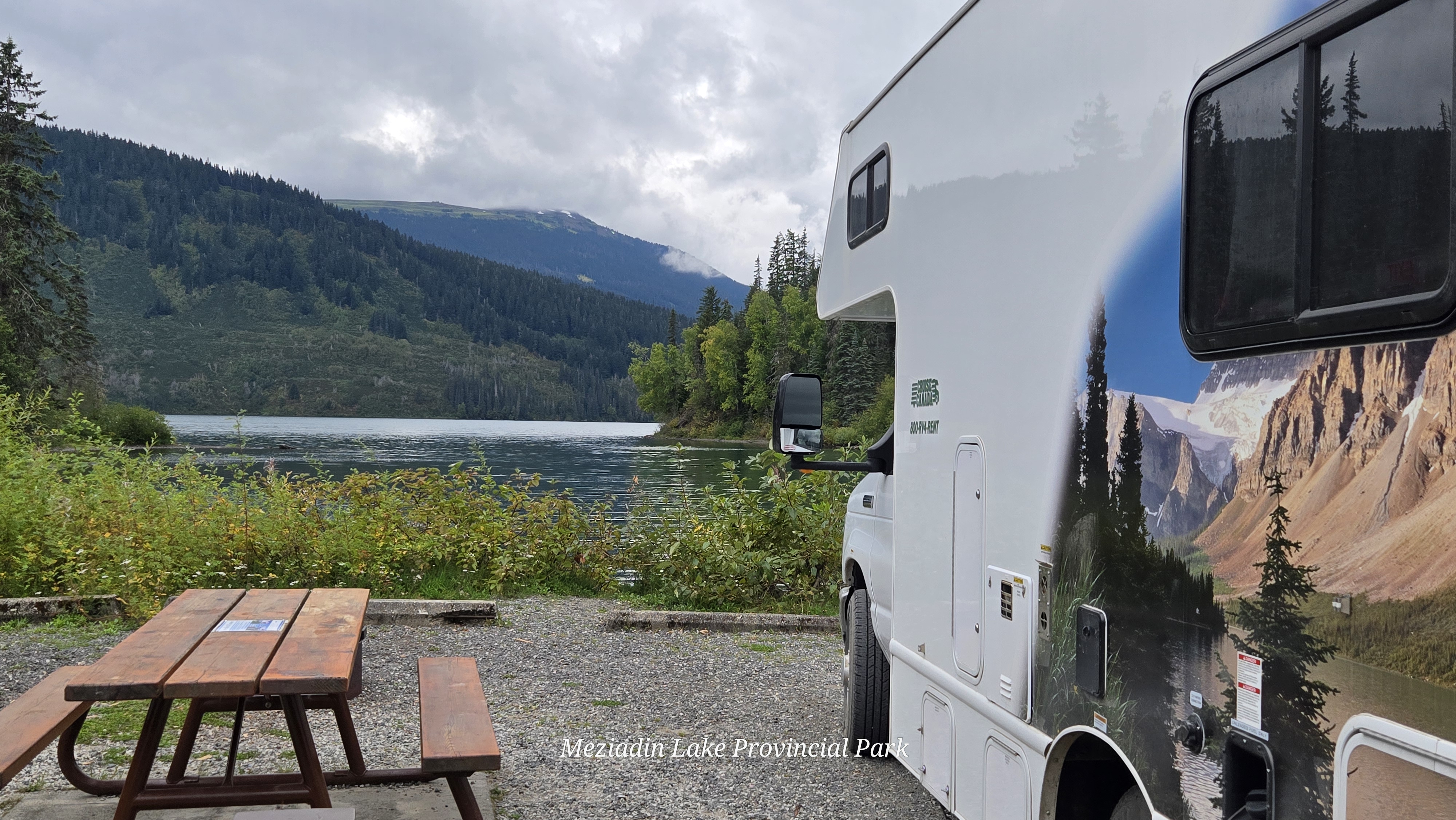
Some of the campgrounds are in remote areas. If you arrive and find them full, you might have a long drive ahead of you to reach the next option and on these roads that is not what you want late in the day. Having them booked in advance meant we could relax, enjoy the journey and know that there was a pitch waiting for us each night.
We had two stays at Government campgrounds that we didn’t book (as they don’t allow pre-booking) but because we travelled in late August/September, this is less busy than travelling May to early August and we had no trouble getting a spot.
For this journey, unless you have a couple of months at your disposable, then planning your exact route is a must, we were on the road for 24 days and whilst this was absolutely doable, it requires pre-planning.
Power: what you can and cannot use without electric hook‑up
You do not need electric hook‑up every night, as long as you understand what works without it.
We made sure we had phone battery packs fully charged whenever we did have power and then relied on those when we were somewhere without hook‑up. Some of the more beautiful river side spots dont always have power plus it is generally cheaper to book a site without power as well.
However, there are a couple of important limitations when you have no electric hook‑up, particularly with Canadian motorhome rentals that do not have generators on board:
1) You cannot use the microwave
2) You cannot run the air conditioning unit
3) None of the electrical sockets work - boil water on the stove for drinks and if you have a toaster (they dont supply one) you cant use that either
This is worth planning for. On hotter days you may really appreciate those powered nights with air con and it is useful to pre-plan your meals if you are relying on the microwave.
I would say start your trip with a couple of nights on powered sites while you settle in and then every now and again stay off-grid.
The plug sockets and USB's (in the lounge area) dont work whilst driving. We have a cigarette lighter that has 2 x USB's in it and we took that so we could charge our devices whilst driving. The drivers cab does have 2 USB's sockets but one didnt work very well so the lighter came in handy.
Tanks, water and the glamorous job of emptying everything
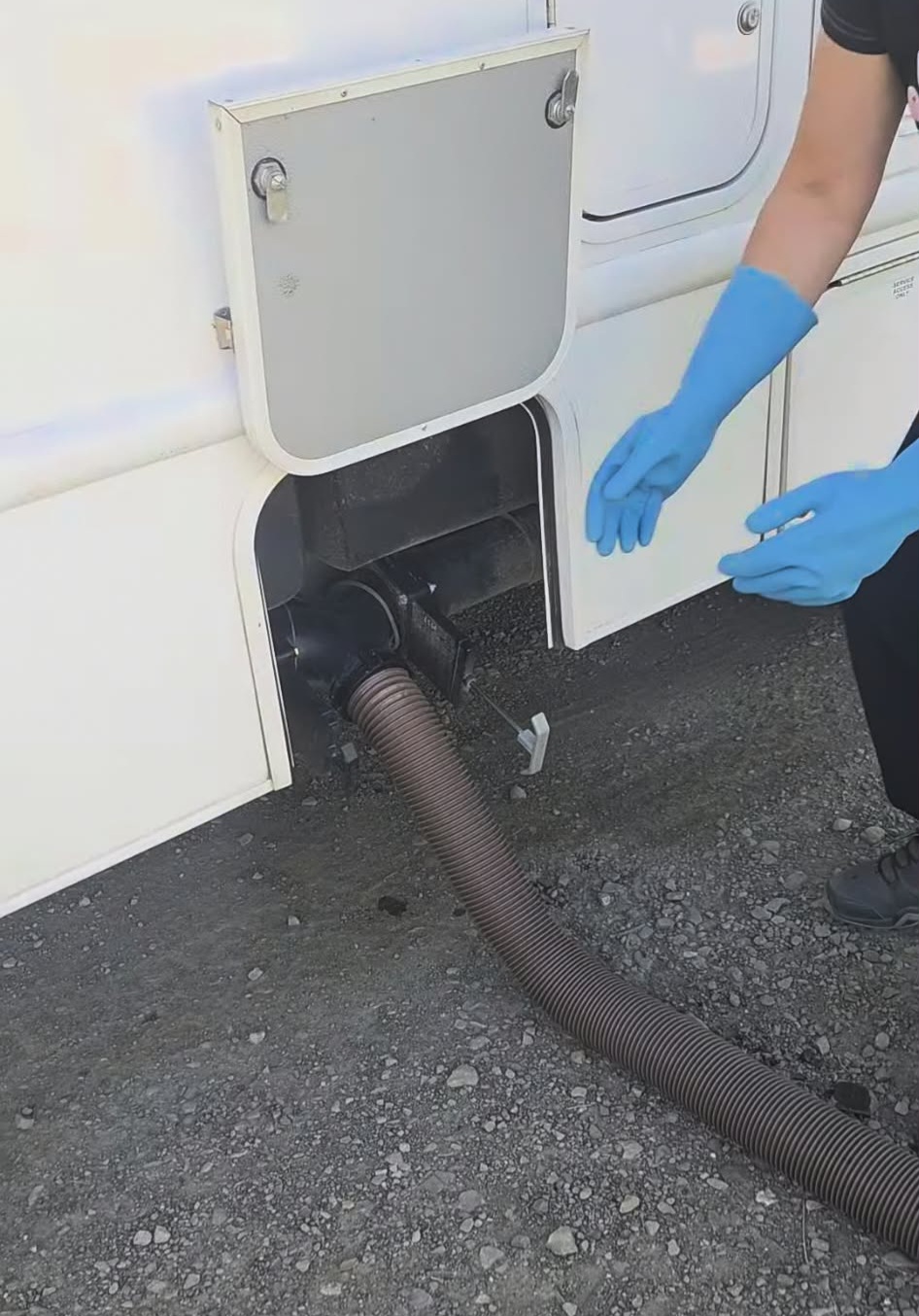
One of the most important routines we settled into was managing the fresh water and waste tanks. Our rule of thumb became to empty the tanks every two days. Even when the gauges did not look too full (sometimes the gauges are not accurate either). These RV's come with a hose that you attach to a pipe outside the van and it flushes down a drain. Either a personal drain next to your RV (if you have booked that) or a shared one on site or nearby (some are free and some are not.
Two days worked well for us, but you might adjust depending on how many people are using the motorhome and how much you use the shower and kitchen. We used the campground showers rather than in the RV apart from once and surprisingly the shower was really good!
By the way - use gloves as things can spill!
Another tip is take some flip flops/sliders for use inside the van, so you dont have to wear your outdoor shoes inside or walk around in socks, especially after doing these jobs.
FYI: We paid just over £700 for all our campgrounds over 24 days
Fuel: never let the tank drop too low
The other non‑negotiable on this route was fuel. On routes like the Alaska and Cassiar Highways, you can have long stretches without many services and not all fuel stations are open all the time.
My advice is do not let your tank go beyond half empty. Treat half a tank as your “refill now” point, not “I still have ages left”. In reality there were only a couple of times when you have to plan this and the majority of the route there were plenty of gas stations.
FYI: In 24 days across 4750 miles we spent approx £1500 on gas, so this is an expense worth calculating for.
Road conditions: mostly smooth, with a few surprises
One of the biggest unknowns before we set off was what the roads would actually be like. Overall, 90% of the roads we drove were great. They were smooth, well maintained and really pleasant to travel on.
The remaining 10% is where you need to slow down, pay attention and be patient. We drove through sections that were under construction, with loose gravel, potholes and temporary surfaces. These bits are not constant, but when they appear you can feel them.
A really helpful detail to watch for is the orange flags by the side of the road. When you see those, it usually means a small dip or change in surface is coming up. They can seem minor at first, but in a motorhome even a “small dip” can feel quite dramatic if you are going too fast.
Before you set off, make sure everything is packed away and nothing is loose, things rattle so expect some cab noise – nothing too drastic, but things can fly off the sides if you haven’t secured them.
We took some clear ‘Gorilla Tape’ with us, in case of any cracked windshields along the way from on-coming or in-front lorries but glad to say that never happened, however the tape came in handy for all sorts of things, so I would definitely take that again.
Everyday motorhome life: the bits no one tells you
Life in a motorhome means 'chores' - washing, cooking, cleaning, tank dumping, to-do list for tomorrow but it quickly finds a rhythm and we had a few surprises. For us, one of those surprises scuttled in on tiny feet. We had a mouse for two nights in a National Park in one of our bottom drawers. It was not exactly part of the dream, but it is one of those things that can happen in remote, natural areas, who knew they can get in through the gaps!
Keep sweet treats in sealed containers or in higher cupboards as that is what our mouse was after.
As well as our tiny uninvited guest (that we never saw), we had some challenges along the way – we broke the glass in the wing mirror which was easily replaced and a blocked waste pipe which we had to go to the garage for at the end of our trip. All free of charge and the after service of Cruise Canada was great!
Not like their orientation which is practically non-existent, which I hear is true for most RV pick up's actually, so googling became part of the RV learning curve.
Also, there are long stretches of road with no mobile signal and no internet, one of my concerns was the vehicle breaking down and how to contact someone, but we had no such trouble, so all good. We had decided to take the Zero Damage policy so in the event of any accidents we wouldnt have a bill to pay.
We also opted for the Early Bird Pick up and Return - I would highly recommend this, we were at the RV pick up depot at 8am so we could get underway (took about an hour) and then return on the last day at 3pm - it gives you 2 more days of your holiday - well worth the extra cost.
Is it worth it?
For me, the answer is absolutely yes. It is a proper adventure that involves planning, over 24 days it meant some long driving days (6-8 hours) and a bit of flexibility when things did not go exactly to plan – we had wildfires to work around in August.
But if you are happy to embrace that, it rewards you with huge skies, scenic campsites, incredible mountain views, wildlife on the side of the road and the satisfaction of carrying your little home with you as you go. No need to pack and unpack a suitcase each night if staying in hotels.
If you are considering a similar journey, I would say:
Be realistic about space in the motorhome. A C21 is perfect for two adults and tight for more.
Pre‑book your campgrounds so you are not hunting for a pitch in very remote areas.
Do not be afraid of nights without hook‑up, as long as you know what will and will not work without power and have your charging strategy sorted.
Get into a good rhythm with fuel and tanks so you are never caught out.
Take the rougher road sections slowly and pay attention to those orange flags.
Accept that the odd hiccup, whether it is a mouse in a drawer or a stretch of construction, becomes part of the story you tell later.
Allow more time for this sort of road trip – next time I would only drive for 2 hours, whatever the destination, for this trip this would mean either not going all the way up to Dawson City or preferably taking 5 weeks or more to have more down time. I appreciate that is not always possible and it wasn’t for us. We knew we were fitting a lot in, in a short space of time due to the distance we wanted to cover.
With the right expectations and a bit of preparation, it can be one of the most memorable and rewarding ways to explore this incredible part of the world.
If you would like to plan your own motorhome adventure on a similar route and have someone take care of all the arrangements, get in touch and I will be happy to help design a trip that suits you.