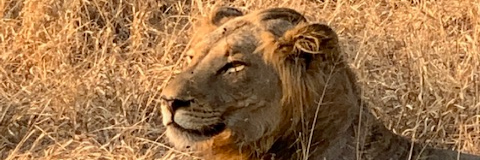
100 Years of Kruger: Why Africa’s Most Iconic Park Belongs on Your Safari List
It has been a month for celebrating centenarians, including Sir David Attenborough and the Kruger National Park. What change they have witnessed.
My grandmother turned 104 and marked the occasion over a couple of days with tea parties and cakes, including an afternoon tea with delicate china cups - vintage of course!
Sir David Attenborough has celebrated his 100th birthday, honoured with a fitting evening at the Royal Albert Hall. And in its own way, another true icon is also marking a milestone: Kruger National Park, officially proclaimed on 31 May 1926 and now celebrating 100 remarkable years.
What change they have all witnessed. From an era when wildlife and wilderness were often seen as resources to be used, to a time when more of us recognise how precious and fragile they really are. For me, Kruger has been part of my own story for 25 years, and it remains a favourite safari destination.
A Brief History of Kruger National Park
Long before it became the Kruger we know today, this corner of north-eastern South Africa was already recognised for its extraordinary wildlife. In 1898, President Paul Kruger of the Transvaal Republic proclaimed the Sabie Game Reserve, protecting land between the Sabie and Crocodile Rivers. Over the following decades, additional land was added and conservation thinking slowly shifted from hunting and extraction towards protection and appreciation.
On 31 May 1926, the Sabie and Shingwedzi reserves were merged and officially proclaimed Kruger National Park — South Africa’s first national park. The first tourists arrived by car in 1927, and the earliest overnight huts were built at Skukuza, Satara and Pretoriuskop in 1928. Today, Kruger covers roughly the same area as Wales — nearly two million hectares of savannah, riverine forest and mopane woodland that supports an astonishing diversity of life: 147 mammal species, over 500 bird species and the full complement of the Big Five. Yet at its heart, the purpose remains the same: to protect a uniquely rich ecosystem and to give future generations the chance to experience wild Africa.
Two Ways to Experience Kruger — and Why Both Are Worth It
One of the things that makes Kruger so special is its flexibility. You can experience it in two quite different ways, and I have done both — each offers something the other cannot.
The Self-Drive Experience: Freedom in the National Park
Driving yourself through Kruger is one of the great safari adventures. You set your own pace, stop whenever something catches your eye, and have complete freedom over where you go and when. The park has an excellent network of tar and dirt roads connecting a series of well-run rest camps — from the large, busy hub of Skukuza with its restaurant and shop, to smaller, more atmospheric camps like Satara or Letaba. You can stay in anything from a basic rondavel to a comfortable cottage with a private deck overlooking the bush.
The self-drive experience rewards patience and curiosity. Early mornings and late afternoons are when the animals are most active, so setting off at gate-opening time — typically around 5:30am in summer — often produces magical sightings with the golden light low and the roads quiet.
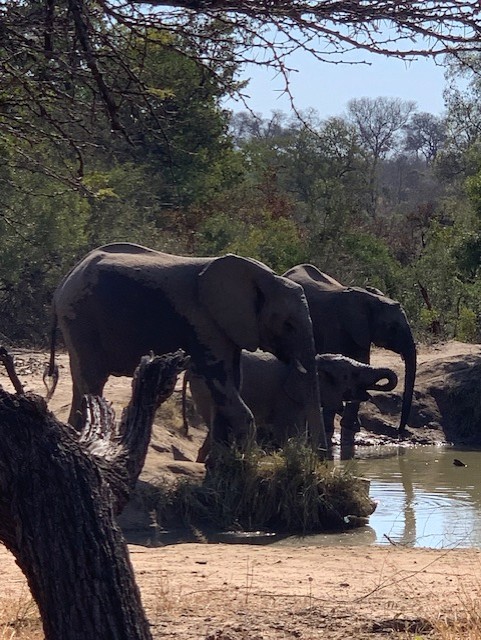
Waterholes are your best friend: pull up, turn off the engine and wait. I have spent some of my most memorable hours simply sitting at a waterhole, watching elephants arrive in clouds of dust or a leopard slink through the reeds.
One important point to note: within the national park, you must stay on designated roads at all times. No off-road driving is permitted, and you must be back at camp by sunset. These rules exist for good reason and actually add to the sense of adventure — you are truly in a wild landscape, on the animals’ terms.
The Private Reserve Experience: Guided, Intimate and Immersive
Bordering Kruger to the west are a number of world-class private game reserves — among them the Sabi Sand, Timbavati and Klaserie — whose unfenced boundaries with the national park allow wildlife to move freely across the entire landscape. This is where the experience shifts into a different gear entirely.
In the private reserves, you are guided by expert rangers and trackers on open 4x4 vehicles that are permitted to go off-road. When a leopard is spotted, your guide can leave the track, push quietly through the bush and position you just metres away. When lion prints cross the road, your tracker can step out of the vehicle, read the story in the sand and follow the trail on foot. These encounters are extraordinary — a level of access and expertise that simply isn’t possible in the national park.
Game drives in the private reserves typically take place twice a day — early morning and late afternoon — with a sundowner stop built into the evening drive. Between drives, you return to a lodge that might have a pool, a spa, a beautifully set dining table under the stars. The ratio of guides to guests is small, the service is attentive, and the whole experience feels deeply personal.
For first-time safari-goers, families with children, or anyone who wants to guarantee exceptional wildlife encounters, I usually recommend combining both: a night or two of self-driving in the national park for the sense of independence and adventure, followed by two or three nights in a private reserve for the guided depth and comfort.
Seeing the Bush Through My Daughter’s Eyes
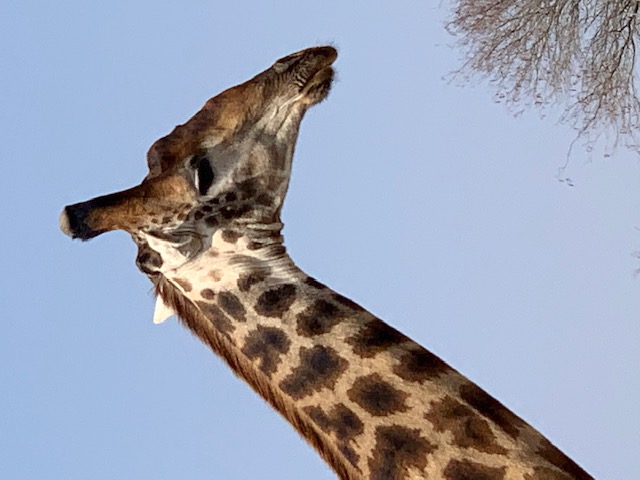
Some of my most treasured family memories come from a reserve adjacent to Kruger, where the fences with the national park are down and the wildlife moves freely across this enormous protected landscape.
It was here that my daughter saw her very first giraffe in the wild. I still remember the look on her face as this gentle, long-lashed giant stepped out from the thorn trees, paused to consider us, and then glided across the clearing as if in slow motion. It was a moment of pure wonder, and one I know she will carry with her for the rest of her life.
Evenings were for sundowners: that golden time of day when the bush glows and the air cools. We would stop somewhere with a sweeping view, step down from the vehicle and stand with a drink in hand, listening to birds settling in for the night and the distant roar of a lion. The sky would soften from orange to pink to deep indigo, and we would feel that lovely mix of excitement and stillness that only the African bush seems to create.
On drives, we tracked all manner of animals, learning to read the landscape through the eyes of our rangers and trackers: fresh lion prints crossing the track, the alarm call of impala, a swirl of dust in the distance that hinted at elephants. These guides were storytellers as much as wildlife experts, weaving in history, ecology and humour in equal measure, so that every drive felt like both an adventure and a lesson.
One afternoon, we spent an unforgettable time by our lodge waterhole as a large herd of elephants arrived in a cloud of dust. They slid silently out of the trees and then, as they smelled water, the whole group seemed to relax. Calves splashed and rolled, teenagers jostled, matriarchs stood calmly watchful. We sat quietly, mesmerised. I confess I had been sat nearby painting my nails and had to freeze mid-brush so as not to miss a single moment.
These intimate encounters are why safaris are so powerful: you are not just observing wildlife, you are being allowed, briefly, into its world.
Beyond the Game Drive: People, Community and Connection
Another part of Kruger’s story that matters deeply to me is the relationship between the lodges and the communities around them. On that same trip, we visited the nearby village and school where many of the lodge team live. We had brought footballs and sports equipment for the children, which were enthusiastically put to use in the dusty playground almost immediately. Watching my daughter kick a ball around with local children reminded me that travel is not just about the places we visit, but the people we meet.
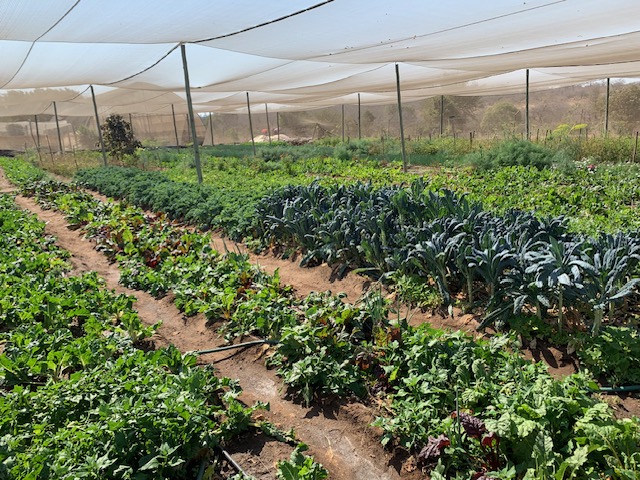
We were also shown the community garden, where fresh produce is grown to supply both the school and the lodge. Rows of spinach, tomatoes and herbs flourished in the African sun, tended by local women whose work supports both food security and local employment. It was a simple but powerful example of how responsible tourism creates shared benefits: guests enjoy delicious, locally sourced meals, while the community gains income and skills.
Kruger and its neighbouring reserves are not empty wildernesses — they are part of living landscapes where conservation, tourism and communities are deeply intertwined.
Kruger’s Conservation Story
Over the last 100 years, Kruger has been at the frontline of some of Africa’s biggest conservation challenges. Rhino poaching remains a very real and serious concern, as does human-wildlife conflict along park boundaries. It would be wrong to pretend otherwise. Yet there are many reasons to feel hopeful:
• Protected habitat on a vast scale. Kruger’s almost two million hectares give animals the space to roam, breed and adapt. In a world of shrinking habitats, this is invaluable.
• The Great Limpopo Transfrontier Park. Kruger forms the heart of a 35,000 km² cross-border conservation area linking Mozambique’s Limpopo National Park and Zimbabwe’s Gonarezhou National Park. Removing fences has allowed wildlife to reclaim ancient migratory routes blocked for generations by international borders.
• Community engagement. Increasingly, conservation projects recognise that local communities must have a genuine stake in protecting wildlife — through employment, education and community-owned tourism.
• Scientific research. Kruger has long been a living laboratory for ecologists and researchers whose work has shaped conservation thinking far beyond South Africa’s borders.
When you visit, you are not just ticking animals off a list. You are supporting a century-long effort to protect one of the most extraordinary corners of our planet.
Why I Still Recommend Kruger After 25 Years
After a quarter of a century of visiting here, Kruger remains one of my top recommendations for several reasons:
• Incredible wildlife, consistently. Few places on earth offer such reliable Big Five sightings. Whether it is your first safari or your fifth, there is always something new to see.
• Flexible for every type of traveller. Self-drivers who want freedom, families seeking child-friendly comfort, couples looking for barefoot luxury — Kruger and its private reserves have options for all of them.
• Easy to reach and easy to navigate. Good flight connections into nearby airports, well-managed transfers and a superb road network mean you can go from city to bush in a matter of hours.
• Real conservation impact. Your visit contributes to a much larger story: decades of habitat protection, community partnership and scientific research that extends far beyond your lodge.
• Space to feel, learn and reconnect. From quiet moments at a waterhole to meeting the people who live and work in the area, Kruger gives you space to step away from everyday life.
Ready to Write Your Own Kruger Story?
If you are considering a safari and would like to include Kruger National Park or one of the private reserves that border it, I would be delighted to help. Having experienced both the self-drive national park and the guided private reserve, I can talk you through the differences and help you decide which combination suits you best.
I can:
• Recommend the right reserve, lodge and style of safari for your travel preferences, budget and group — whether that is a first-time family adventure, a special anniversary trip or a solo escape.
• Build a tailor-made itinerary that combines Kruger with Cape Town, the Winelands, the Garden Route or other parts of Southern Africa.
• Advise on the best time of year to visit, how long to stay, and what to expect day to day — so you feel fully prepared and excited.
Wondering where to stay? Discover unforgettable places in the Kruger to stay.
Get in touch and let’s design a safari that feels personal, meaningful and unforgettable.