5 Days in Budapest: A First‑Timer’s Guide to Hungary’s Captivating Capital
This was my very first visit to Budapest, and in fact my first time in Hungary. Here is how my five‑day city break unfolded and how I fitted in the Buda side, the famous funicular, a guided tour of the State Opera House, a special dinner at Gundel, the House of Terror, the scenic No. 2 tram, the Parliament and the city’s bustling market.
Day 1: First Impressions & The River Danube
After arriving and dropping my bags, I made a beeline for the River Danube. For a first‑time visitor, it is the perfect place to start: the water gliding past, the elegant bridges stretching between Buda and Pest, and the city’s most iconic buildings lined up along the banks.
I walked the promenade on the Pest side, taking in views across to Buda’s hills and castle district. The Chain Bridge and the skyline beyond gave me that “I’m really here” moment. As daylight faded, the lights along the river came up, giving my first glimpse of just how beautiful Budapest is after dark.
A relaxed dinner nearby and an early night set me up nicely for a full day of exploring.
Day 2: Buda Side, Funicular & Storybook Views
Day two was devoted to the Buda side. Crossing the river in the morning light felt like stepping into another world: quieter streets, leafy slopes and a more residential, village‑like feel.
Rather than climb the hill on foot, I treated myself to the funicular ride up to Buda Castle. It is a short journey but a charming one, with ever‑widening views over the Danube and Pest as you glide upwards. At the top, I spent time wandering around the castle district, with its cobbled streets and pastel buildings, and pausing at viewpoints that seemed to reveal a new angle on the city at every turn.
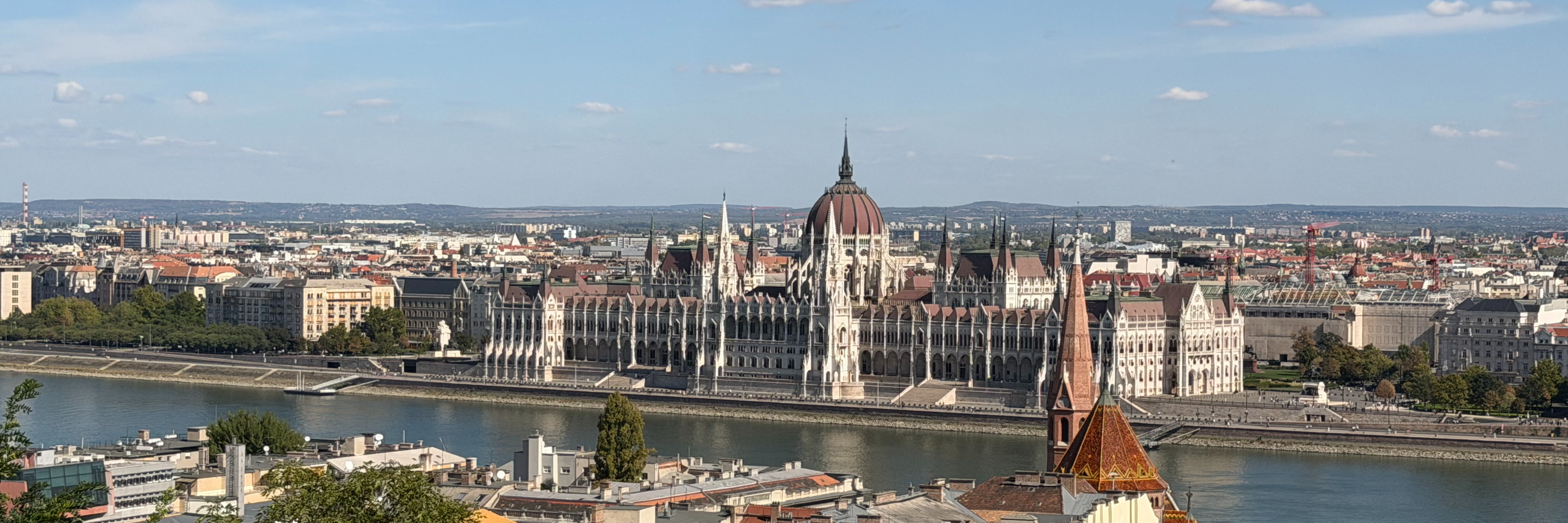
I continued to Fisherman’s Bastion, whose fairytale turrets and sweeping viewpoints quickly became one of my favourite corners of the city. I could see the Parliament building standing proudly on the Pest bank and boats gliding serenely along the river. For a first visit, it was the perfect introduction to Budapest’s layout and character.
That evening I headed back down into Buda and then across the river again, watching the sunset catch the water as I walked.
Day 3: State Opera House, Gundel Restaurant & An Elegant Evening
Having soaked up some of the city’s historic charm, day three began with a mini walking tour of Pest. I wandered past elegant boulevards and side streets, admiring façades that hinted at the city’s imperial past, and made a stop at the beautifully restored Parisi Udvar, with its intricate glass and tilework. From there, I worked my way to one of Budapest’s classic coffee houses, Café Gerbeaud, for a slice of dobos cake and some leisurely people‑watching.
In the afternoon I joined an English‑language guided tour of the Hungarian State Opera House. Even if you are not an opera enthusiast, this is a must for the architecture alone. Our guide brought the building’s history to life, from its gilded auditorium and sweeping staircases to the tiny details in the frescoes and chandeliers. Sitting in the opulent main auditorium, it was easy to imagine Budapest’s elite arriving here in their finery more than a century ago.
The highlight of the day, though, was dinner at the legendary Gundel restaurant. From the moment I stepped inside, it felt like a special occasion: crisp white tablecloths, polished service and a menu that reinterprets traditional Hungarian flavours with finesse. I lingered over each course, savouring both the food and the atmosphere. For a short city break, it was a true “treat yourself” evening and one I would recommend to any foodie visiting Budapest.
Day 4: House of Terror, No. 2 Tram & Parliament Views
Budapest’s beauty is only part of its story, so on day four I focused on its more sobering history.
I began at the House of Terror, a powerful and thought‑provoking museum housed in a former headquarters of both the fascist and communist regimes. The exhibitions are intense and at times harrowing, but they offer vital context to the city and country you see today. I left with a much deeper understanding of what Hungary has been through in living memory.
To process it all, I headed back towards the river and boarded the No. 2 tram. Widely considered one of the most scenic tram routes in Europe, it runs along the Pest embankment of the Danube, offering superb views of the Buda side, the bridges and many of the city’s key landmarks. For the price of a tram ticket, you essentially get a mini sightseeing tour.
One of the highlights along this stretch is the Hungarian Parliament Building. I took time to hop off and admire it up close, its neo‑Gothic spires and intricate façade every bit as impressive as the photos suggest. Whether seen from the tram, from across the river on the Buda side, or lit up at night, Parliament quickly became one of my favourite sights in Budapest.
Day 5: Market Mornings & A Last Look at the Danube
On my final day I headed to the city’s main market hall. It is a feast for the senses: stalls piled high with paprika, salami, fresh produce and local pastries, with the murmur of traders and shoppers filling the vaulted space. I used the opportunity to pick up a few edible souvenirs and grab a simple, satisfying lunch.
With my flight later in the day, I spent my last couple of hours exactly where I had started: back at the River Danube. I took a slow stroll along the embankment, watching trams rattle past and boats cruise by, committing the views to memory. The city felt familiar now, its once confusing mix of Buda and Pest, grand boulevards and quiet side streets all starting to knit together.
As I headed to the airport, I realised just how much Budapest had delivered in only five days, especially for a first‑time visitor: grand architecture, moving history, elegant evenings, memorable meals and that constant backdrop of the Danube tying it all together.