Golden Triangle
Delhi, Ranthambore, Jaipur and Agra
This journey took me through India’s iconic Golden Triangle – Delhi, Jaipur and Agra – with the added magic of Ranthambore National Park in search of tigers. What follows is a flavour of the itinerary I experienced and why this can be the trip of a lifetime.
 Arriving in India: First Impressions of the Golden
Triangle & Ranthambore
Arriving in India: First Impressions of the Golden
Triangle & Ranthambore
After an overnight flight into Delhi, the energy of India hits you almost as soon as you step outside the airport doors. Delhi is the country’s second largest city, home to roughly 22 million people (only Mumbai is larger, with around 26 million), and it feels every inch the bustling capital: colourful, chaotic, endlessly fascinating and, above all, alive.
Delhi: History, Havelis and the Heartbeat of Old Delhi
Qutub Minar & First Glimpse of Delhi’s Past
Our first stop, even before truly settling in, was Qutub Minar, the site of the first Muslim mosque in Delhi. Dating back to 1152, its striking minaret rises to 72.5 metres, making it the tallest brick minaret in the world. Over the centuries it has been added to and adapted by various rulers, so you get a wonderful layering of Sultanate architecture and history in one place.
As we wandered through the landscaped gardens, black-shouldered kites circled silently above us, a reminder that even in a city this size nature is never too far away.
Checking In & Old Delhi by Rickshaw
We checked into Le Meridien, a stylish and comfortable base in the city, and enjoyed a leisurely lunch before throwing ourselves into the deep end: a guided tour of Old Delhi.
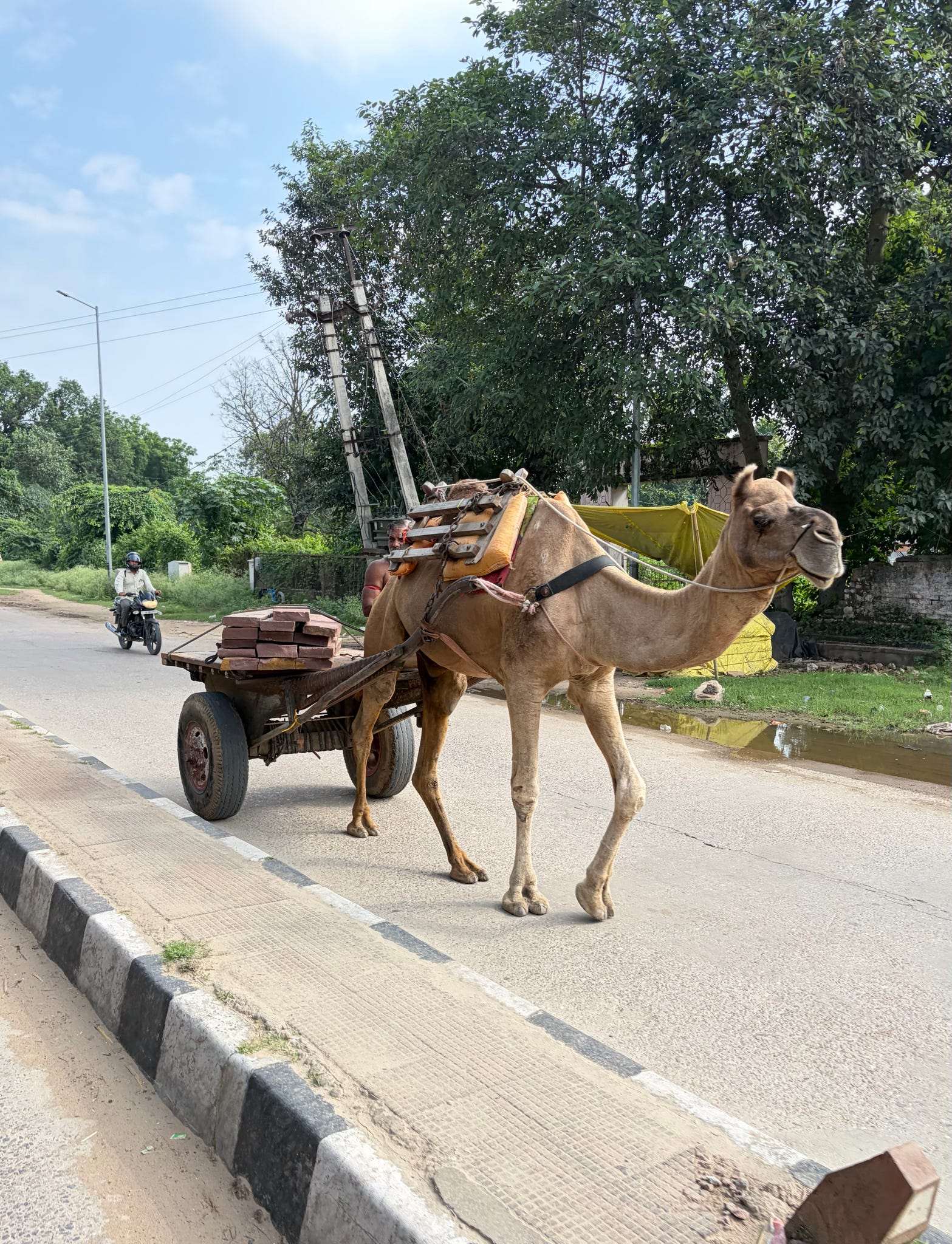
The tour began with a rickshaw ride that felt like a true baptism of fire. The streets were heaving with rickshaws, tuk tuks, mopeds, cars, lorries and even men hauling wagons on foot. Horns blared constantly, lanes blurred into one another, and yet somehow it worked. Drivers threaded through gaps so tiny I was convinced we would collide at any second, but there were no bumps, no visible road rage, just a kind of organised chaos and good-natured banter. It is about as far from rush hour in the UK as you can imagine.
Our two guides, from the Salaam Balak Trust, then led us on foot through the markets.
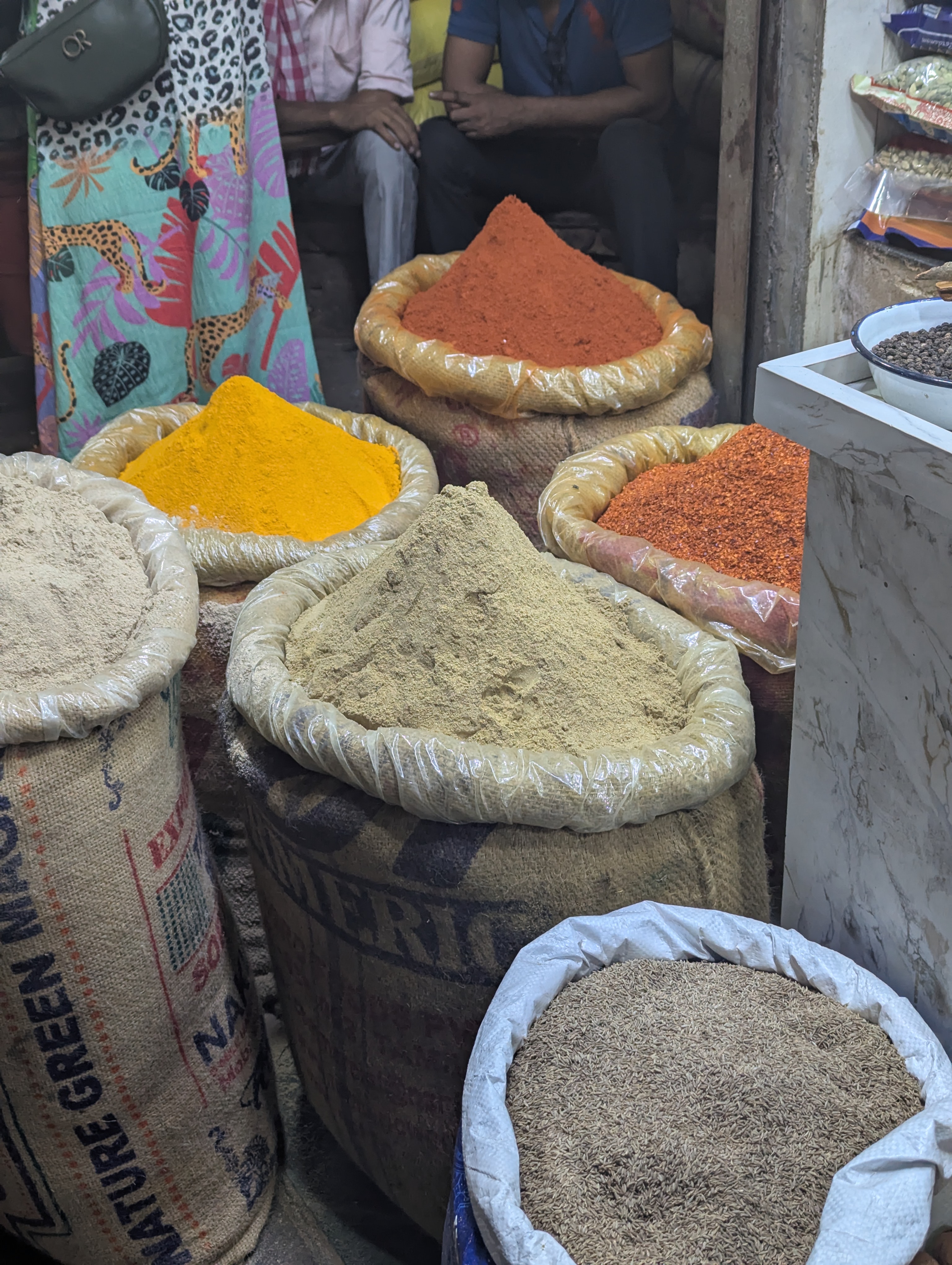
· Spice Market: The largest in the city, where we needed face masks to cope with the sheer intensity of the spices in the air. Sacks of chillies, coriander, turmeric and more towered above us while porters dashed back and forth.
· Havelis: Our guides pointed out several havelis, traditional mansions built around inner courtyards, very reminiscent of riads in Marrakech. Many now hide behind unassuming facades, so having a guide is invaluable.
· Wedding Market: With the wedding season about to begin, the streets were full of brides shopping for the big day. Windows and stalls were draped with magnificent bridal lehengas and elegant cream suits for the grooms.
Haveli Dharampura: A Hidden Gem in Old Delhi
We ended the tour at the beautifully restored Haveli Dharampura, a heritage property that has been painstakingly brought back to life. It now houses a restaurant, rooms and a rooftop terrace, and the attention to detail is exquisite, both here and in its sister haveli just a couple of hundred metres away. Rooms feel traditional and intimate, with either intricate wallpaper or simple whitewashed walls.
From the rooftop you can drink in views over Old Delhi: mosques, a Sikh temple and other places of worship, with only the Baptist church hidden from view due to its flat roof. Around you, life happens on every rooftop: children flying kites, men involved in pigeon racing, women gathered in conversation.
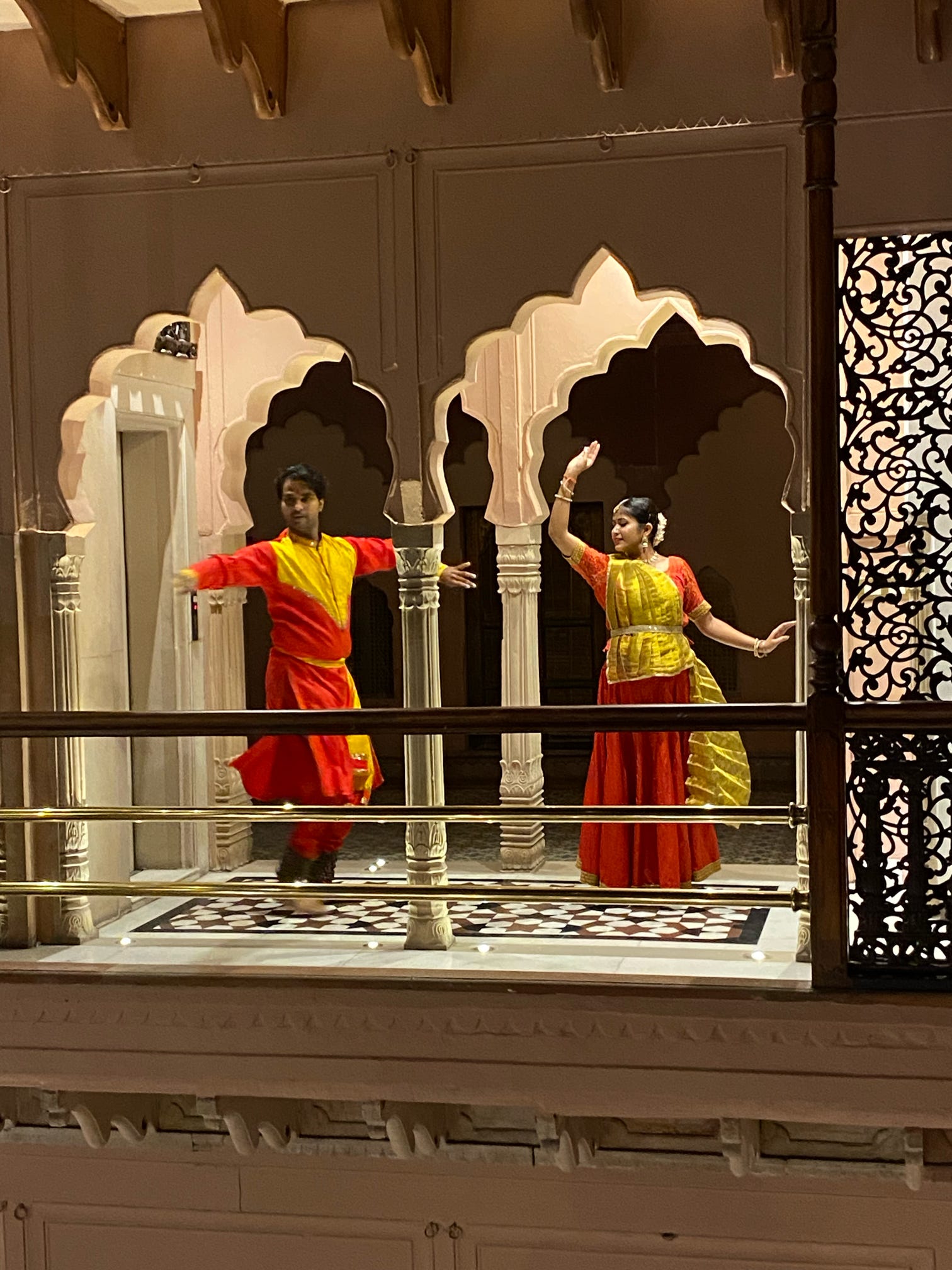
Dinner was a seven-course celebration of traditional street food, refined and beautifully presented, yet still retaining its authentic flavours. The evening finished with traditional dancing, the perfect way to end a first full day in India.
Ranthambore: Tigers, Leopards and a Royal Lodge
The Road to Ranthambore
Days 2 and 3 saw us leave Delhi for Ranthambore, a drive of around six hours along India’s relatively new motorway network. Construction started 17 years ago and continues today, linking all four corners of the country and cutting driving times by as much as half.
The journey offered a different, more rural side to India: wide farmland, villages, and a constant backdrop of cows, goats and birdlife. Service stations dotted the route, providing easy opportunities to stop and stretch our legs.
Maharba Lodge: A Colonial-Inspired Retreat
Our base here was the beautiful Maharba Lodge, a former colonial hunting lodge originally built as a country house for the local maharaja and rebuilt in 1933. There is a tangible sense of history: photographs and artefacts recall its glory days, including a royal visit by The Queen and Prince Philip in the 1960s. We were even shown the presidential suite where they stayed. Recently and lovingly renovated, the property oozes character and understated class, with subtle nods to its hunting-lodge past throughout.
After dinner, it was early to bed, with alarms set for 5 a.m. in preparation for our first game drive in Ranthambore National Park.
Ranthambore National Park: In Search of Tigers
Coffee and biscuits at dawn are something of a safari ritual, and by 5.45 a.m. we were heading into the park. Ranthambore was designated a sanctuary in 1972 specifically to protect tigers. To give a sense of perspective:
- In 1875 there were more than 400,000 tigers worldwide.
- By 1915 that number had dropped to around 50,000.
- In 2001 it was closer to 2,000 in India.
- Today, thanks to protection efforts, there are now roughly 5,500 tigers globally, with around 4,000 across 19 national parks in India.
Ranthambore is one of the best known, and many clients come here with one thing in mind: spotting a tiger in the wild.
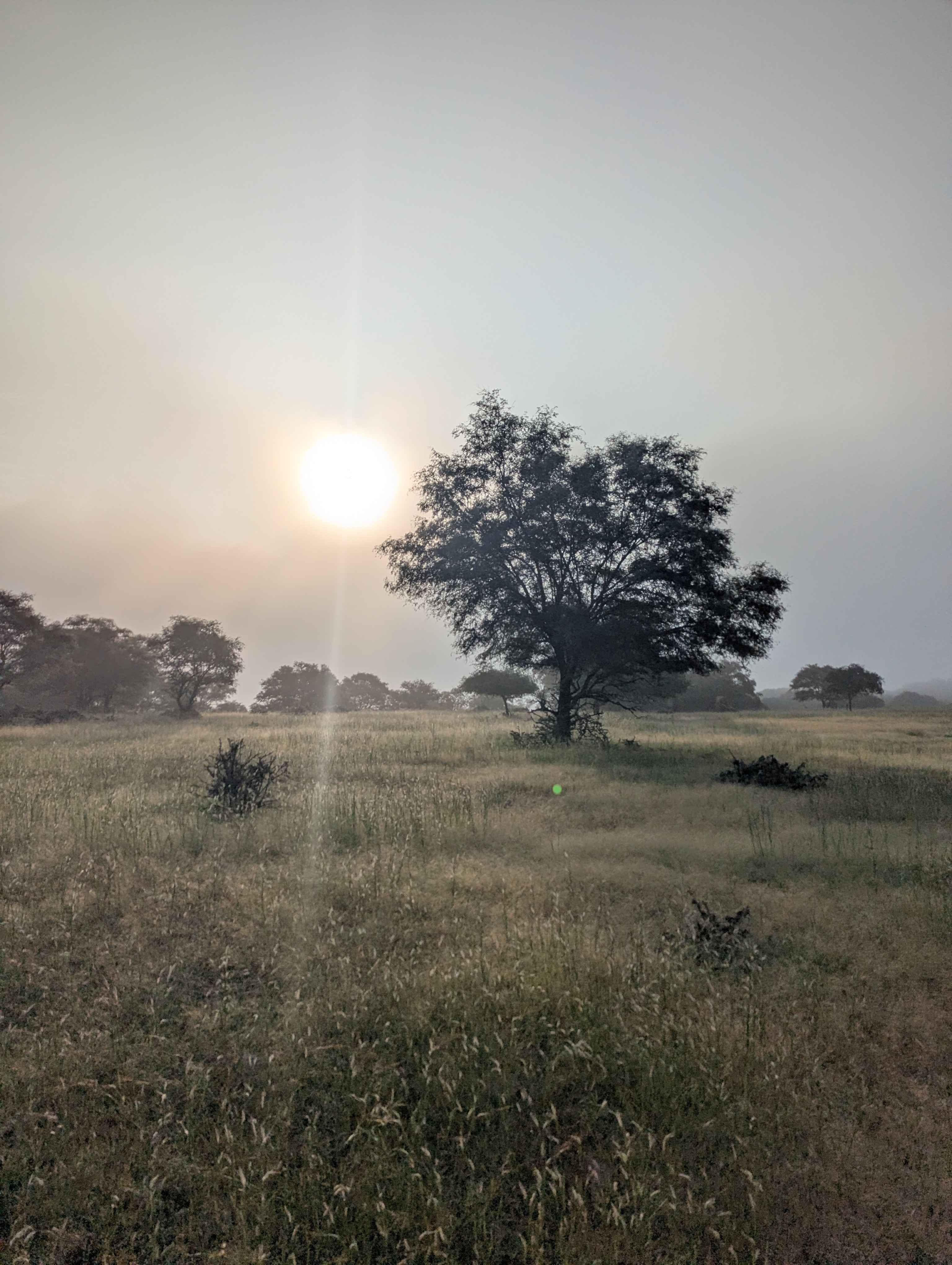
Nature, of course, offers no guarantees. We did not see a tiger on this drive, but we were rewarded with something arguably even more special: a leopard, stretched out by a stream. We were able to sit quietly for around ten minutes watching him sleep, roll on his back and lazily stretch before finally ambling off. All of this was viewed through binoculars at a respectful distance, but it was still an extraordinary encounter. Our guide confirmed how rare it is to have such a prolonged and peaceful sighting.
Jaipur: Forts, Palaces and the Pink City
Arrival & Storri Castle Konata
On Day 4 we left Ranthambore for Jaipur. I had heard from many clients that Jaipur was their favourite city on the Golden Triangle, so my expectations were high.
Our first stop on arrival was Storri Castle Konata, an atmospheric 19th-century castle built in 1872 and now a characterful hotel. It offers 52 rooms in total, 24 of which sit in the original heritage building. Each newer block houses a further 12 rooms. The original 24 rooms, as well as the spa, occupy beautifully converted former stables. We were served a delicious lunch presented in traditional tiffin boxes, a lovely touch that felt very in keeping with the setting.
Amber Fort
Next came Amber Fort, perched high above a lake with sweeping views across the hills and the Great Wall-like fortifications that snake along the ridges. Access is through smaller vehicles that take you up to the entrance, sparing you a steep climb in the heat, although it can be walked for those who prefer.
Dating back to the 16th century, the fort is vast, with courtyards, halls, pavilions and royal apartments. Our guide really brought it to life with stories of the maharaja, his twelve wives and the elaborate protocol of court life. It is a place that rewards time and curiosity: everywhere you look there are delicate carvings, intricate mirror work and views that stretch for miles.
Samode Haveli & A Magical Evening
That evening we checked into Samode Haveli, a lovingly restored historic mansion tucked away within the city. Once inside, the noise of Jaipur seems to melt away, replaced by courtyards, fountains and peaceful corners where you quickly forget you are in the middle of a bustling metropolis.
We were each gifted a sari to wear for the evening and, with all fifteen of us dressed in traditional attire, there was a real sense of occasion. Pre-dinner drinks came with an unexpected treat: the head of guest services shared some of the hotel’s history, clearly and deeply proud of its story, before leading us onto a balcony. Below us, the courtyard was illuminated by around 1,000 tea lights. It was breathtaking, emotional and one of those moments that will stay with me for a very long time.
Jaipur Continued: Observatories, Milk Markets and Women-Led Rickshaws
Day 5 was devoted to exploring more of Jaipur’s signature sights, but we began with something far more everyday and authentic: the local milk market.
Milk Market & Everyday Life
Here, milk is still tested in a very traditional way, by hand. Men dip their hands into the churns to check the consistency and quality before agreeing a price, currently around 75 rupees per litre. Milkmen then load smaller churns onto hooks on their motorbikes and head out to deliver across the city. It is a simple scene, but one that gives a real glimpse into daily life.
The “Pink Palace” & Jantar Mantar
We paused at the famous pink palace, which sits on a busy main street. Despite its name, this is essentially a decorative façade rather than a functioning palace, created to allow royal ladies to watch parades below without being seen. It is incredibly photogenic and one of Jaipur’s most recognisable landmarks.
Nearby is Jantar Mantar, a must for anyone with even a passing interest in astronomy. Built in 1727 by Jai Singh II, who was himself an astrologer, this open-air observatory is filled with enormous and strangely beautiful instruments used to track the movement of celestial bodies, measure time and chart the skies. The sophistication of the science, given when it was constructed, is astonishing.
City Palace & The Pink City Rickshaw Co.
We then made our way to the City Palace, an elegant complex of courtyards, corridors, gateways and museum spaces. It remains the residence of Jaipur’s royal family and is currently home to the 28-year-old maharaja, reputedly one of India’s most eligible bachelors.
Later, we experienced the Pink City Rickshaw Co., a wonderful initiative started in 2015. One hundred women from local villages were trained to become rickshaw drivers, giving them an income, independence and a visible role in the tourism economy. It is a brilliant example of sustainable tourism and women’s empowerment in action.
The afternoon was left for shopping and bargaining in the bazaars: clothes, bags, jewellery and all the colour and clamour you might expect from Jaipur’s markets.
Agra: Taj Mahal Dreams & Rural Charms
Ekaa Lodge & A Farm-to-Table Feast
Days 6 and 7 took us from Jaipur to Agra. We arrived at Ekaa Lodge in time for lunch and were treated to a Pattal Ki Daawat, a five-course vegetarian feast served in a home-style way on biodegradable leaf plates. Many of the ingredients came directly from the surrounding fields.
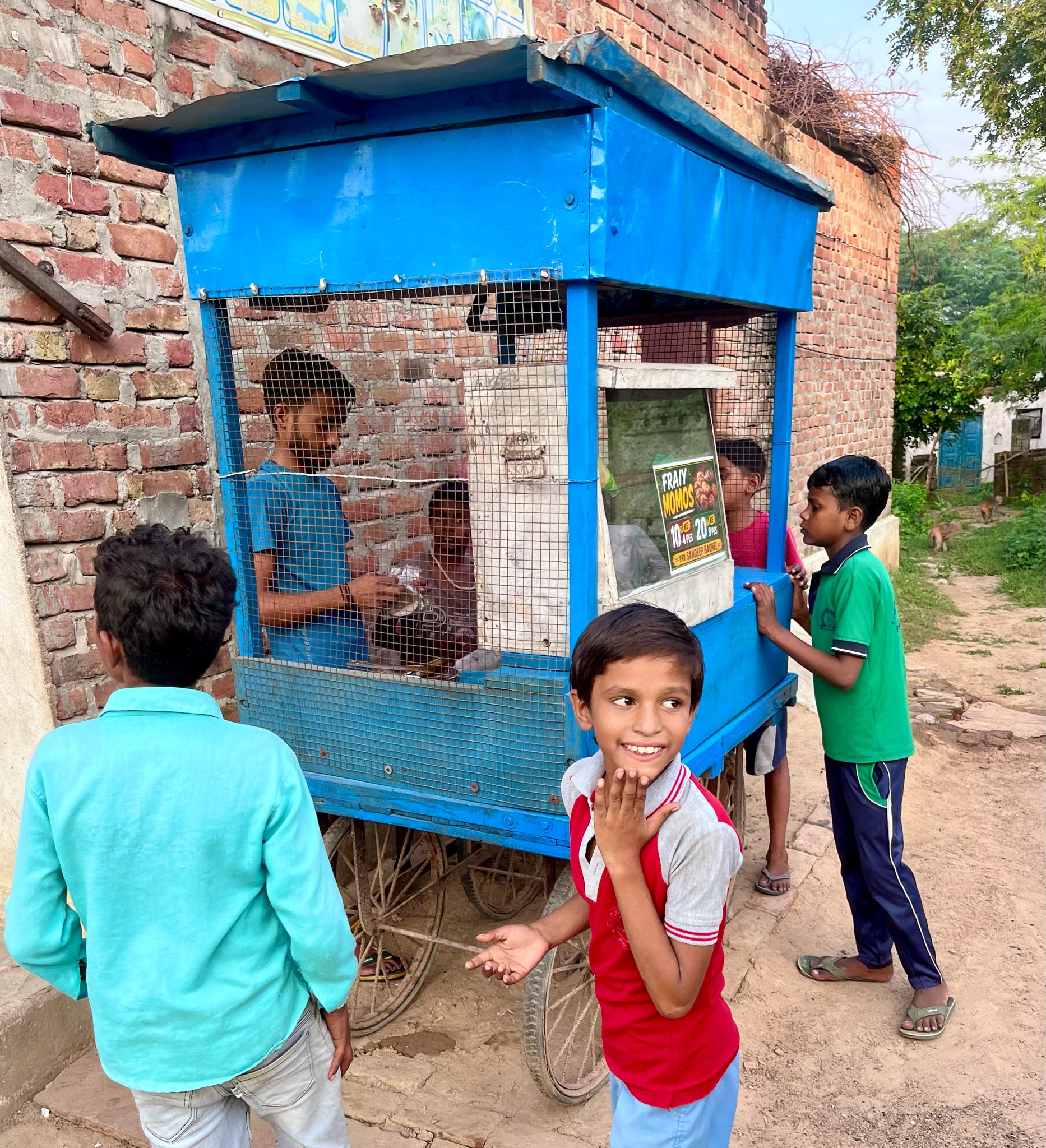
Afterwards, we took a gentle walk through the farmlands themselves, watching children play freely and families going about their day. It was among these fields that we caught our first glimpse of the Taj Mahal, shimmering in the distance: a quietly magical moment.
We also had the chance to tour The Oberoi Amarvilas, one of the most prestigious hotels in Agra. Every room has a view of the Taj, some with private balconies, so you can enjoy the monument from your own terrace, without needing to book the presidential suite at around £20,000 per night.
Taj Mahal & Agra Fort
Day 7 was the day for a true bucket-list experience: visiting the Taj Mahal itself.
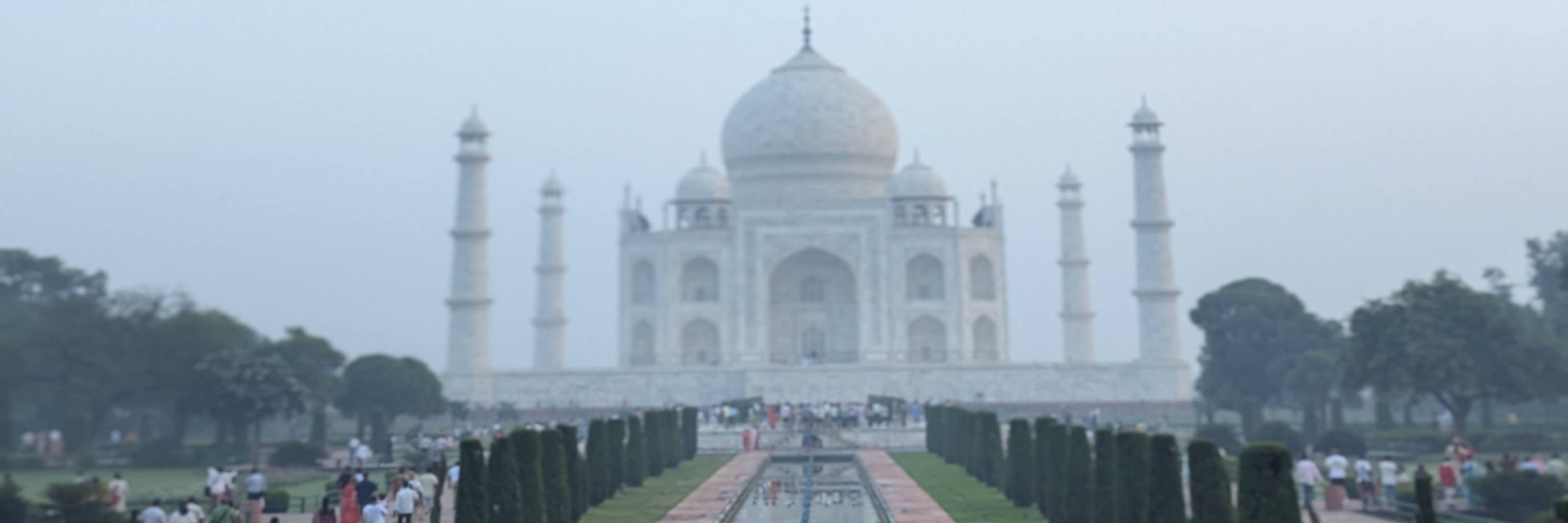
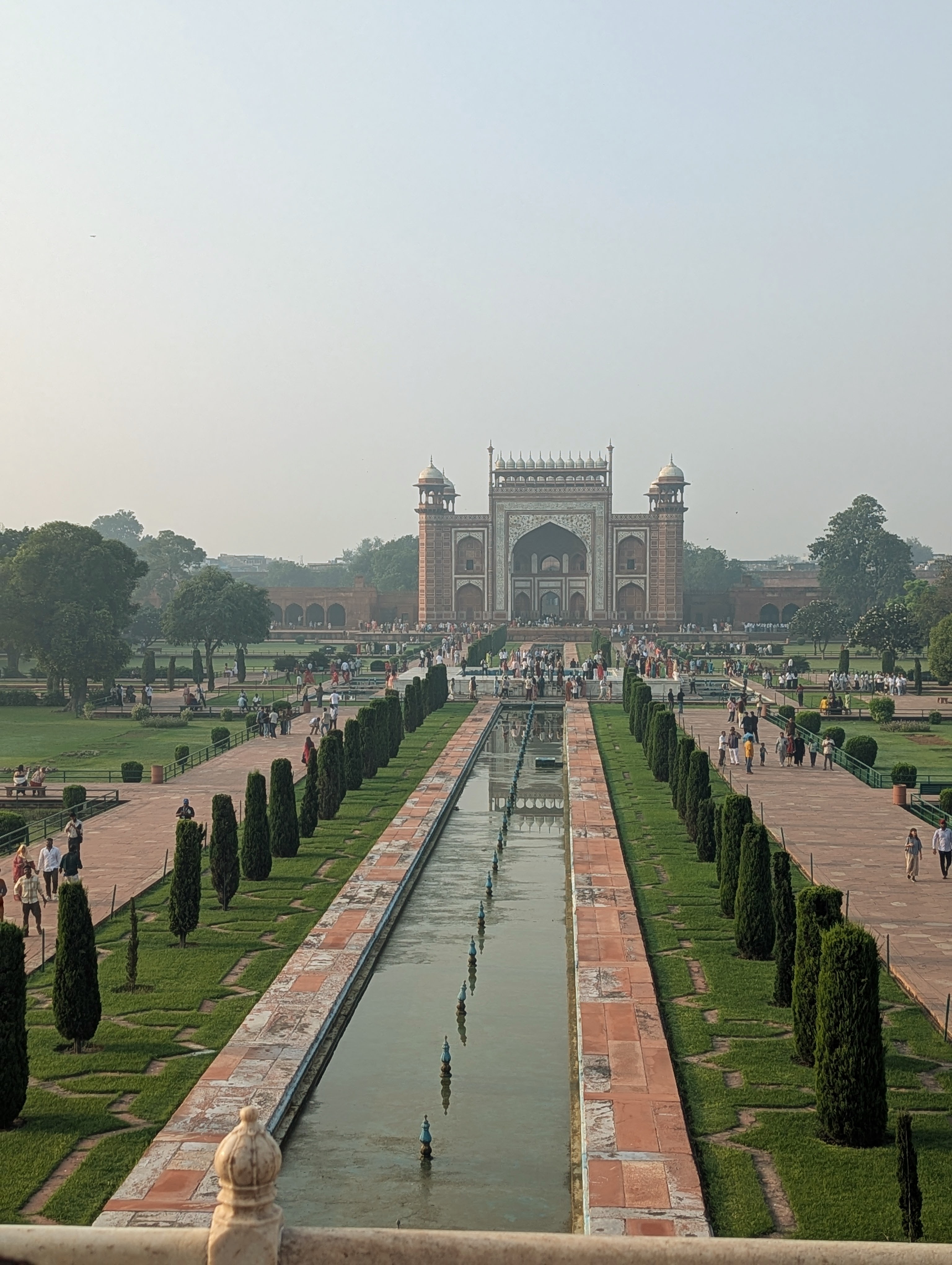
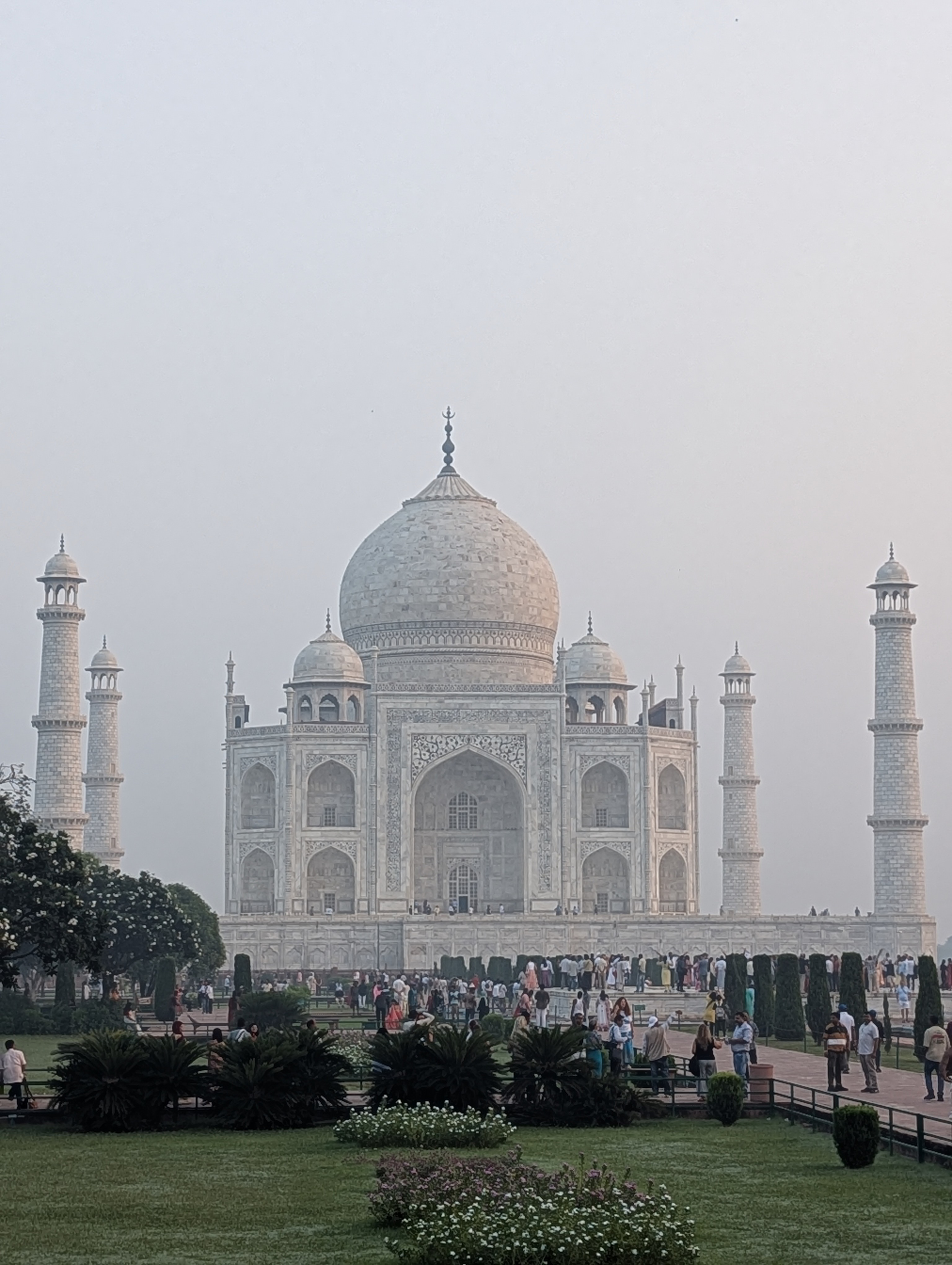
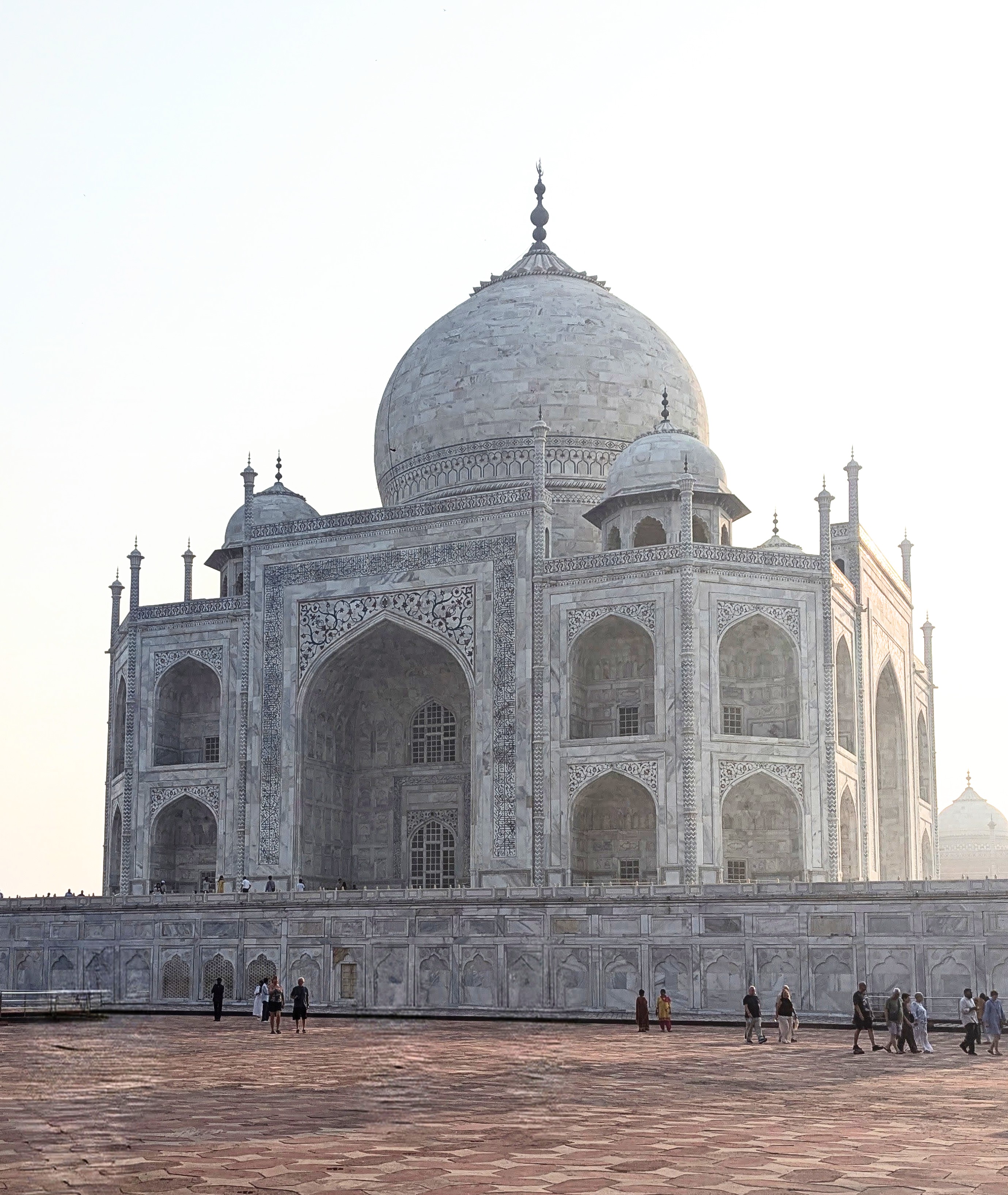
Construction began in 1631, taking 22 years to complete, with 17 of those years devoted to the mausoleum. It was commissioned by the fifth Mughal emperor for his beloved wife of 19 years and is a masterclass in symmetry and craftsmanship. The marble, the inlay work, the reflections in the water channels: it is quite simply one of those sights that no amount of description can truly do justice. It is something you need to stand before in person to appreciate in full.
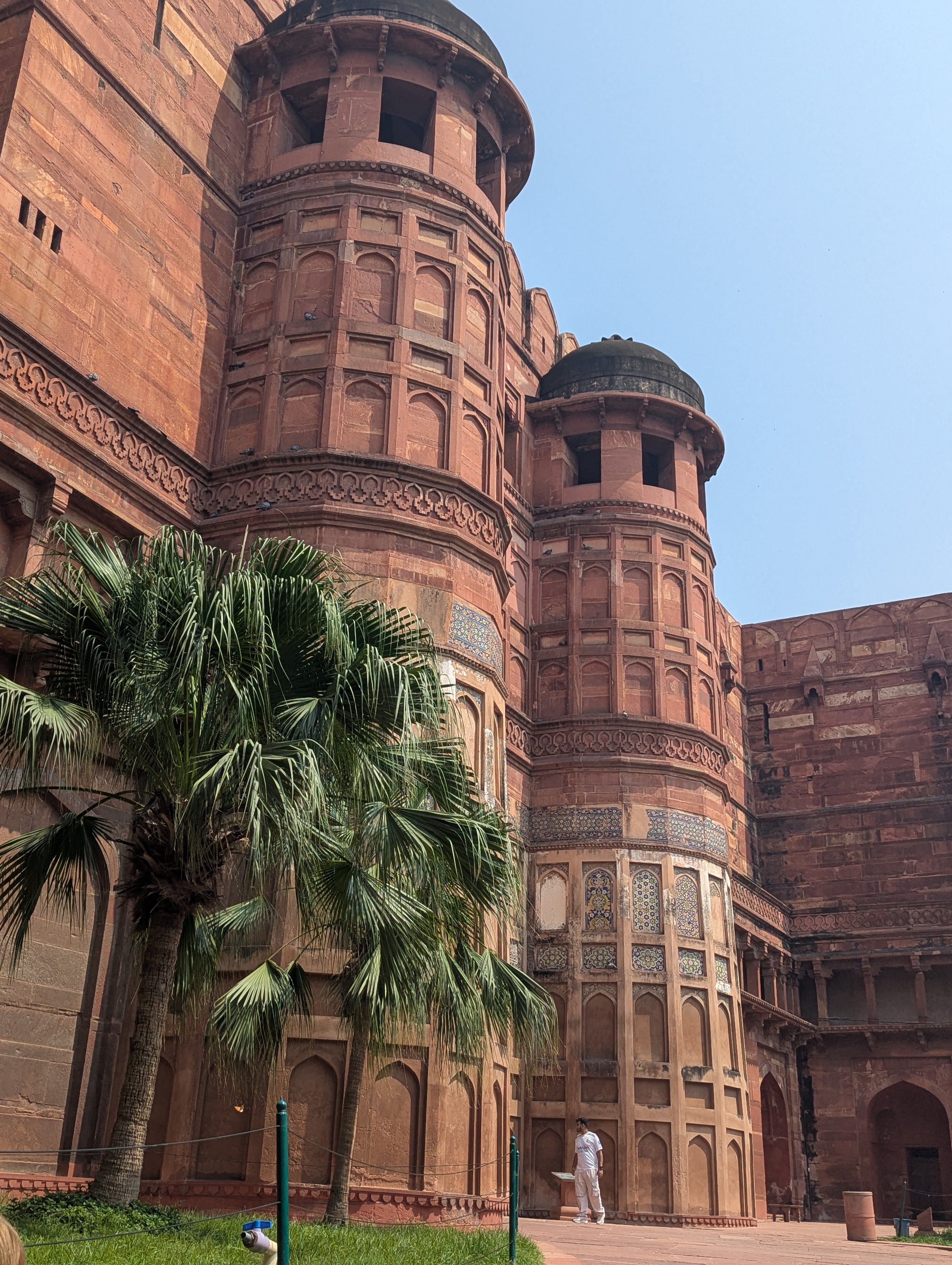
Later we visited Agra Fort, completed in 1573 and overlooking the Yamuna River. Initially built as a military stronghold to consolidate Mughal power, it later became a palace and, tragically, a prison. It is here that Emperor Shah Jahan, the man behind the Taj Mahal, was imprisoned by his own son and spent his final years gazing at his creation from afar.
Chambal Safari Lodge & Rural Heritage
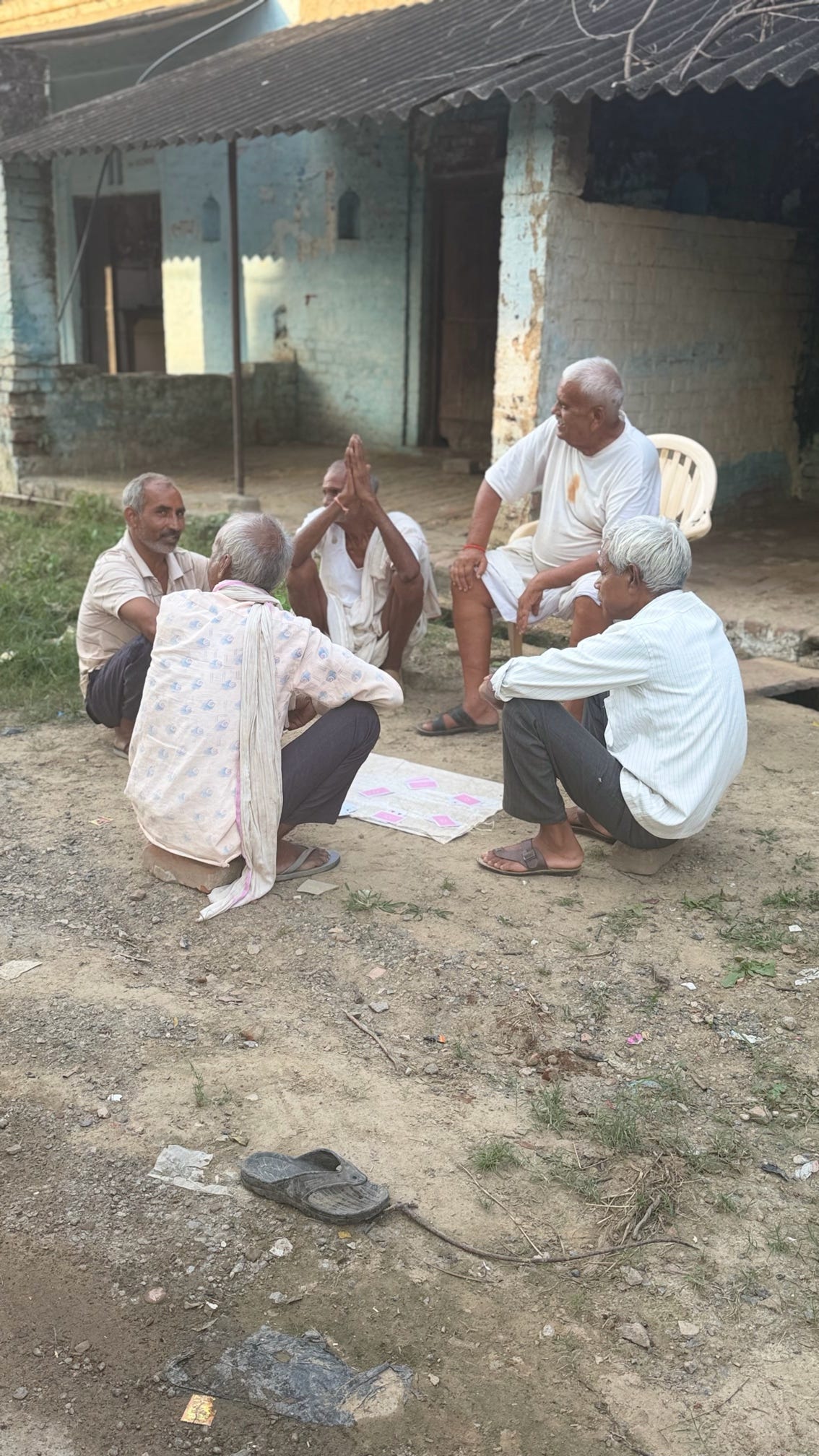
From Agra we continued to Chambal Safari Lodge for a homestay-style experience, akin to very comfortable glamping. A homemade buffet lunch awaited us, then in the evening we enjoyed a heritage walk through Holipura Village. Once a thriving settlement of around 2,000 people, full of grand havelis, it now has a population of roughly 500, living amidst many derelict but still beautiful old mansions.
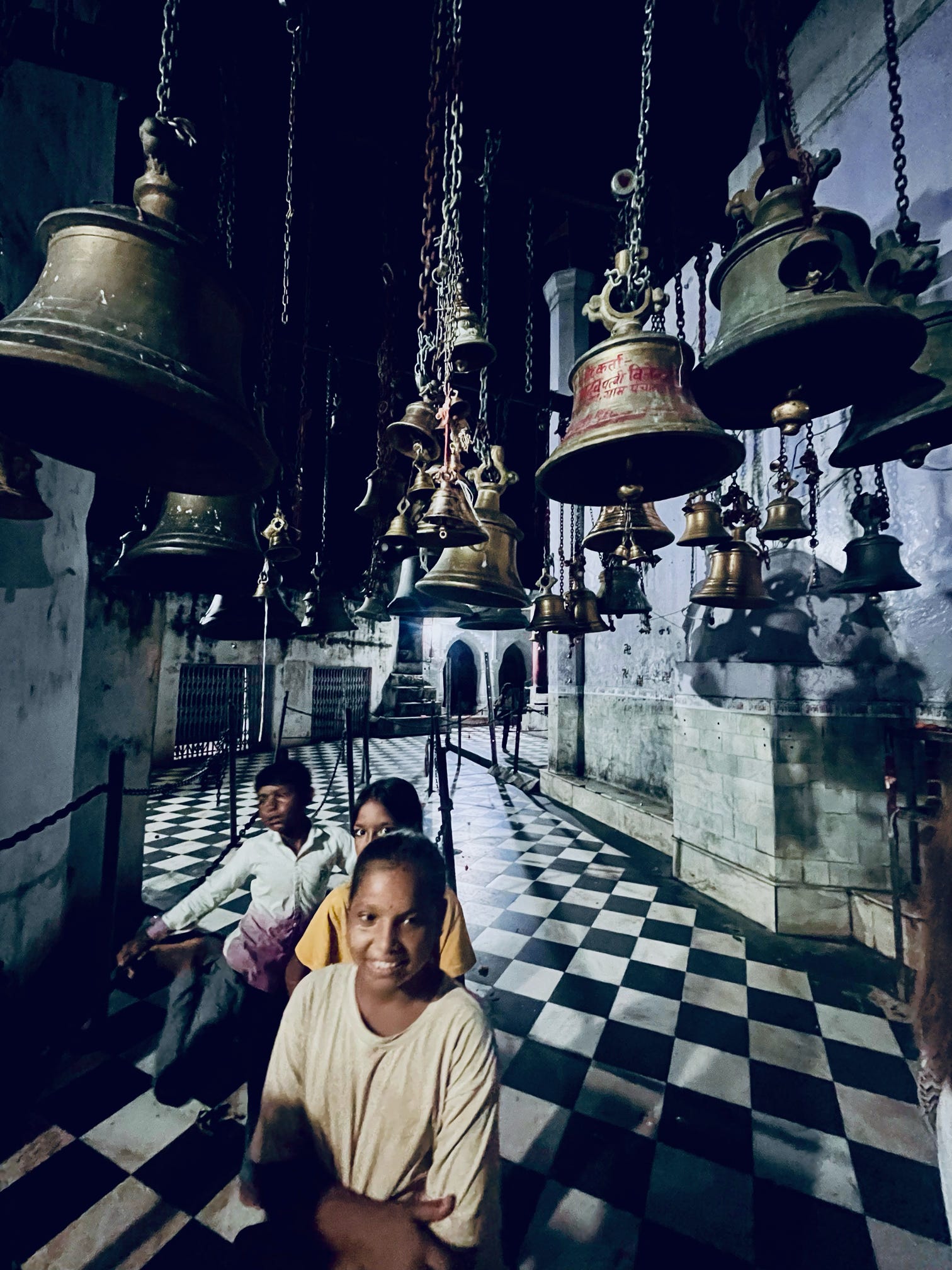
We ended the day at Bateshwar Temples, a cluster of riverside temples where we watched the sun set from the rooftop of an old haveli. As dusk fell, we were invited to witness an evening ceremony at one of the temples, a serene and spiritually rich moment.
Delhi Finale: Trains, Temples and a Farewell to India
Returning by Train
Days 8 and 9 brought us full circle back to Delhi. This time we travelled by train, which cuts the journey from around four hours by road to roughly two. I found it an excellent way to travel: reserved seats, large reclining chairs and the ever-changing tapestry of Indian countryside slipping by outside.
On arrival we checked into The Imperial, an elegant heritage hotel, and later visited the Oberoi in Delhi, another outstanding property that will appeal to clients who enjoy impeccable service and contemporary luxury.
Gurudwara Bangla Sahib & Langar
Our final day began at Gurudwara Bangla Sahib, a major Sikh temple in the city. We moved quietly through the complex, sitting for a while inside to observe the rhythms of worship and then spending time by the sacred pool. From there we visited the langar, the community kitchen that provides free meals 24 hours a day to anyone who comes. Watching volunteers cook, serve and wash up on such a vast scale was deeply moving and a powerful example of community service in action.
India Gate & Gandhi’s Final Home
We continued to India Gate, the monumental arch that honours soldiers of the British Indian Army who lost their lives in war, before heading to the Gandhi museum. Housed in the residence where Mahatma Gandhi spent his final 144 days, it was here that he was assassinated on his way to evening prayers in the garden. Walking through those rooms and along the final footsteps marked in the grounds brings the history very close.
That evening, we gathered for a farewell dinner, a chance to reflect on all we had seen and experienced: the chaos and colour of Old Delhi, the quiet dignity of the Taj, the thrill of wildlife in Ranthambore, the grandeur of Jaipur’s forts and palaces, and the warmth and resilience of the people we met along the way.
Who This Trip Is Perfect For
This Golden Triangle and Ranthambore journey would be ideal for clients who:
· Are keen on a first-time visit to India with a route that balances iconic sights with authentic experiences.
- Enjoy a mix of heritage hotels, characterful havelis and comfortable lodges, rather than standard chain properties throughout.
- Are interested in wildlife, but understand that sightings cannot be guaranteed.
- Appreciate culture, history and food, from rooftop kite-flying and observatories to spice markets and street food tasting menus.