The Luxury of Space: What Really Makes a Hotel Feel Premium?
How space, flow and clever design quietly outperformed five‑star glamour
Two weeks ago I came back from a family holiday at Grecotel LUXME Dama Dama in Rhodes, a four‑star, all‑inclusive resort that was completely full in peak August. On paper it sounded like a recipe for crowds and queues. In reality, it felt calm, spacious and surprisingly easy. That contrast made me look much more closely at what we are really paying for when we choose a “premium” hotel, and why some four‑star resorts can feel more luxurious than places with an extra star.
I was staying at a fully booked four‑star hotel in Rhodes in the middle of August, and that experience made me completely rethink what actually makes a hotel feel luxurious.
Where was everyone?
I found myself asking that question more than once during our stay.
We were at Grecotel LUXME Dama Dama in Rhodes. It was August, we were in the middle of the school holidays and the hotel was fully booked. There were hundreds of people there.
Yet my boys were happily throwing a ball around in the swimming pool without getting in anyone’s way. We rarely queued for a drink, we did not experience that nightly surge of everyone descending on dinner at once and, despite being surrounded by other families, it simply did not feel as though we were holidaying in a full hotel.
That was not to say the realities of August disappeared completely. Sunbeds were naturally in high demand and, although the hotel actively tried to manage the reserving of unused beds, there was only so much any hotel could do about guest behaviour. But that almost made me notice the difference more: the hotel was full, yet the resort itself did not feel overcrowded.
And it got me thinking about what we are actually paying for when we choose a premium hotel.
Luxury is not always something you can photograph
When we think of a luxury hotel, we tend to think about the things that make an immediate impression: beautiful bedrooms, marble bathrooms, dramatic lobbies, statement furniture and the latest interiors.
But there is another kind of luxury that is much harder to capture in a brochure.
Space.
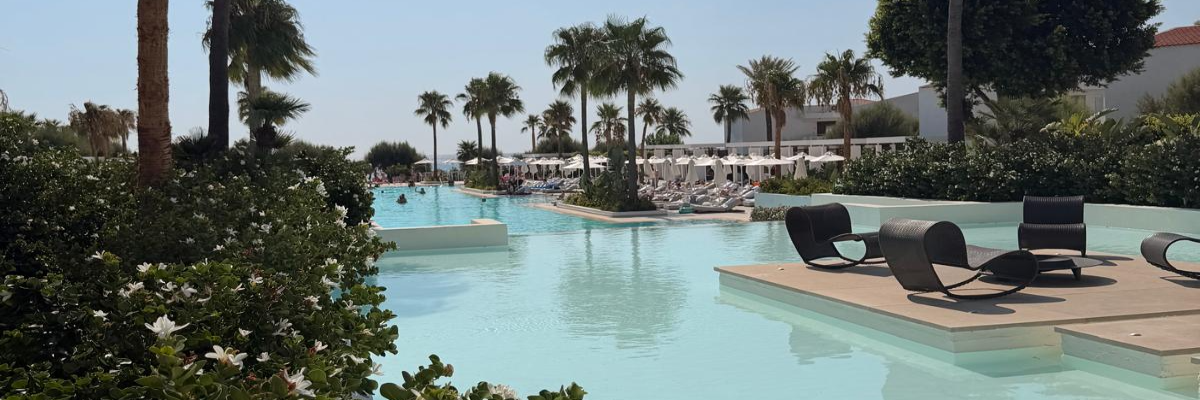
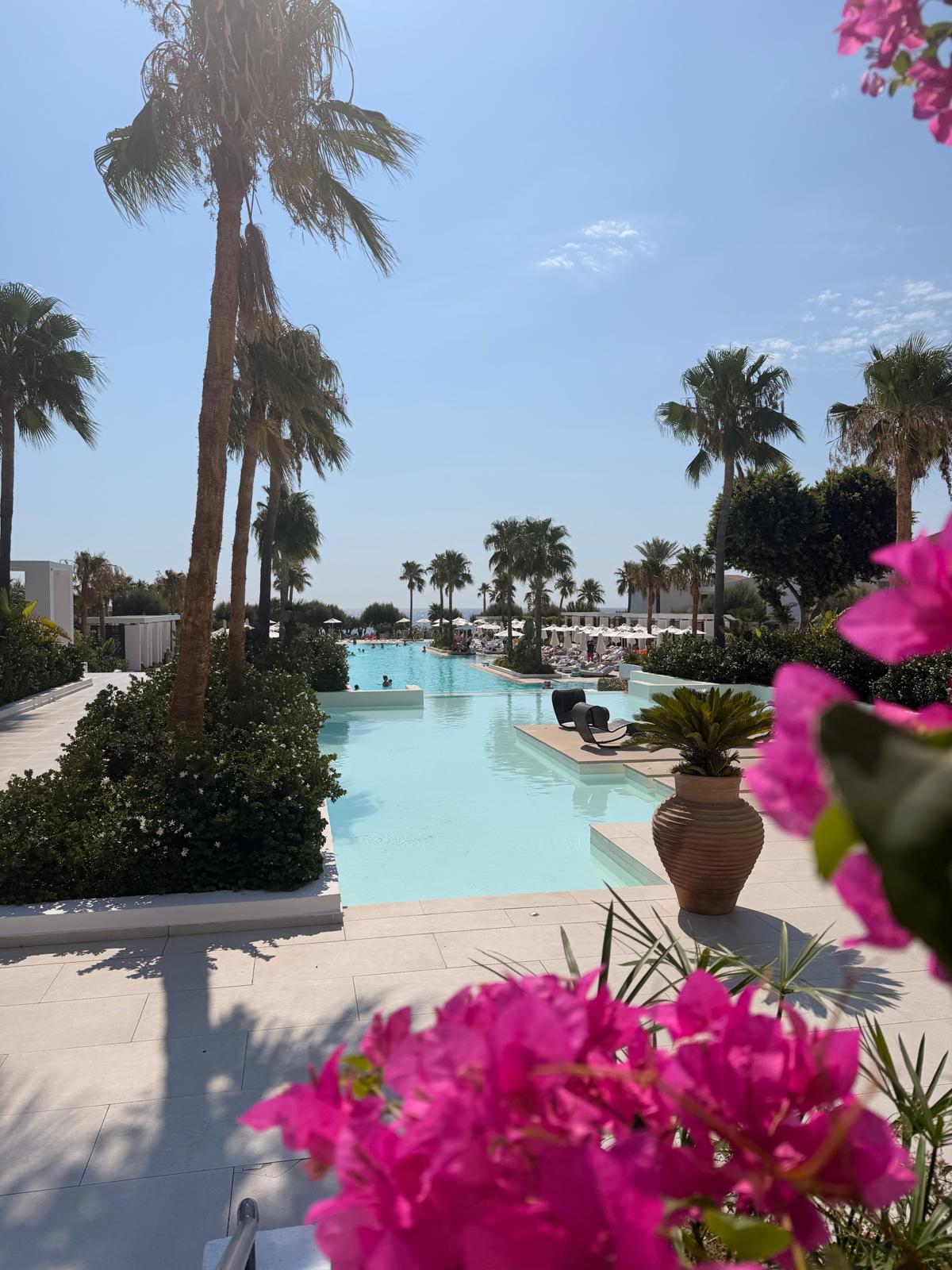
Dama Dama has just over 300 accommodation units across approximately 25,000 square metres of resort: roughly 80 square metres of resort space for every room.
Of course, nobody handed us our own private 80‑square‑metre patch of Rhodes at check‑in. But when we were actually staying there, we could feel what those numbers meant.
There were gardens between accommodation areas. There was an enormous swimming pool, generous communal spaces and direct access to a proper beach. Guests naturally spread out rather than being funnelled towards one central leisure area.
And there was something quite significant about that commercially too.
Land without bedrooms on it costs money.
A resort could potentially put more accommodation on that land and sell more rooms every night. Retaining gardens, open spaces and generous facilities for fewer guests is part of what you are paying for.
Sometimes the difference between a standard and premium resort is not that the expensive one has added more. It is that it has resisted squeezing more in.
But space alone is not enough. What really struck me at Dama Dama was how well the hotel used it.
The accommodation, gardens, pool and beach all flowed into one another. We could wander straight from the resort on to the sand: no road, no shuttle, no effort. Suddenly hundreds of guests had another huge area in which to disperse.
Then people spread out again when it was time to eat.
And I think this is where Grecotel’s LUXME concept really started to make sense.
It was not just what was included: it was how it was delivered
Luxury all‑inclusive can sometimes be interpreted simply as “more”: more food, more drinks, more expensive brands, more restaurants.
At Dama Dama, I realised that the timing and variety mattered just as much.
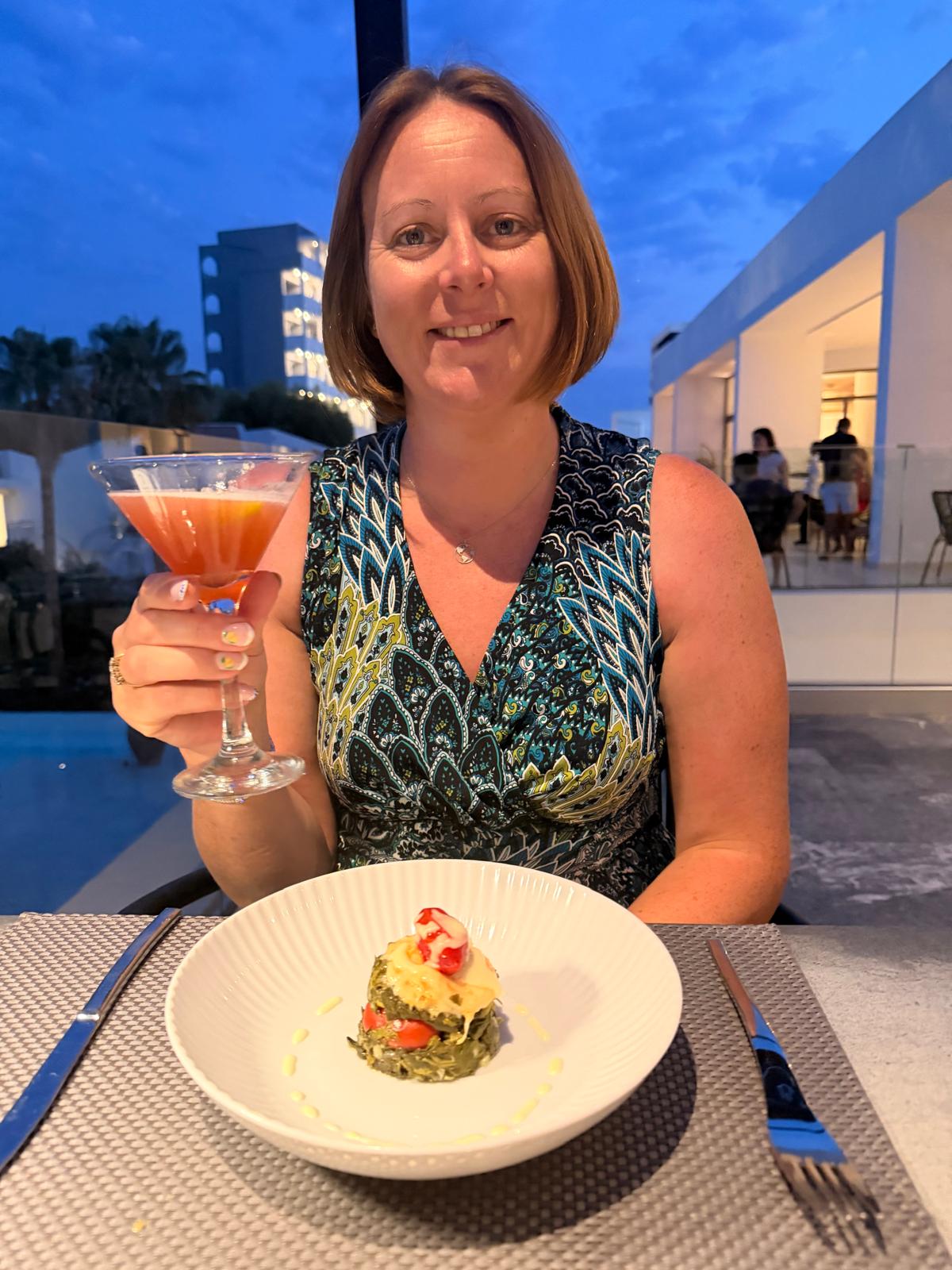
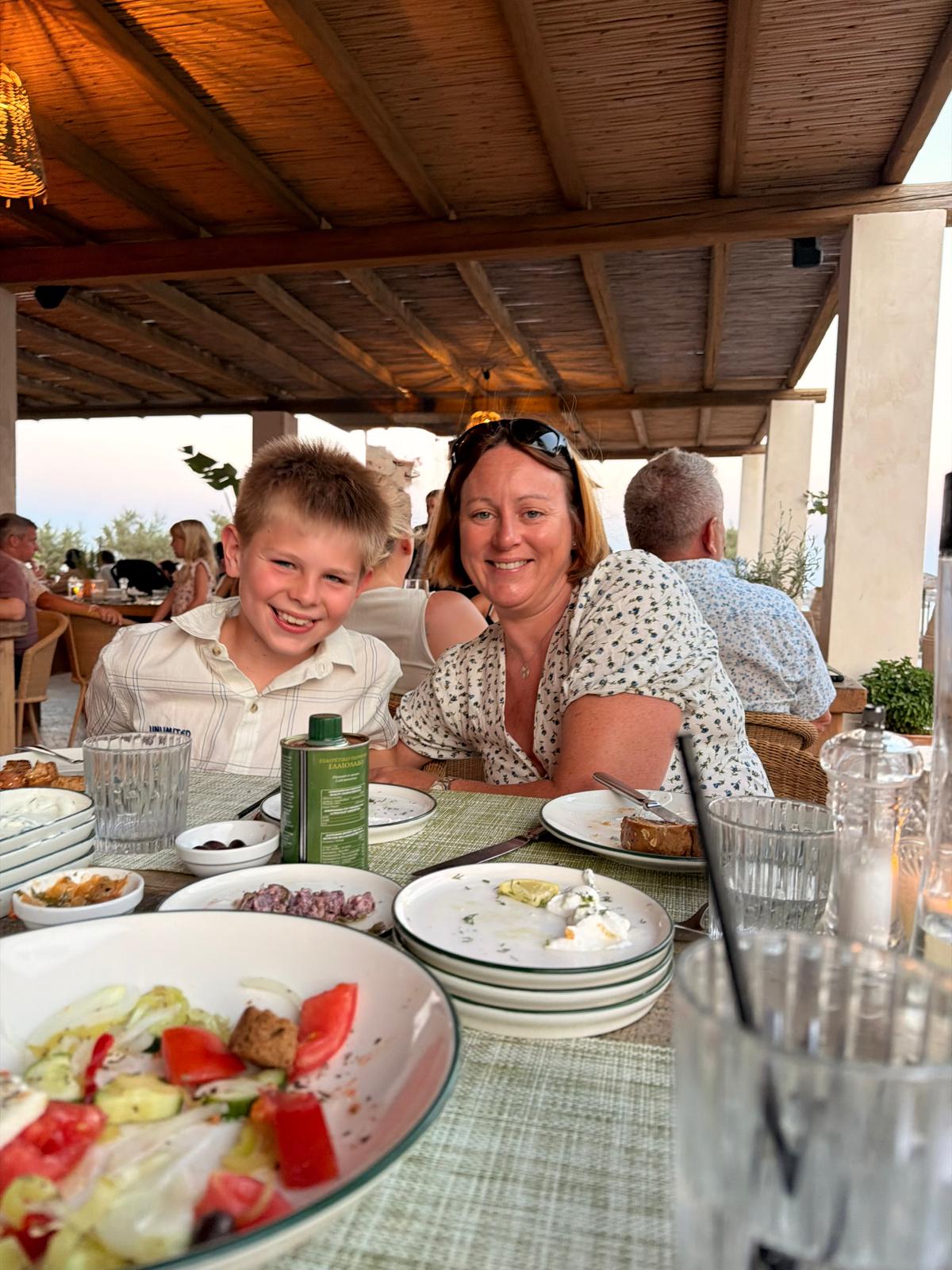
Food was available throughout the day and there were multiple places to eat, including à la carte restaurants that people genuinely wanted to use.
That last bit was important.
There is little benefit in a resort advertising several restaurants if everyone still prefers the main buffet. At Dama Dama, the alternatives were part of the experience.
So guests naturally developed different routines.
One family was having lunch while another was still at the beach. Someone had an à la carte dinner booked while another family was eating later. Others were having something casual or stopping for a drink.
We did not get that sense of the entire hotel collectively checking the time and thinking: “Right. Six o’clock. Everybody to the buffet.”
It felt like choice and indulgence to us as guests. But underneath it was something rather clever: good hospitality was also good crowd management.
And perhaps that was what I appreciated most about Grecotel. A lot of the things they got right were not particularly glamorous. They were practical.
The things you notice on day five, not day one
Our room at Dama Dama was not the newest hotel room I have ever stayed in.
This is an established resort and some of the accommodation is more traditional, with refurbishment continuing across the property. I have stayed in newer five‑star hotels where the bedroom itself probably delivered a bigger “wow” when I first opened the door.
But give me a few days in a hotel and my priorities change.
Can I actually unpack? Is there enough wardrobe space? Where do four suitcases go? Can I make a coffee without leaving the room? Do I need to remember to buy shampoo? If I need something, do I have to walk to reception and queue?
At Dama Dama, we had proper storage. There was a huge luggage bench that actually fitted our cases. We had toiletries, a coffee machine and a complimentary minibar stocked with soft drinks. If we needed something, there was a WhatsApp concierge.
None of that was particularly Instagrammable.
Nobody has ever returned from Greece excitedly showing their friends photographs of an excellent suitcase bench.
But spend seven nights stepping over four open suitcases because your beautifully designed room has nowhere sensible to put them and suddenly you appreciate it.
I would rather have somewhere to put four suitcases than a statement chair nobody sits on.
And I think that sums up something Grecotel seems to understand particularly well.
Luxury is not only about how a hotel looks. It is about how easily you can live in it.
Grecotel is a long‑established, family‑owned Greek hotel group and, while its properties continue to evolve and undergo refurbishment, there was something about Dama Dama that felt as though it had benefited from decades of actually operating resorts.
Someone had thought about where people put their things. Someone had thought about how hundreds of guests move between the pool and beach. Someone had thought about what happens when everybody gets hungry. Someone had thought about how to spread people around a resort rather than simply building facilities and hoping they cope.
And when those decisions worked, you did not necessarily notice them.
You just noticed that your holiday felt easy.

Which brings me back to those stars…
Dama Dama is a four‑star hotel, and I find that fascinating.
I have stayed in some fantastic five‑star hotels and resorts that I absolutely loved and would return to in a heartbeat. Different hotels deliver luxury in different ways, and the right choice will always depend on the person travelling.
But that week reminded me why I would never judge a hotel simply by the number of stars beside its name.
A star rating can tell you whether certain facilities and services exist. It cannot really tell you how a hotel feels when it is full.
It does not tell you whether there will be room to play in the pool in August. It does not tell you whether everyone will descend on the same restaurant at the same time. It does not tell you whether your family can actually unpack. It does not tell you whether getting from your sunbed to the beach takes thirty seconds or fifteen minutes.
And it does not tell you whether a hotel has been designed, and operated, in a way that makes hundreds of other guests almost disappear into the background of your holiday.
Perhaps that is what I learned that week.
Real resort luxury is not always about adding more.
Sometimes it is fewer rooms on the land. More space between them. More places to eat and more flexibility about when you eat. A beach you can simply wander on to. A room designed for people to actually live in. Help when you need it.
And enough space, choice and thought that even when the hotel is completely full, your holiday does not feel as though it is.
That is also why choosing the right hotel is about so much more than ticking “five‑star”, “all‑inclusive” and “beachfront” on a search.
Those labels are useful. But understanding the brand, the resort, what is genuinely included and, most importantly, how it all works when the hotel is busy tells you far more about the holiday you are actually going to have.
Dama Dama has four stars beside its name.
After a week there in peak August, I think that is rather telling.
Just perhaps not in the way you would expect.