Samburu in Two Nights: A Soul‑Stirring Stay at Sasaab
Sasaab
Flying low over the ochre plains of northern Kenya, our Tropic Air private charter skimmed past rocky outcrops and winding riverbeds, before descending into the vast wilderness of Samburu. We had left the lush, green landscapes of Solio Lodge in Laikipia behind, swapping rolling hills and rhino-filled plains for the raw, rugged beauty of Samburu and our home for two nights: Sasaab.
Samburu in Two Nights: A Soul‑Stirring Stay at Sasaab
Flying low over the ochre plains of northern Kenya, our Tropic Air private charter skimmed past rocky outcrops and winding riverbeds, before descending into the vast wilderness of Samburu. We had left the lush, green landscapes of Solio Lodge in Laikipia behind, swapping rolling hills and rhino-filled plains for the raw, rugged beauty of Samburu and our home for two nights: Sasaab.
From the moment we landed, there was a palpable change in atmosphere. Samburu feels ancient and untamed, a land of wide horizons, dust devils and dramatic skies. The drive to Sasaab was a safari in itself, with our guide immediately pointing out the region’s unique species, known as the “Samburu Special Five”: reticulated giraffe, Grevy’s zebra, Somali ostrich, gerenuk and beisa oryx. It was a tantalising introduction to what was to come.
Sanctuary on the River: Our Suite at Sasaab
Arriving at Sasaab, we were welcomed with cool drinks, warm smiles and that wonderful sense of stepping into a small, luxurious sanctuary in the middle of nowhere. Our suite was a vast, airy tented room under a high thatched roof, beautifully styled with Moroccan and Swahili influences. Soft fabrics, carved wooden furniture and earthy tones blended seamlessly with the surrounding landscape.
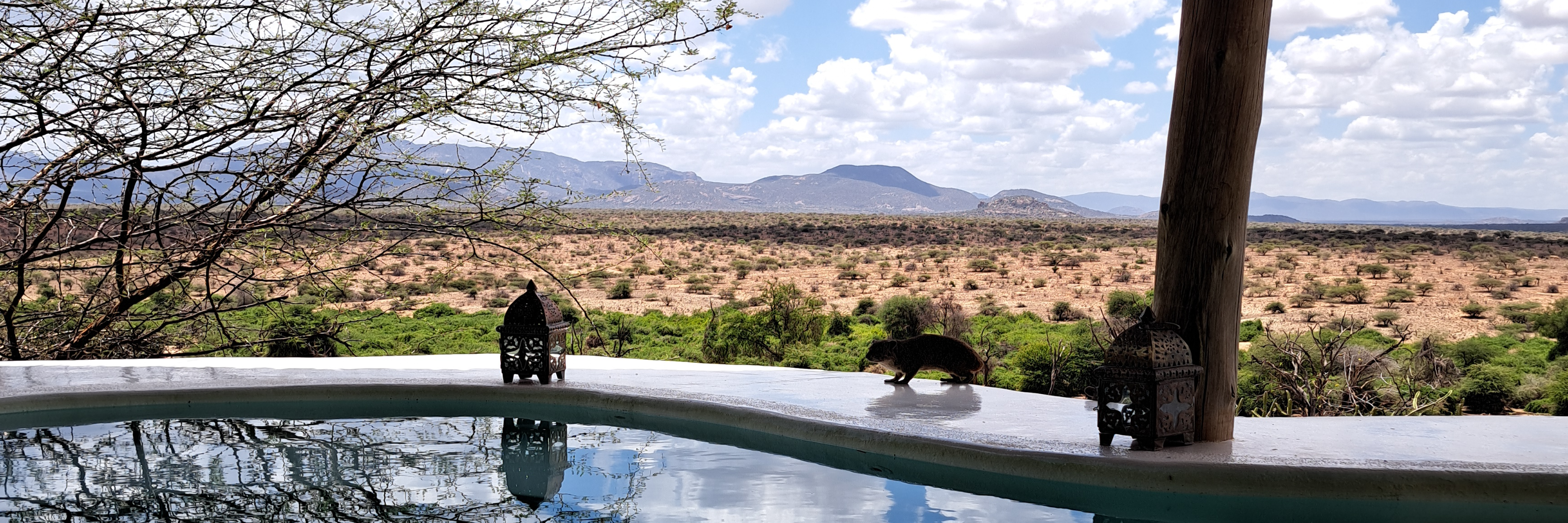
But the true magic was a private, covered plunge pool on the veranda, looking out over the broad sandy river below. The pool was the perfect place to escape the intense heat and as I bobbed around, I watched Elephants wander down the banks at their own unhurried pace, crossing at leisure through the shallows, stopping to drink and spray themselves. To sit in your own pool and watch a herd of elephants silently appear on the opposite bank is one of those experiences that lodges in your memory forever.
Afternoon Game Drive & Sundowners on the Rocks
That first afternoon, we headed out on a game drive, bumping gently along dusty tracks as the sun dropped lower in the sky. It did not take long before we started seeing Samburu’s icons. Reticulated giraffe, with their intricate, net‑like patterns, moved gracefully through the thorny scrub. We soon found the endangered Grevy’s zebra too, instantly recognisable with their fine pinstripes, white bellies and large, rounded ears. To see them here, in their fragile stronghold, felt very special.
As the light turned golden, our guide stopped the vehicle and suggested we stretch our legs. We walked up a tumble of rocks to a high vantage point, the air cooling as the sun dipped towards the horizon. At the top, the Sasaab team, effortlessly laid out a full sundowner bar: drinks, perfectly chilled, and a spread of snacks to keep us going.
We stood with a drink in hand, watching the sun melt into the arid plains of Samburu, the sky catching fire in shades of orange, pink and purple. It was breath-taking!
As dusk gave way to night, we carefully walked back down to the vehicle and drove to the lodge beneath a canopy of emerging stars. Back at Sasaab, dinner was a delicious affair under the night sky, with candlelight, lanterns and the distant sounds of the bush as our soundtrack. It was the perfect end to our first day.
One of the most magical touches at Sasaab was the chance to sleep under the stars for a night. Each room has a veranda accessed by stairs which boasts a romantic star bed, with plush mattresses, soft linens and lanterns casting a warm glow. As the sounds of the bush rose around me and the sky darkened to reveal a spray of constellations, I drifted off beneath the Milky Way, wrapped in cosy blankets.
A Six‑Hour Safari & Bush Breakfast to Remember
Day two began early, with the cool pre‑dawn air still carrying a hint of the night. After a quick coffee, we set off for a longer exploration: a six‑hour game drive into Samburu National Reserve, complete with a bush breakfast.
Samburu National Reserve is unlike anywhere else in Africa. One of the most remarkable things about it is the relationship between people and wildlife, especially elephants. The Samburu people never hunted elephants, and because of this long history of coexistence, the elephants here do not see humans as a threat in the same way they might elsewhere. The result is extraordinary encounters: elephants that allow you to come incredibly close, sometimes walking right past the vehicle, utterly relaxed. To look into the eyes of a wild elephant at such close range, and to know it chooses tolerance rather than fear, is profoundly moving.
The wildlife was outstanding. We saw elegant reticulated giraffe browsing among the acacias, more Grevy’s zebra with their striking stripes, and an array of antelope and birdlife that our guide identified with ease. Every question we had, about behaviour, ecology, local culture or conservation, was answered with depth and passion. The guides here are storytellers as much as spotters, weaving together the threads of wildlife, landscape and people into something truly enriching.
Mid‑morning, we pulled into a quiet clearing on the banks of the river where a full bush breakfast had been set up. Tables, chairs, a cooking station, fresh fruit, eggs to order, hot coffee and juice: all conjured out of the back of the vehicle, it seemed. Eating a proper cooked breakfast in the middle of the African bush, with elephants and giraffe in the distance, is one of those pinch‑me experiences that is hard to describe without smiling.
Cooling Off & Quad Biking Through the Bush
By the time we returned to the lodge, the heat of the day had become intense. There was only one sensible thing to do first: a quick dip in our private plunge pool. Slipping into the cool water, looking out once more over the river, we could feel the dust and heat of the morning dissolve away.
Refreshed and revived, we set off in the late afternoon for a very different kind of adventure: a quad bike safari. This was a chance to feel the landscape in a more visceral way, winding our way through the arid bush, kicking up small clouds of dust as we went. We negotiated sandy dunes, avoided spiky bushes and followed narrow tracks between scrub and rocky outcrops, always under the careful guidance of our hosts.
A Rain Ceremony in an Ancient Riverbed
As the light softened once again, we arrived at an empty riverbed: a broad stretch of sand and ancient rock, carved over millennia by water that now flows only seasonally. Geologists have studied this riverbed and found that the bedrock here is among the oldest in the world, adding an almost humbling sense of geological time to the scene.
Then, carried on the warm evening air, came the sound of singing.
Waiting for us in the riverbed were local Samburu women, gathered to perform their traditional rain ceremony. Their voices rose and fell in haunting, rhythmic layers, a soul‑stirring sound that echoed off the banks and seemed to seep into the very rocks beneath our feet. It was both intimate and powerful, a living expression of a culture completely tied to the land and to the rhythms of nature.
We were deeply honoured to be welcomed into this moment and invited to take part in the ceremony. Standing there, in an ancient riverbed under a wide African sky, joining in as best we could with the clapping and movement, felt like stepping briefly into another world.
After the ceremony, when the women had departed and the last notes of their song had faded into the evening, we stayed in the riverbed for drinks.
Then came dinner.
An Unforgettable Bush Dinner Under the Stars
Our bush dinner that night, set directly in the riverbed, was unforgettable. A long table, beautifully laid with linen, glassware and candles, stood beneath a canopy of stars. Nearby, a small fire crackled and staff moved quietly in the background, serving course after course of delicious food that somehow tasted even better out here than it ever could in a restaurant.
The conversation flowed easily, punctuated by the occasional call of a nightjar or the distant bark of a baboon. Above us, the Milky Way stretched clearly from horizon to horizon, free from any light pollution. In that moment, time seemed to slow. It was just us, the stars, the ancient rocks beneath our feet and the lingering presence of the ceremony we had just witnessed.
Later, we drove back to Sasaab in a gentle procession of lantern‑lit vehicles, reluctantly aware that this was our last night in Samburu.
Leaving Sasaab, Carrying Samburu With Us