Vietnam stole my heart: Our multi-centre Vietnam holiday
Hanoi-Halong Bay-Hoi An
Multi-centre Vietnam holiday touring Hanoi, Halong Bay in Northern Vietnam and Hoi An in Central Vietnam.
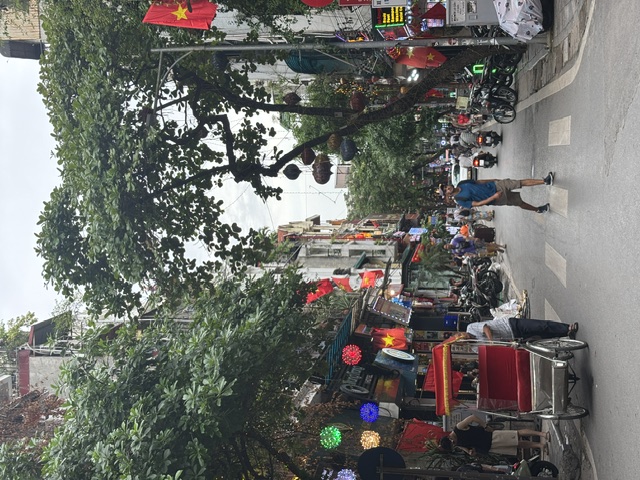
I fell in love with Vietnam the second we stepped out into the busy, noisy, slightly crazy street outside our hotel in Hanoi’s Old Quarter.
Beeping motorcyclists flowed around us in all directions, people in traditional cone-shaped hats pushed heavily-laden carts of fruit or carried their produce on poles supporting deep woven bamboo baskets (quang ganh), people sat on their haunches eating from steaming bowls outside makeshift eateries and the air was thick with the scent of Chinese herbs and medicines. It was a feast for the senses.
Over the coming days we learned how to navigate crossing the chaotic roads following the principle described to us by a tour guide of ‘sticky rice’ – form a close knit group, walk out into the road together and hope for the best!
Hanoi
We landed at Noi Bai International Airport and made the mistake of an early restroom visit after disembarking, which cost us vital time. We ended up at the back of a long queue which moved at a glacial pace through the immigration hall, taking us more than hour to get through and risking a surcharge with the taxi company picking us up. My advice? Save your comfort stop for baggage reclaim!
Our transfer with Mozio took us to L’Heritage Hotel, a traditional Vietnamese hotel right in the heart of Hanoi’s bustling Old Quarter.
Our first stop, for a late lunch, was TEP Vietnamese Restaurant and Vegan Food, where to our delight we were introduced to a range of traditional dishes including vegan noodles and chicken fried rice and waiting staff taught us how to assemble our summer rolls from rice paper wraps, salad leaves and herbs and fresh vegetables.
Then we set off to explore the city on front, joining the swell of people doing their Sunday afternoon promenade around the Hoan Kiem lake, where the Old Quarter meets Hanoi’s French Quarter. At weekends, the normally hectic road around the lake is closed to traffic and fills instead with children in electric toy cars, street performers and groups of people performing Tai Chi to music coming out of tinny sound systems.
Back at the hotel I signed up for an eSIM for 350,000 VND (approx. £9.90) to ensure we could stay connected for messages from tour operators and transfers and access maps and other services while out and about. The hotel brought someone in to install it on my phone there and then, giving me 4.5GB of data per day for a month, compared with the £65 our UK mobile network provider wanted to charge for just a single, one-off gigabyte.
Jeep tour
The next day, a green army jeep pulled up outside our hotel and we set off on an exciting tour of Hanoi, zipping down flag and lantern lined side streets and taking in some of the city’s key sights, sounds and smells.
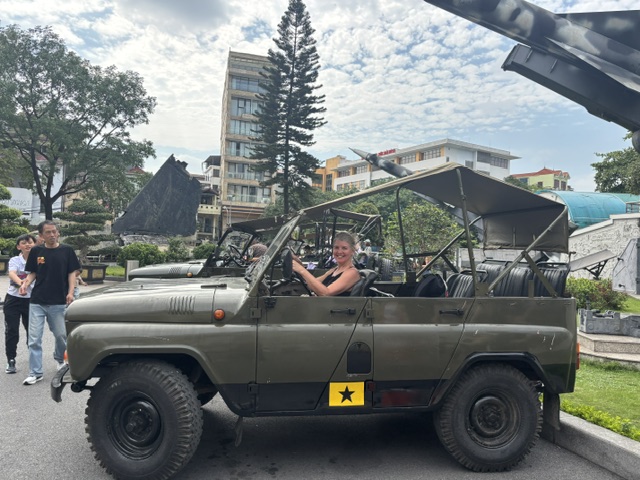
The B52 Victory Museum, filled with sobering remnants of destroyed B52 bombers from the 12-day-night campaign of the American (Vietnam) War in December 1972, serves as a reminder to today’s generation of the sacrifices that were made. Our tour guide Finn told us ‘We forgive but we don’t forget’.
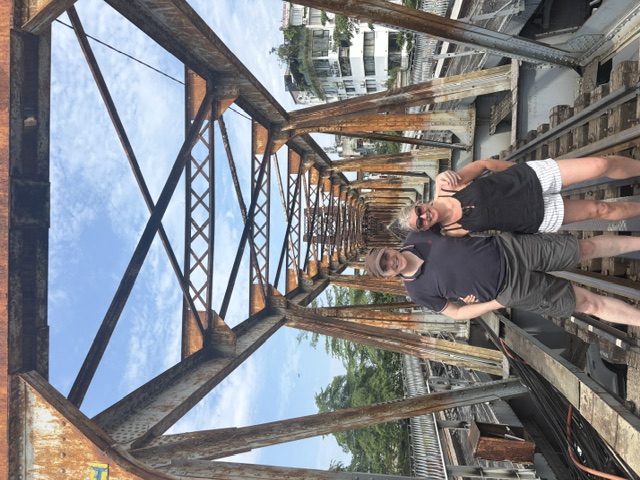
At Long Bien Bridge, said to have been bombed 14 times during the American War and rebuilt, we walked along the railway tracks and got elevated views of Hanoi’s Old Quarter.
We ate lunch at the Hidden Gem Café. As the name suggests, it’s tucked away and accessed via an alley off Hang Tre Street. It’s an eco-friendly café across four floors, with charming décor made from recycled materials, and we got to try a range of traditional foods, including the Vietnamese sandwich (Banh Mi) and famous egg coffee – a strong coffee with a frothy topping of egg yolks and sweet condensed milk, which you fold into the liquid. It tasted incredible.
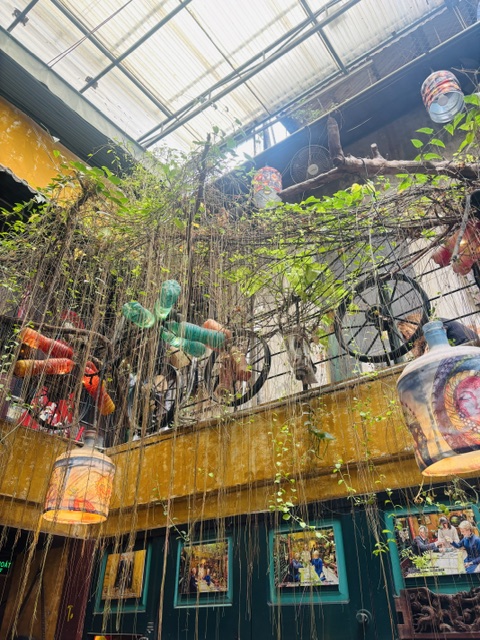
Later, we visited a local neighbourhood on the outskirts of the city and had the chance to see how generations of families live together in close quarters . We learned about the fascinating tradition of burning paper money, clothes and ‘essentials’ (ie paper Rolex watches and iphones) to send to family members in the afterlife.
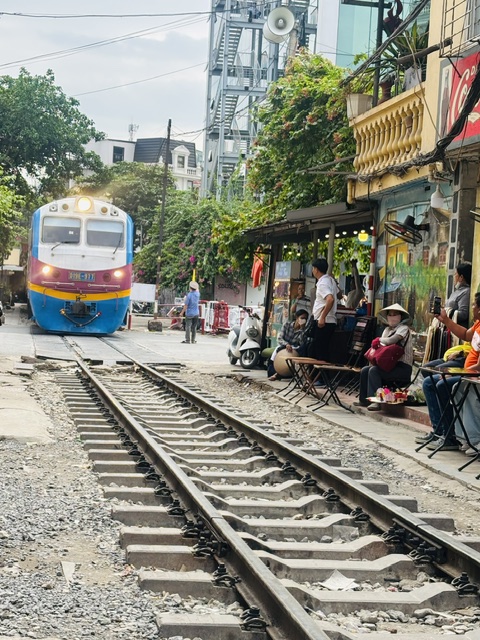
The absolute highlight, though, perhaps inevitably, was our visit to Train Street, where bars and cafes sit almost on top of the train tracks.
At first we joined the throngs of people walking up and down the railway line, filled with the sounds of street hawkers selling their wares. Then, with minutes to go before a train was due to pass through, we positioned ourselves on stools outside a café and watched in awe as a massive train rumbled through inches from our tightly tucked-in knees!
Halong Bay
For years I’ve been besotted with travel book photographs of Halong Bay, a UNESCO World Heritage Site in North Eastern Vietnam, so it was top of the list for our Vietnam itinerary.
We chose a two-day, one-night cruise on the Paradise Legacy, a fabulous 42-cabin small ship, travelling the 2.5 hour journey from Hanoi by bus transfer.
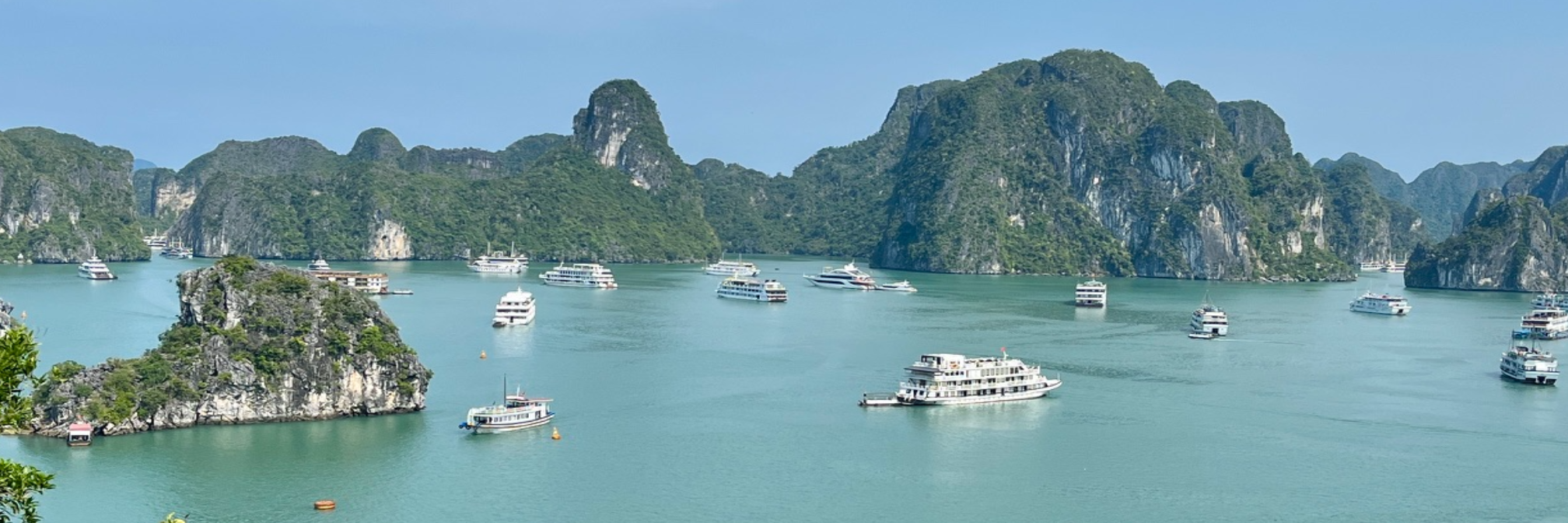
As we sailed through the Tonkin Gulf’s emerald green waters scattered with towering limestone pillars and jungle clad islands, it was a real ‘pinch me’ moment. Even the most striking photographs do not do this place justice – there is a raw beauty and serenity there that can only be fully appreciated when experienced in person.
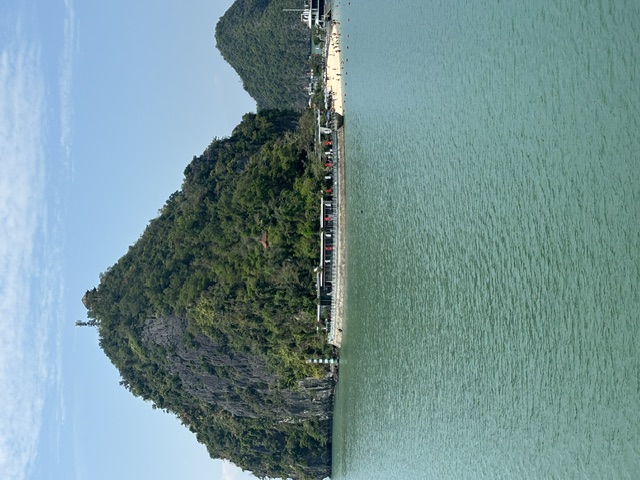
Our first stop was the breathtaking Titov (also known as Ti Top) island – sometimes described as Halong Bay’s ‘jewel in the crown’, with its conical mountain cloaked in lush tropical vegetation rising above a crescent shaped white sand beach.
We hiked the steep 450 steps to the summit for incredible panoramic views across the bay, then cooled off in the sea.
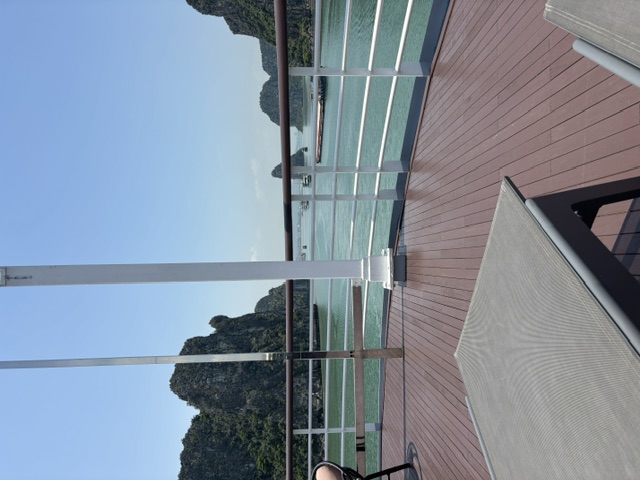
At Luon Cave, a wide bamboo boat took us through a low-ceilinged limestone archway and into a green lagoon encircled by mountains that are inhabited by wild golden monkeys. We paused to watch a mother and baby scampering about on a low ridge and then were rowed across the expanse of water to take the scenery in.
Early next morning, the day started with a memorable Tai Chi session on deck, before the final stop of the trip at Sung Sot Cave, one of the largest and most beautiful caves in Halong Bay.
Its vast caverns feature illuminated stalactites, stalagmites and unique rock formations – and the views from the entrance, 25 metres above sea level and accessed via a steep 50-step staircases are probably the best in the bay.
As we headed back towards Tuan Chau for our return trip to Hanoi, I drank in the view and tried to commit it to memory, knowing I’d be back to looking longingly at photographs after the trip.
Overnight train to Da Nang
We’d read many reviews and had lengthy debates about the pros and cons of taking an overnight train from Hanoi to Da Nang for the next stage of our trip, versus adding an extra flight to our itinerary.
Flying would be so much quicker, right? Well yes, but for a unique travel experience and the chance to see central Vietnam’s lush tropical landscapes and stunning coastline we eventually decided it had to be the train.
We took a first class sleeper train, the overnight 14 hour Laman Express, from Hanoi to Da Nang, checking in at the Mango Hotel next door to Hanoi station. The route followed Vietnam’s 1,000 mile North-South Railway, which stretches from Hanoi to Ho Chi Minh and is widely considered one of the world’s best and most memorable rail journeys.
It was a far cry from the dirty and overcrowded overnight train we recalled taking in China 31 years ago and it was honestly one of the highlights of our trip, allowing us to see a huge swathe of the country that we would otherwise have missed.
We split our group of five into a three and two and we each had a private four bunk sleeper compartment with clean bedding and a table laden with snacks and drinks. There was a hot and cold tap in the corridor for drinks and a couple of shared, western-style toilets and a separate basin, with everything kept spotlessly clean by the attentive staff.
Beds were on the extra firm side, but to my amazement the gently rocking motion of the train sent me off to sleep. I awoke as the sun was rising and the steward was starting up that day’s refreshment service, rattling his trolley through the corridor hollering good morning and offering coffee, tea, beer and wine in a sing-song voice.
Over the next hours I watched in awe as we sped through an ever-changing landscape of lush countryside, brown streams, ponds strewn with giant water lilies, wide rivers and the occasional cow.
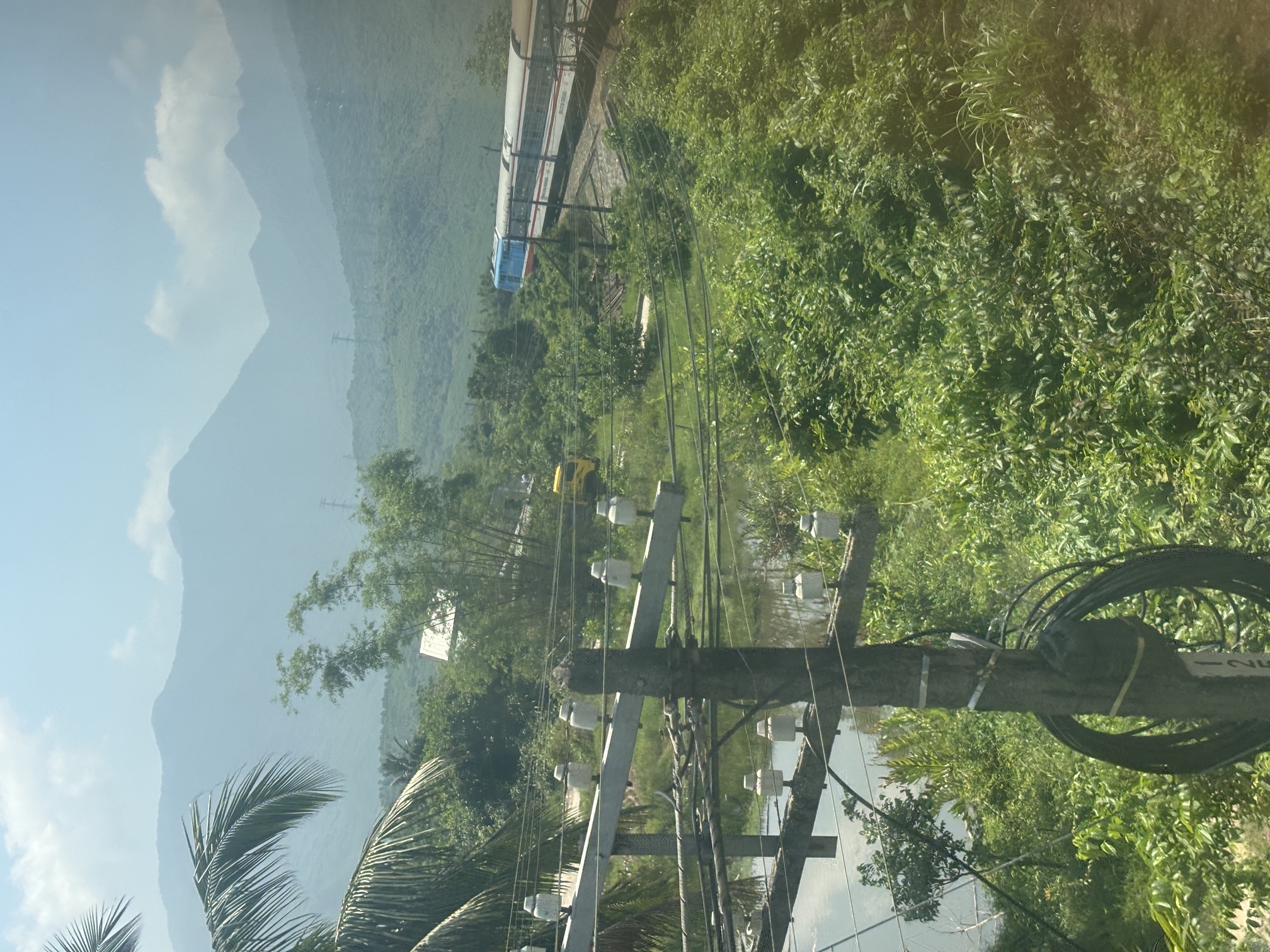
We passed people in traditional Vietnamese hats working in the fields and hillsides carpeted in white flowers as hazy mountains came into view on the horizon. Then the first glimpses of the sparkling South China Sea and white sand beaches as we travelled through the iconic Hai Van Pass.
Arriving at Da Nang station, we were mobbed by taxi drivers as we disembarked with our luggage – apparently this is common and we were glad to already have our onward taxi transfer to Hoi An booked in advance.
Hoi An
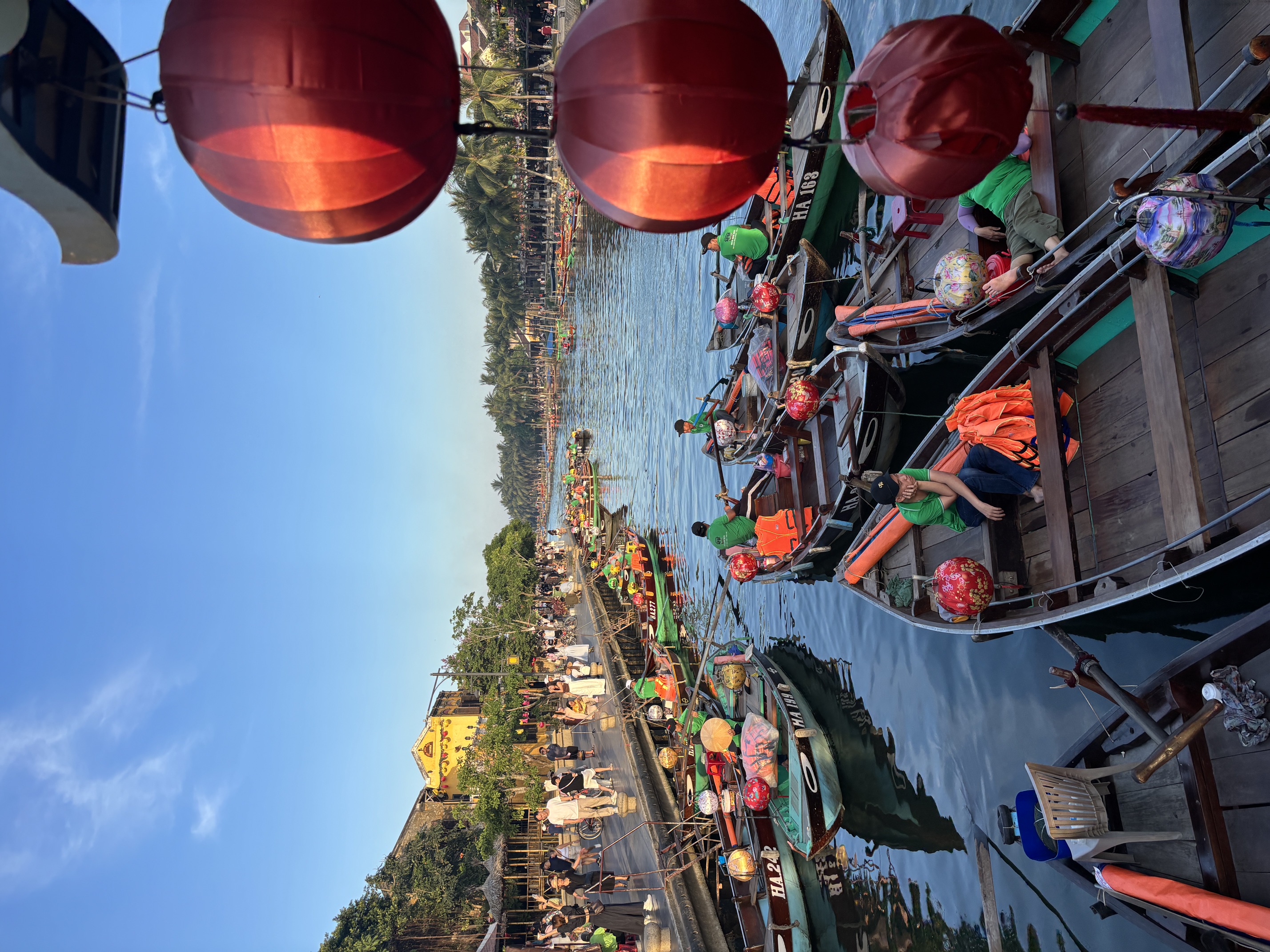
In start contrast to clamour of Hanoi, there was a chilled vibe along Hoi An’s coast, which is breathtakingly beautiful and one of the top 100 beaches in the world. We stayed at Palm Garden, a beachfront resort, and planned a mixed itinerary of relaxation time and excursions for our 4-night stay.
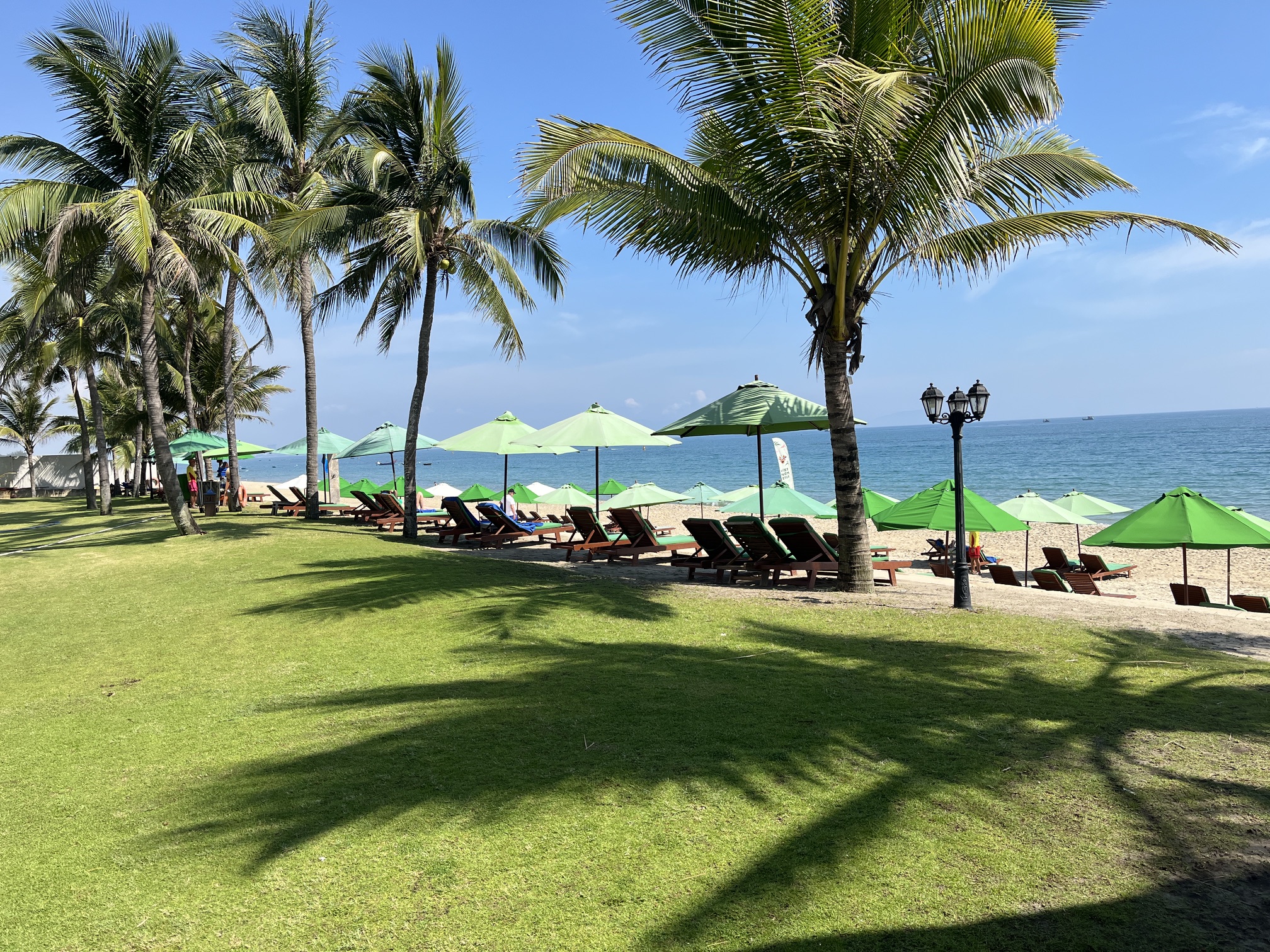
Our first half-day tour kicked off with an unexpectedly chaotic – but very fun - trip on colourful circular basket boats (thuyen thung) at Cam Thanh Coconut Village.
We’d expected a tranquil experience, but instead found ourselves being vigorously paddled downstream through the green waters running between dense mangroves by highly entertaining locals cracking jokes.
Emerging into a wider stretch of water, you could pay an additional 100,000 VND to be rapidly spun around by skilled ‘basket dancers’ – I was happy to sit that one out but our daughters jumped on board and squealed loudly as they were whipped around so fast they were almost flung into the water.
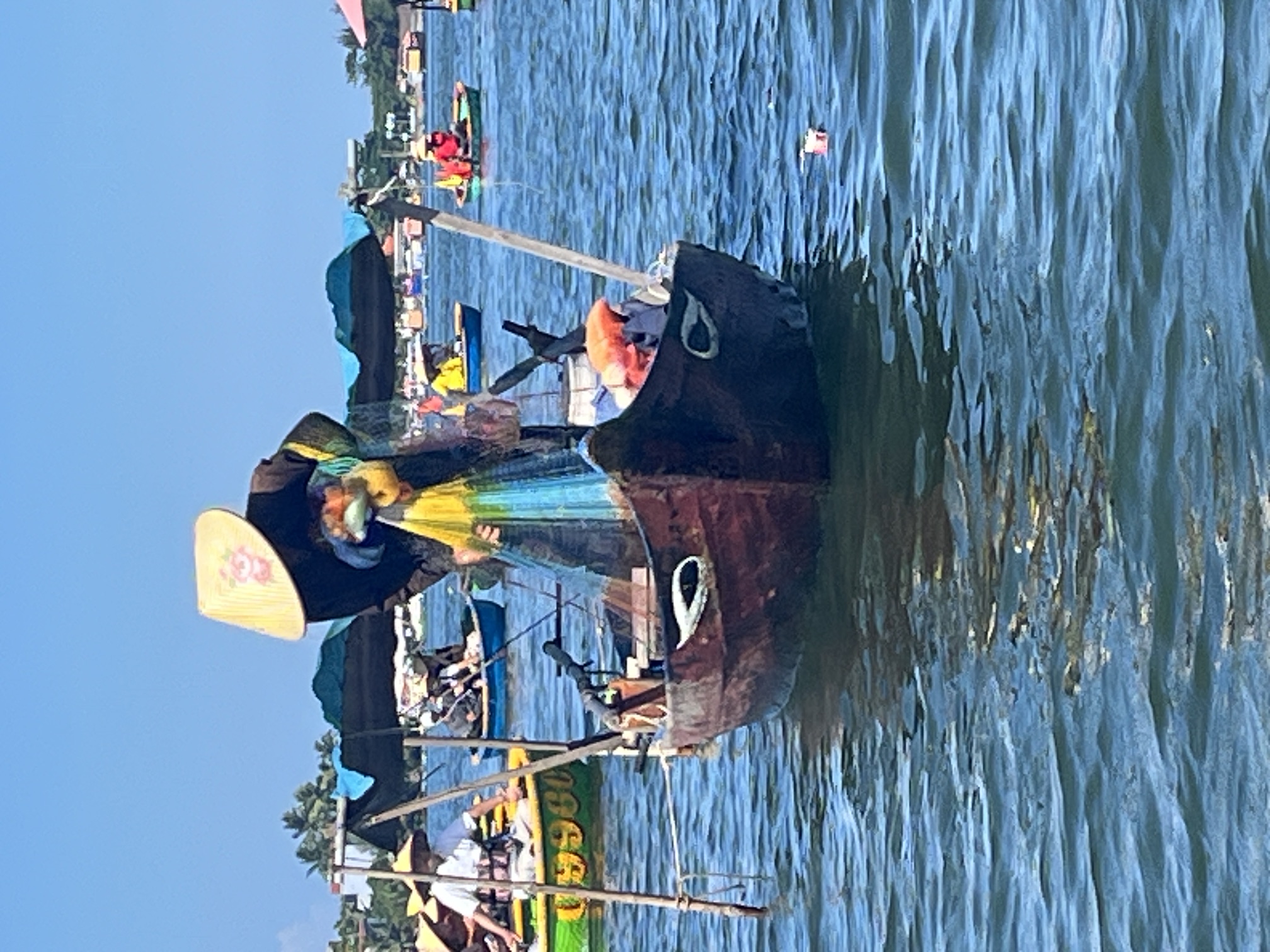
Afterwards we headed into Hoi An for a walking tour of the mustard-hued Old Town, a UNESCO World Heritage site with Chinese, Japanese, Portugese and French influences that hark back to its days as a major trading port between the 15th and 19th centuries.
It was a great way to learn about the town’s history and also experience it first-hand,
from the elaborately decorated Quan Cong Temple, where you can attach written prayers for blessings and good luck to incense spirals hanging from the ceiling, to the 17th century Chinese ancient home Quan Thang, which is still inhabited by several generations of the same family descended the first occupants. We met its oldest resident, an 86-year-old man, and sampled traditional Vietnamese banh vac (white rose dumplings) being cooked by his wife.
We crossed the Japanese Bridge Pagoda (Chua Cau), one of the most iconic of Hoi An’s sights. While you need a ticket to access the temple in the centre, you can cross the bridge itself for free and be rewarded with views out to the Thu Bon River.
Hoi An is famous for its lanterns and at night, the area around the Thu Bon River comes alive with hawkers selling lantern boat trips. The water twinkles with colourful lit paper lanterns, released by visitors as they make a wish and while it can all feel a little over-touristy, the 20-minute boat ride is fun and a bit of a must-do when visiting Hoi An.
Many of the lantern shops offer the chance to make your own lantern to take home and we made a gorgeous Chinese style lantern in red floral fabric after being assured it would collapse down to fit in our already tightly-packed suitcase!
The following day, our second tour took us an hour and a half out of Hoi An to the My Son Sanctuary, an ancient Hindu temple complex in a secluded valley surrounded by mountains. The site was built by the Cham people and used between the 4th and 13th centuries before being abandoned.
Sadly much of it was destroyed in the American War, when it was bombed while being used as a military base by the North Vietnamese Army, so the tour takes you around the partially restored remains of around 70 temples and statues featuring ancient carvings.
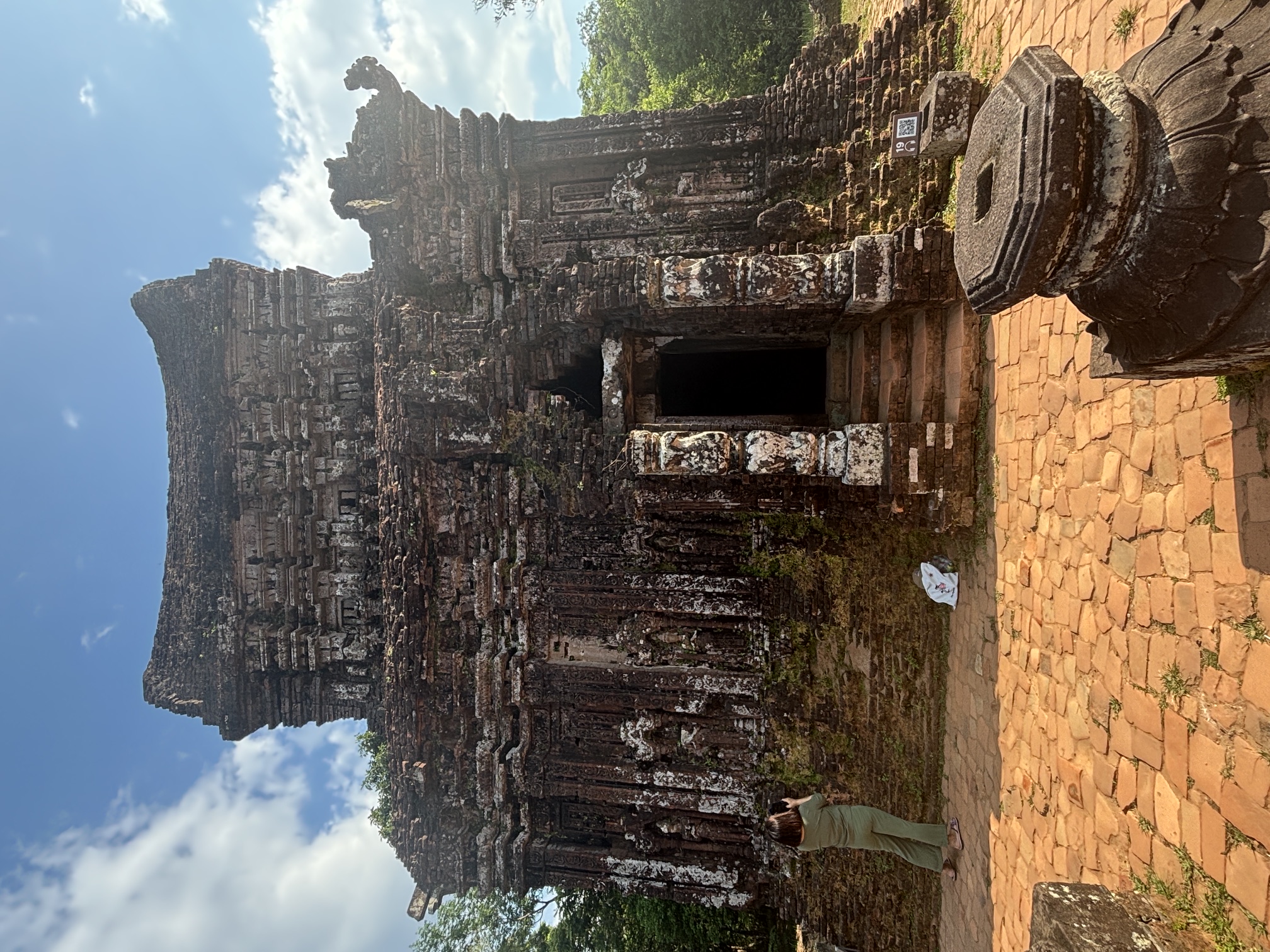
Although it was incredibly hot in the valley, giant fans had been installed around the site to keep a cool breeze moving, which made it enjoyable to stroll around and take in the stunning scenery. One of the highlights was a cultural performance in the Folk Art Performance Hall of Cham’s Shiva and Aspara dances.
I was sad to leave Vietnam at the end of our eight-day trip. I loved the kindness and warmth we experienced from the Vietnamese people, the blend of cultures, the diverse landscapes and breathtaking scenery and the fabulous food. But I know we’ll be back – in fact, we’re already planning our next trip!
Tips
To ensure a private compartment on the Laman Express, book out all available tickets for each cabin. You can use the names of travellers in your party more than once on the booking in order to do this.
You need more cash in Vietnam than you might think – while many shops and restaurants do accept bank cards, there was often a 2% or 5% surcharge for using them and we were encouraged to pay in cash. Use a travel credit card to withdraw cash from ATMs as and when needed without incurring foreign transaction fees rather than trying to anticipate how much to take beforehand.
Buy an eSIM before you go. If travelling to more than one country, get a global esim to avoid extortionate charges with your UK network provider.