
Travel Myths I Hear All The Time… And What’s Actually True
As someone who spends a lot of time researching and booking travel, I've untangled “things people have heard” from what actually happens in the real world.
Friends, social media, headline news and that one bad experience ten years ago can all paint a very distorted picture of travel.
Here are some of the most common myths I hear, and the truth that can help you travel better, not just cheaper.
Myth 1: “Booking last minute is always cheapest”
There are occasions when last‑minute deals appear, but they are not a reliable strategy. Waiting for a miracle price can actually mean:
- Fewer flight options, often with awkward times or long connections
- Limited or no rooms left at the hotel your choice
- Higher prices during popular dates or school holidays
Airlines and hotels use sophisticated pricing systems that respond to demand. For peak periods, prices usually rise as seats and rooms fill up, not the other way round.
What’s actually true:
For most trips, especially school holidays, honeymoons or big once‑a‑year
getaways, booking earlier gives you:
- Better choice of flights, times and cabins
- The pick of room categories and views
- A clearer view of the full cost, which makes planning and budgeting easier
I can help you decide when to book based on your destination, dates and flexibility, rather than chasing a mythical last‑minute bargain that may never appear.
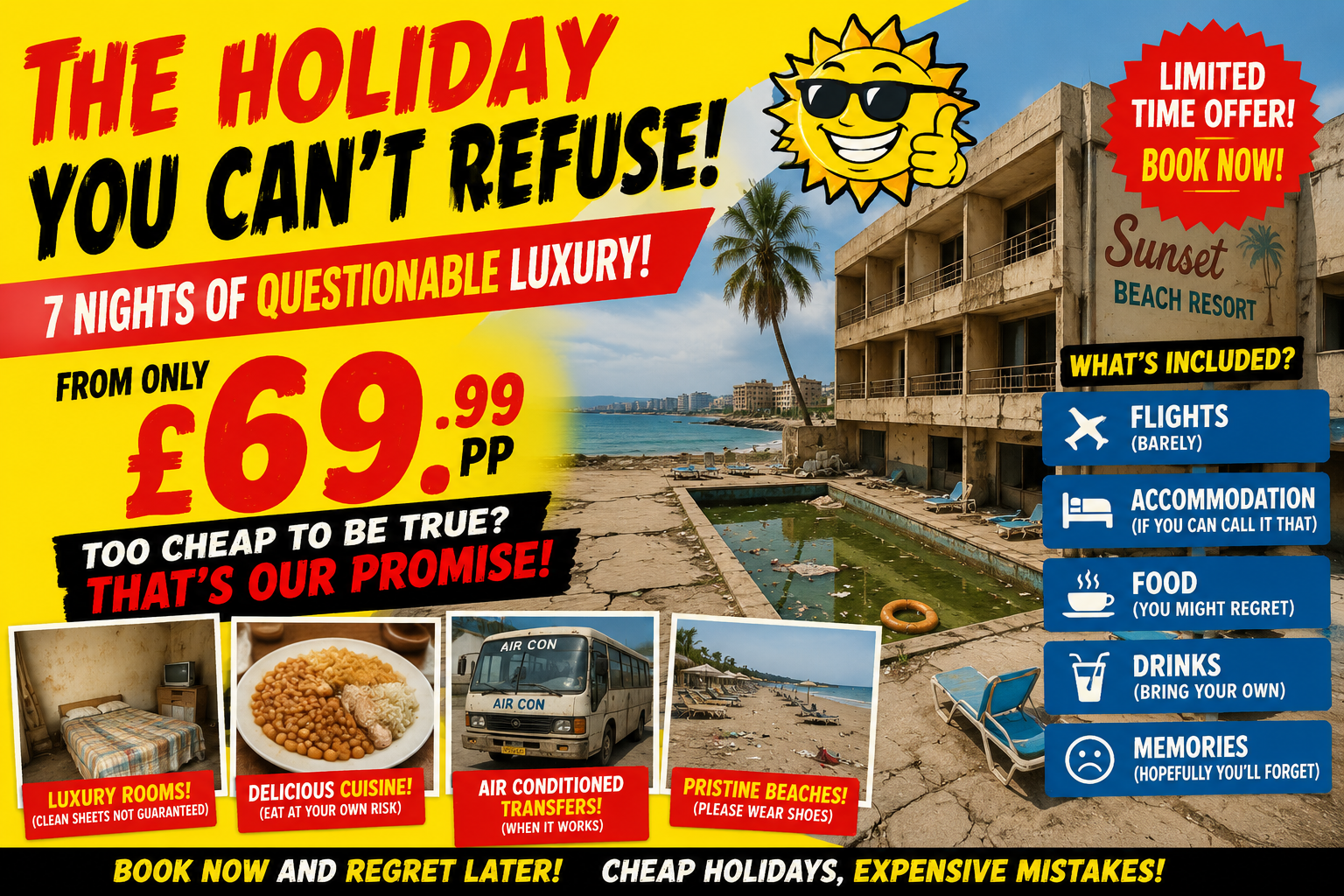
Just for a bit of fun, I hope you like my 'tongue in cheek' advert. Although most of what is advertised here has happened to people, you only have to watch 'Holidays from Hell'! I remember 2 get aways of our own a few years ago, where a lot of things weren't right. They were both booked online and 1 was an all inclusive, which we didn't use.
Myth 2: “It’s always cheaper to DIY online”
It can look that way on the surface: lots of “from” prices and tempting banners. What those do not show is:
- Resort fees and local taxes that get added later
- Luggage, seat selection and transfers, which often appear as extras
- The time it takes you to search, compare and second‑guess everything
By the time a DIY planner has bolted on the essentials and booked everything separately, they can easily be paying the same or more than a professionally planned, protected trip.
What’s actually true:
My role is not to compete with the very cheapest “headline” price. It is to:
- Build a trip that actually works, door‑to‑door
- Include the right extras so there are fewer nasty surprises
- Use trusted suppliers and contracts, with proper financial protection
- Step in personally if something goes wrong
You'll be more than surprised to find that with smarter routing, better‑timed flights and the right hotel choices, the trip we build together can offer far more value than the “cheapest” DIY option.
Myth 3: “All‑inclusive is always the best value”
All‑inclusive can be fantastic in the right setting: especially for families, groups and those who like to know most of the cost upfront. However, it is not automatically the best choice for every destination or style of travel.
Potential downsides can include:
- Paying for food and drink you will not actually use
- Feeling less inclined to explore local restaurants and bars
- Being tied to one resort when the surrounding area is the real highlight
What’s actually true:
Sometimes a lovely bed‑and‑breakfast or half‑board stay in the right location
gives more freedom, more authenticity and better value. The key questions to ask are:
- How do you really like to spend your days and evenings?
- Are you foodies who love trying local places, or do you prefer the convenience of staying put?
- Are there teenagers with hollow legs or little ones who snack all day?
Once you know that, we can decide whether all‑inclusive is a smart way to manage costs, or if another board basis suits you better.
Myth 4: “All four‑star (or five‑star) hotels are the same”
Star ratings are one of the most misunderstood parts of travel. They vary by country and are not always a guarantee of the experience you are expecting.
Two properties with the same rating can be completely different when it comes to:
- Location and surroundings
- Room sizes and layout
- Atmosphere and service style
- The quality of food, drinks and facilities
A shiny new four‑star in the right part of town can give a far more enjoyable stay than an old five‑star in a less convenient spot.
What’s actually true:
The “feel” of the hotel is as important as the official rating. When I
recommend properties, I look at:
- What you have enjoyed before
- Who are you travelling with
- How you want to spend your time (by the pool, exploring the city, on the beach, in the spa)
- The feedback and knowledge I have from previous guests and personal visits
The result is a stay that genuinely matches your expectations, rather than one that simply ticks the “four‑star” box.
Myth 5: “City breaks are always cheaper than beach holidays”
Many people assume a quick city break is automatically the budget‑friendly choice. In reality, cities often come with:
- Higher nightly hotel rates
- More meals and drinks out
- Entry fees for attractions, shows and experiences
A cleverly chosen beach or countryside stay, especially out of absolute peak season, can be much better value over the same number of nights.
What’s actually true:
Cost depends on the overall shape of the trip: destination,
duration, time of year, and style. I often compare:
- A three‑night city break with lots of eating out and activities
- Versus a five‑ or seven‑night coastal or island stay with more downtime and inclusive elements
The comparison can be eye‑opening, and it means we can match the right type of holiday to your budget and expectations from the start.
Myth 6: “Using a travel advisor means losing control”
Some people worry that if they hand their plans over to an expert, they will lose control, pay more or be “talked into” something they do not want. In reality, my role is to give you control, not take it away.
What’s actually true:
Working with me means:
- One person who listens first, then suggests
- Clear options that fit your brief and budget
- A single point of contact before, during and after the trip
- Someone who knows your preferences for future planning
You still make every decision. I simply narrow the world of possibilities down to the ones that make most sense for you, then take care of the details.
Turning myths into better holidays
Travel is full of stories: some true, some based on one person’s bad luck, and some that were accurate once but no longer match how the industry now works.
The most important thing you can do is ask. I can then answer any questions you may have and explain what will actually fit your situation, helping you make your next travel decisions with confidence.
Thanks for reading,