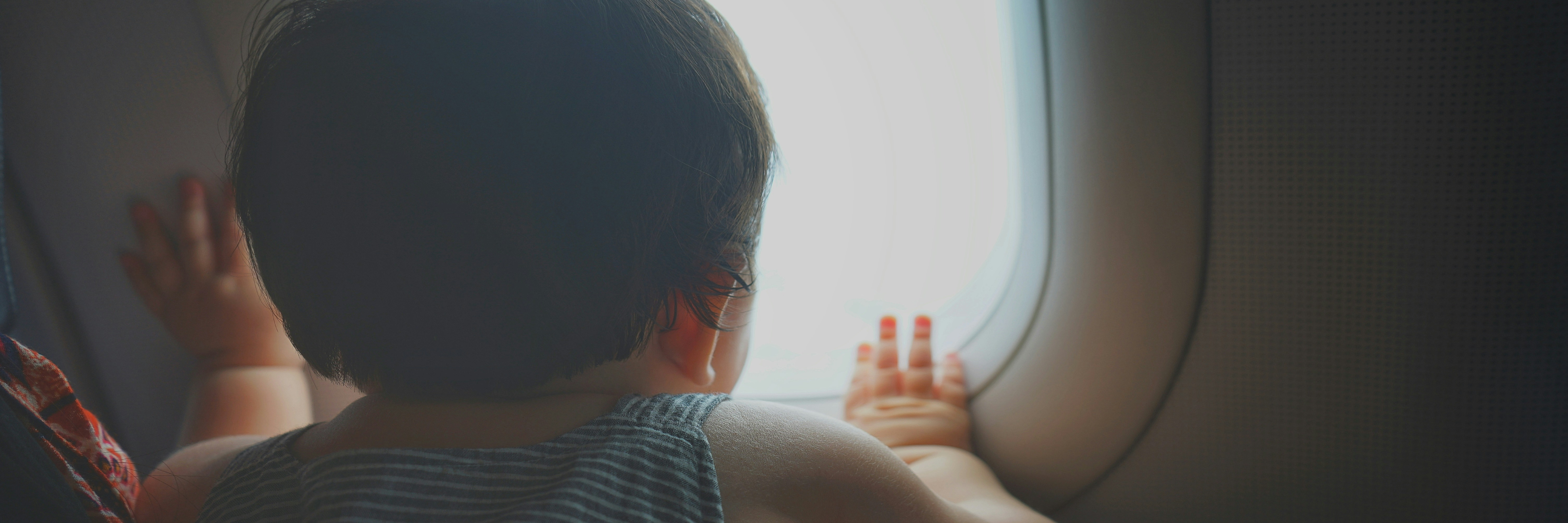
The Joy of Flying with Young Children
Flying with babies and toddlers is not always a recipe for joy, as I discovered on multiple solo journeys between Australia and the UK. But with the right mindset, preparation and a few smart tricks, it can be far less daunting and sometimes even… enjoyable.
On my son’s very first flight he was just eight months old. We were flying Dubai to Newcastle and, judging by the looks from our fellow passengers, they were completely dreading eight hours of screaming. Instead, he was an absolute star: not a single cry for the entire seven hours, and several people stopped to tell us how brilliant he had been as they disembarked.
That angelic phase did not survive the toddler years.
Looking back, a couple of things really helped on that first trip and the return: both sectors were daytime flights, so less disruptive to everyone’s sleep, and I had my husband with me. One of us could sit with the baby while the other wrestled the bags, toys, snacks and endless paraphernalia that comes with such a tiny person. Daytime flights and a travel partner are not always possible, but if you have the option, I highly recommend both.
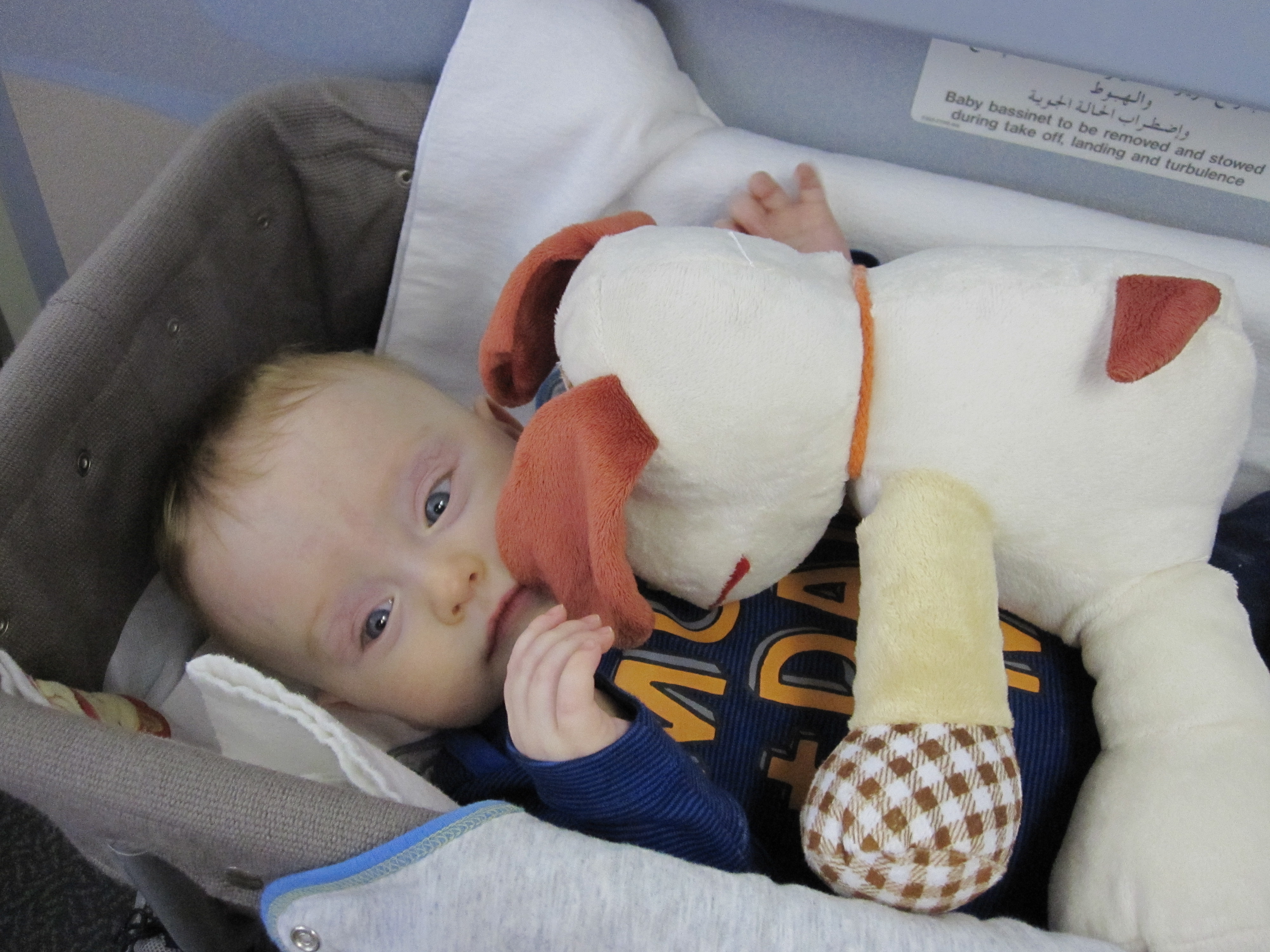
Top tips for flying with a baby
- Feed
during take-off and landing
Be ready to feed as the plane climbs and descends, whether that is breast, bottle or dummy. The sucking motion helps to equalise the pressure in their ears and can stop discomfort before it starts. - Pre-book
a bassinet if you can
If your route and cabin allow it, reserve a bassinet seat. Once baby is asleep you can lay them down, free up your arms and enjoy a little rest yourself. - Use
empty seats to your advantage
If you are seated next to someone and there are empty seats nearby, a quick, polite word can work wonders: apologise that your baby might disturb them and suggest they might like to move. If they do, you have effectively doubled your space. - Overpack
nappies
Take far more nappies than you think you will ever need. Delays, diversions and tummy upsets happen, and you do not want the added stress of running out at 35,000 feet. - Pack
spare outfits for both of you
Aim for at least two spare outfits for the baby and one for yourself. Arriving covered in sick (or worse) is not the look anyone is going for at the end of a long-haul flight.
The reality of flying with a toddler
The biggest challenge with toddlers is that they have no real understanding of why they must be strapped into a seat for take-off and landing. If they do not want to sit still, those banshee shrieks can begin very quickly.
This is where distraction truly comes into its own. I always travelled with my own device and child-sized headphones. Relying on the in-flight entertainment, if there even was any, was an extra layer of stress I did not need while juggling a screaming child. Because devices have to be stowed for take-off and landing, you also need a good supply of non-screen distractions.
Top tips for flying with a toddler
- “New”
toys from old favourites
Hide a few of their favourite small toys or books a couple of weeks before you travel, then bring them out on the flight. The novelty of being reunited often buys you a precious few minutes of peace. - Pack
sensory and fidget toys
Simple fidget toys, sticker books or anything tactile can keep little hands and minds busy without disturbing anyone around you. Plasticine is great as the physical pressure of pressing it can be very calming for a child. - Pre-load
devices with their favourites
Download their favourite TV shows and films on a tablet before you travel. Do not rely on airline Wi-Fi or the onboard library, and remember to fully charge everything. - Practise
with headphones at home
Get your child used to wearing their headphones in the weeks before you fly. The first time in a noisy cabin is not the moment to discover they hate the feel of them. - Snacks,
snacks and more snacks
You really cannot have too many. Take a variety of familiar and “special treat” options, and hand them out slowly across the journey. - Carry
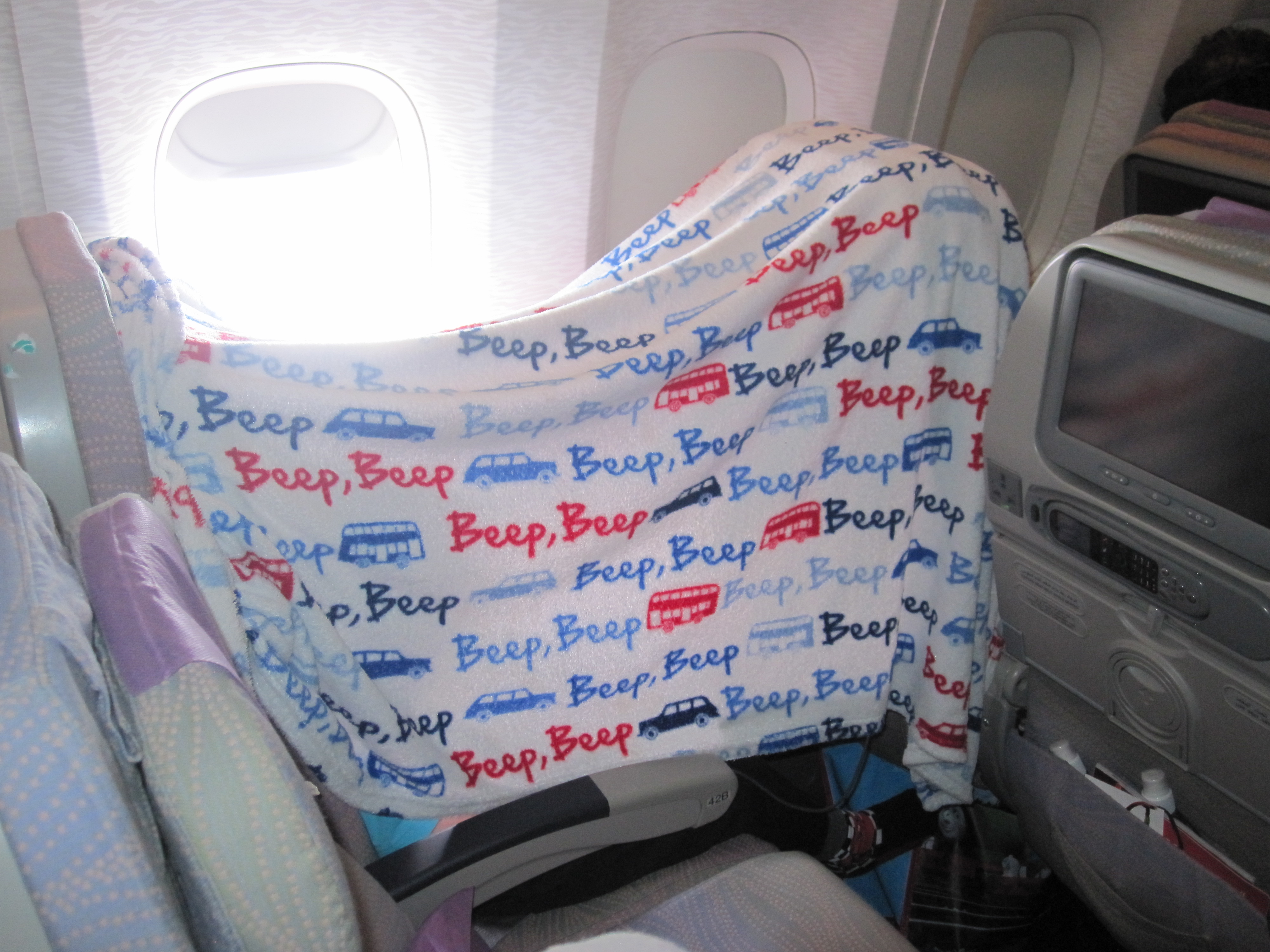
a blanket to create a “den”
The lights, noise and number of people on a plane can be very overwhelming. I always found that tucking a blanket behind the headrest and then over the seat in front (where possible) to create a darker “den” really helped calm my son and made it easier for him to settle. - Reuse
your baby strategies
Offer a lidded cup, dummy or even a lollipop to suck during take-off and landing to help with ear pressure. If there are spare seats nearby, gently suggest that anyone seated next to you might be more comfortable moving. Always have spare clothes for both of you within reach. - Consider
pull-ups, even if they are toilet trained
If your child announces they need the toilet just as the seatbelt sign comes on, a pull-up can be a sanity saver, especially during long periods when you simply cannot get to the loo.
Coping with tantrums (and preventing your own)
On one solo journey from Australia to the UK, my son fell asleep just before landing. I had to wake him, because I was travelling alone and had all our cabin bags plus the buggy to manage. Despite help from the cabin crew, his screaming tantrum lasted all the way through the airport, until he fought so hard that his pram flipped over. I have to admit, I had my own meltdown at that point!
On the return journey, I tried to keep him to his usual sleep schedule. I switched off the TV and encouraged him to sleep, which triggered another monumental meltdown. When an unhelpful flight attendant asked if I could “please make him be quiet because other passengers were trying to sleep”, I was dangerously close to having my own tantrum.
Those experiences taught me a few things.
Top tips for coping with tantrums, especially if you are travelling alone:
- Tune
out everyone else
Try, as much as you can, to stop worrying about what other people are thinking. Most passengers are parents, grandparents or aunts and uncles themselves. Your job is to care for your child, not to meet everyone else’s expectations. - Ask
for help early
Cabin crew are generally happy to help, but they are not mind readers. If you need assistance with bags, pushchairs or getting settled, ask. In my case, I should have asked them to take charge of the bags while I carried only my son, then waited somewhere quiet for him to wake naturally. - Let
go of strict sleep schedules
Time zones, cabin noise and excitement mean that normal routines rarely survive a long-haul flight. Children will sleep when they are exhausted enough, even if it is not at the “ideal” time. Removing that pressure can ease your stress enormously. - Be
cautious with medication
Do not feel obliged to follow well-meaning advice to give sedating antihistamines or similar in the hope they will make your child drowsy. Some medications can have the opposite effect and cause hyperactivity instead, as I learned to my horror, which is the last thing you want at cruising altitude. Always seek proper medical advice before giving anything new, and never test it for the first time on the plane.
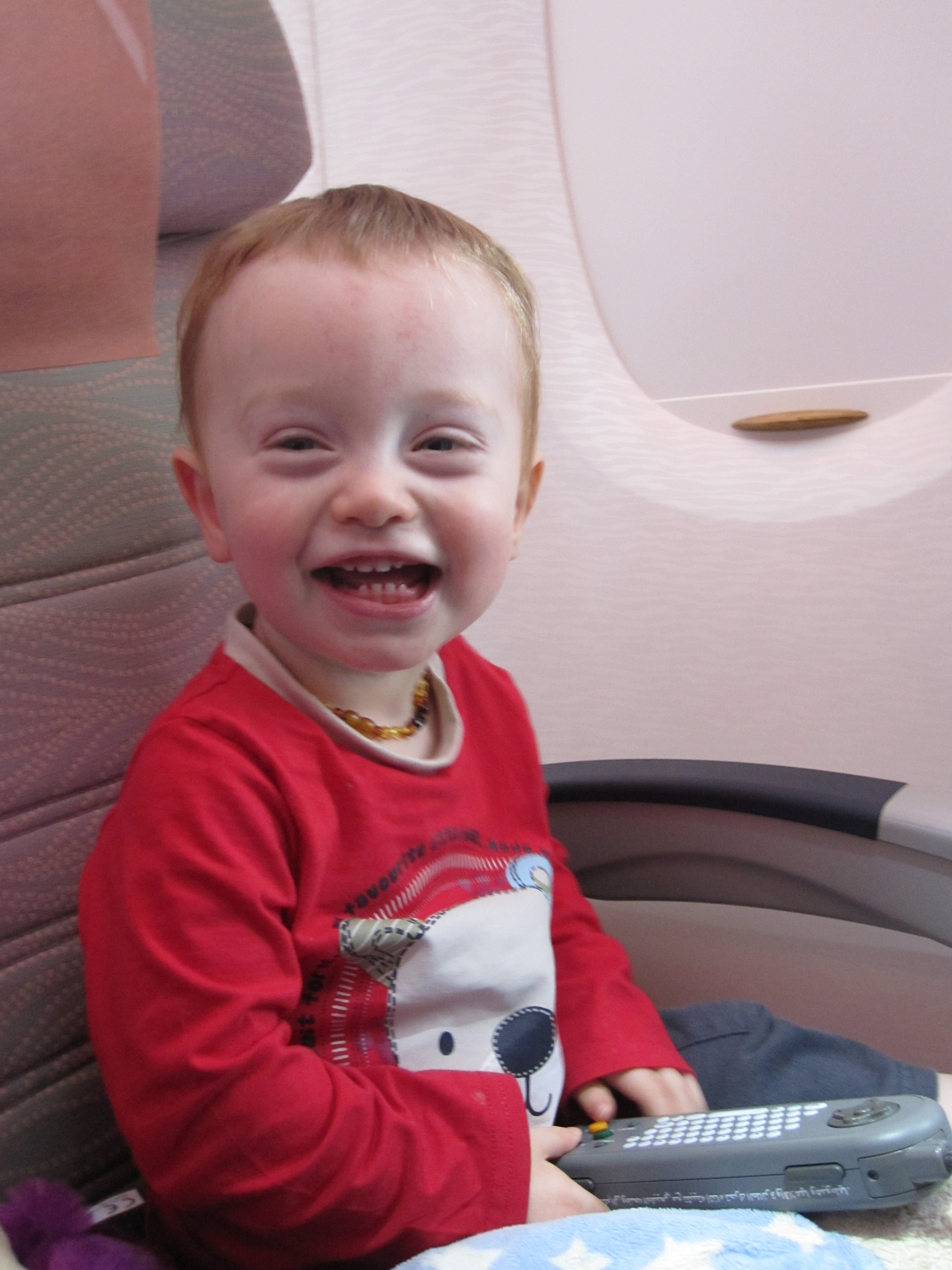
A final thought
Flying with little ones can be intense, messy and emotional, but it can also be incredibly special. Your baby’s first view of the clouds, your toddler’s excitement at a “big aeroplane” and the shared adventure of travelling together are memories that last far longer than any mid-air meltdown.
Prepare as well as you reasonably can, pack more nappies and snacks than you think you will ever need, and try to give yourself the same kindness and patience that you give your child. Perfect flights are rare, but with realistic expectations and a few strategies up your sleeve, they can certainly be joyful.