From Eau de Cologne to Kölsch: Discovering Cologne’s Signature Sights and Scents
An insider’s guide to Cologne’s culture, Christmas markets, carnival spirit and the flavours that make the city unique.
From the moment you step onto its riverside promenades, Cologne is a city that appeals as much to the senses as it does to the soul. This is the birthplace of Eau de Cologne and the home of Kölsch, a beer so local it even shares its name with the dialect. Between the soaring spires of its cathedral, world‑class museums, fairy‑lit Christmas markets and legendary carnival, Cologne blends history, humour and hedonism into a city break that feels effortlessly warm and welcoming.
Cologne at a Glance
Cologne is Germany’s fourth largest city, straddling both banks of the Rhine and anchoring the wider Rhine‑Ruhr region. Once heavily bombed in the Second World War, it has been rebuilt as a lively, green and forward‑looking city, with more than a quarter of its area given over to parks and open spaces.
It is a heavyweight in education and research, home to one of Europe’s oldest and largest universities as well as the European Union Aviation Safety Agency (EASA). Media, insurance and automotive companies all have a strong presence here, and Cologne is twinned with Liverpool, sharing a similar sense of humour and down‑to‑earth character. It is also famous for its high pub density and much‑loved Kölsch breweries such as Reissdorf, Gaffel and Früh.
Modern Cologne & A City Rebuilt
As the largest city in the Rhine‑Ruhr region, Cologne benefits from excellent connections by land, air and water. Five Rhine ports and Cologne/Bonn Airport keep the city well linked, while Koelnmesse, the trade fair centre, hosts major events like Art Cologne, imm cologne and gamescom. Broadcasters such as WDR and RTL sit alongside production studios and publishers, earning Cologne a reputation as Germany’s media capital.
The city’s post‑war story is never far from view. After hundreds of air raids left around 95 per cent of the historic centre in ruins, architect Rudolf Schwarz led a reconstruction that respected the medieval street plan but introduced simple 1950s facades. Over time, key landmarks such as the Romanesque churches, the Gürzenich event hall and Cologne City Hall were painstakingly restored. Today the city feels both historic and modern, its scars woven into a confident, creative present.
Cologne Cathedral & Historic Heart
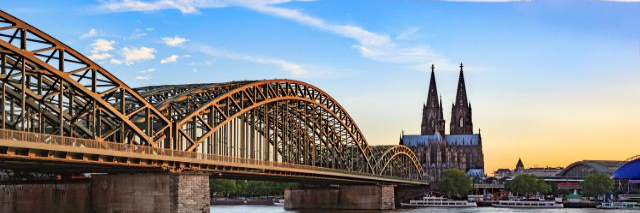
No visit is complete without standing beneath the twin spires of Cologne Cathedral (Kölner Dom), the city’s defining landmark. Work began in 1248 and finished in 1880; today the cathedral is a UNESCO World Heritage Site and Germany’s most visited landmark. It is the largest Gothic church in northern Europe, and its towers rise to around 157 metres.
Despite suffering bomb damage, the cathedral survived the war and repairs continue to this day, earning it the nickname “the eternal construction site”. Inside, highlights include the 14th‑century High Altar, the gilded Shrine of the Three Kings, the 10th‑century Gero Cross and striking stained glass, from medieval panels to Gerhard Richter’s shimmering modern “pixel” window. Climb 509 steps to the viewing platform for sweeping views over the rooftops and the Rhine.
Around the cathedral, Cologne’s old town reveals more of its past. Twelve Romanesque churches, many with roots in Roman times, have been beautifully restored. Cologne City Hall remains the oldest continuously used town hall in Germany, and medieval houses such as the Gürzenich and Overstolzenhaus add character to the narrow streets. Three surviving city gates still frame the centre, while shopping streets like Hohe Strasse, Schildergasse and Ehrenstrasse mix big‑name brands with independent boutiques.
Down by the river, bridges like the Hohenzollernbrücke dominate the skyline. From the embankment, the classic view of bridge and cathedral is hard to beat, and the Cologne Cable Car gliding across the Rhine offers another way to enjoy the panorama.
Culture, Nightlife, Kölsch & Eau de Cologne
Cologne is a gift for culture lovers. The Roman‑Germanic Museum showcases the city’s ancient roots, while Museum Ludwig holds one of Europe’s most important modern art collections, including significant Picasso works. The Schnütgen Museum of religious art sits within the Romanesque church of St Cecilia, blending architecture and collection beautifully.
Music runs through the city’s veins. The Gürzenich Orchestra, WDR Symphony Orchestra and several renowned choirs are based here, and Cologne played a pioneering role in electronic music and experimental sounds from the 1950s onwards. Today, nightlife ranges from relaxed bars in the student quarter of Kwartier Latäng to late‑night venues around Hohenzollernring, Friesenplatz and Rudolfplatz.
Literature is celebrated at the annual lit.COLOGNE festival, while Nobel Prize‑winning author Heinrich Böll is the city’s most famous literary son.
Then there are Cologne’s two most iconic “scents and sips”. Kölsch beer, brewed only in and around the city and served in slender glasses, is a local institution. It even shares its name with the local dialect, inspiring the affectionate joke that Kölsch is the only language you can drink. Eau de Cologne, meanwhile, was first created here in the early 18th century and became a coveted luxury across Europe. Today, both the historic Farina house and the famous 4711 brand still produce fragrance in the city, giving visitors a tangible link to Cologne’s perfumed past.
Carnival Spirit & Christmas Magic
Cologne’s exuberant side shines brightest at carnival. The season officially begins on 11 November at 11:11 a.m., but the real “crazy days” start with Women’s Carnival on the Thursday before Ash Wednesday. The whole city becomes a street party, with locals and visitors in costume filling squares, bars and pubs, particularly around Zülpicher Strasse, Neumarkt and Heumarkt.
In the run up to Christmas, Cologne swaps carnival confetti for fairy lights. Eight Christmas markets appear across the city, with four large and much‑loved markets forming the festive heart: at Cologne Cathedral, on Alter Markt, on Neumarkt and on Rudolfplatz. Together, they attract almost two million visitors every year.
The Cathedral market, gathered around the tallest Christmas tree in the Rhineland, is the showstopper, with more than 160 wooden pavilions, artisan crafts and steaming mugs of mulled wine. Alter Markt, in the Old Town, feels like a storybook scene, complete with gabled houses, half‑timbered stalls and family‑friendly attractions. Neumarkt, Cologne’s oldest market, transforms into the Angels Market, glowing under a canopy of stars, while Rudolfplatz pairs festive stalls with fairy‑tale figures and the backdrop of a medieval gate.
Beyond these, the Medieval and Harbour markets by the Chocolate Museum, the Floating Christmas Market on a riverboat and the relaxed, village‑like Stadtgarten market all add their own twist, from nautical themes to live shanty music and local crafts.
If You Go: Practical Tips for Visiting Cologne
- Getting
there from the UK
Direct flights from several UK airports to Cologne/Bonn (CGN) take around 1 hour 15 minutes. You can also travel by train via Brussels, connecting onto a high‑speed service into Köln Hauptbahnhof, which arrives right beside the cathedral. - Best
time to visit
December is magical for Christmas markets and cosy evenings with mulled wine. February or early March brings carnival, ideal if you love big street parties. Spring and early autumn offer milder weather, fewer visitors and plenty of time for museums, riverside walks and café‑hopping. - How
long to stay
A 2 to 3 night stay works perfectly for a first visit: enough time for the cathedral and old town, a museum or two, a river cruise and a few different Kölsch brewhouses. - Getting
around
The centre is very walkable. Trams, buses and local trains are straightforward to use, taxis are easy to find and a short Rhine cruise is a relaxed way to see the skyline. - Money,
language & packing
Germany uses the euro, and while cards are widely accepted, it is useful to have some cash for smaller cafés and market stalls. English is widely spoken, but a few German phrases go a long way. Comfortable shoes, a warm layer and a waterproof are invaluable, especially in winter.
Sights, Scents & Flavours
Whether you are tracing the story of Eau de Cologne in a historic perfume house, sampling Kölsch in a traditional brewhouse, gazing up at the cathedral or wandering between twinkling Christmas stalls, Cologne is a city that lingers in the memory. Its blend of grand architecture and unpretentious charm makes it an ideal city break in any season. Visit in winter and you will find a city wrapped in lights and spice‑scented air, where every corner offers a new sight, taste or scent to fall in love with.
If Cologne has sparked your curiosity, I would love to help you turn this inspiration into a trip. Get in touch to start planning your Cologne city break, from the perfect travel dates to the right neighbourhood and hotel for you.