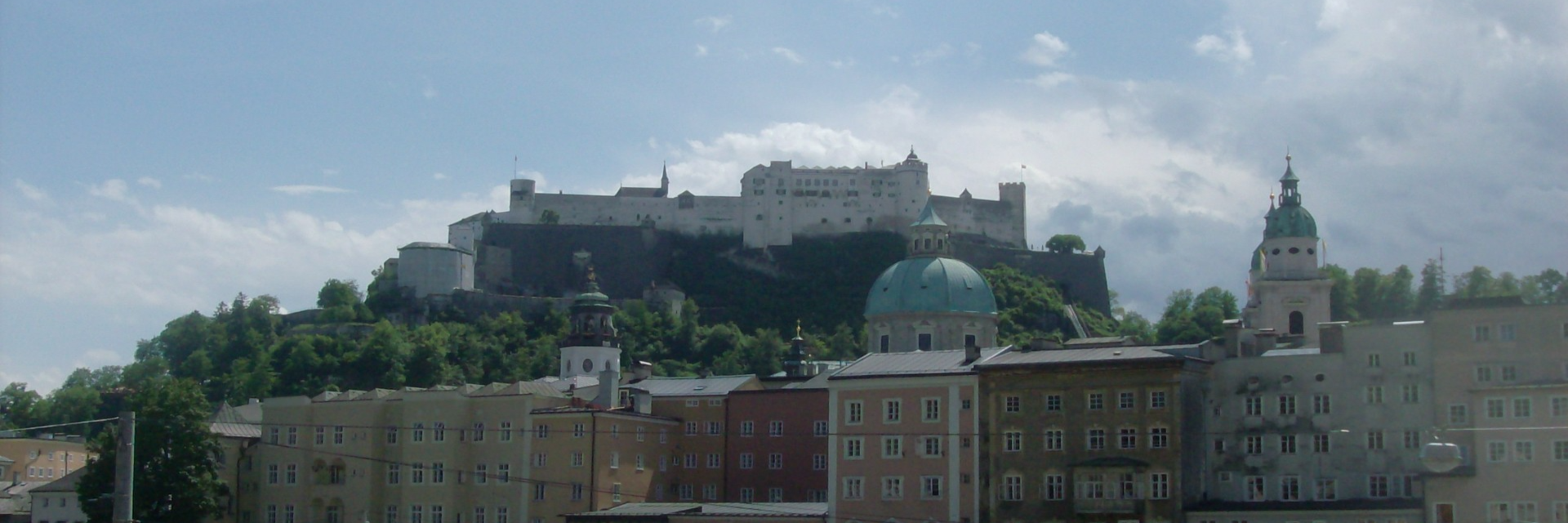
Salzburg: Where baroque beauty meets the Sound of Music
With Storybook streets, soaring spires and Alpine views, there is so much to love about this magical city
Framed by snow-dusted Alpine peaks and nestled on the banks of the River Salzach, Salzburg is one of Europe’s most enchanting small cities. Its beautifully preserved Old Town, with elegant baroque churches and cobbled lanes, is a UNESCO World Heritage Site and feels almost like a film set: fitting for a city forever linked with The Sound of Music, as well as the genius of Wolfgang Amadeus Mozart, who was born here. Despite its rich history, Salzburg has a fresh, youthful energy thanks to its three universities and vibrant cultural scene. Grand church spires and the mighty Hohensalzburg Fortress rise above a compact centre that is perfect for exploring on foot, while wooded hills and mountains form a dramatic backdrop in every direction.
Geography & Setting
Salzburg sits close to the northern edge of the Alps, where mountain landscapes meet softer rolling plains. The city is divided by the River Salzach, with the atmospheric Altstadt (Old Town) dominated by baroque towers, churches and the imposing Hohensalzburg Fortress above. Two green hills, the Mönchsberg and Kapuzinerberg, form the city’s “lungs”, offering walking paths and wonderful viewpoints just a short stroll from the historic streets.
The 1,972‑metre Untersberg mountain lies only a few kilometres from the centre and, on clear days, rewards visitors with sweeping views across the city and deep into the Alps. Salzburg is also well located for multi-centre holidays, approximately 150 km east of Munich and 300 km west of Vienna.
A Brief History
Human settlement in the Salzburg area dates back to the Neolithic period, but it was the Celts and then the Romans who first established a town here. Around 15 BC, the Romans created the city of Juvavum, which developed into an important centre in the province of Noricum before later falling into decline.
In the early 8th century, Saint Rupert chose this site to found a new religious centre, giving it the name “Salzburg” or “Salt Castle”, a reference to the lucrative salt trade along the River Salzach. Over time, Salzburg grew into a powerful ecclesiastical state within the Holy Roman Empire, ruled by prince-archbishops who left a remarkable architectural legacy of palaces, churches and the hilltop fortress.
The city later passed between Bavarian and Austrian control during the Napoleonic era, before becoming firmly part of Austria in the 19th century. Remarkably, much of its baroque core survived the damage of the Second World War, allowing today’s visitors to experience one of Europe’s best-preserved historic city centres.
Salzburg Today
By the mid‑20th century, Salzburg had grown beyond 100,000 residents and today is a thriving, cultured city with a metropolitan area of over 200,000 people. It is renowned for its quality of life, beautiful setting and strong cultural calendar that draws visitors from all over the world.
Highlights & Main Sights
Salzburg’s compact size makes it ideal for leisurely exploration, whether you are following in Mozart’s footsteps, retracing scenes from The Sound of Music or simply soaking up the café culture and architecture.
Old Town (Altstadt)
The Old Town, a UNESCO World Heritage Site, is a treasure trove of baroque
architecture, graceful squares and hidden courtyards. Key highlights include:
- Salzburg Cathedral (Salzburger Dom): A magnificent baroque cathedral that forms the heart of the Old Town.
- Hohensalzburg Fortress (Festung Hohensalzburg): One of Europe’s largest and best-preserved castles, crowning the hill above the city with superb panoramic views.
- Getreidegasse: A charming, narrow shopping street lined with traditional wrought‑iron shop signs and historic townhouses, including Mozart’s birthplace.
- Mozart’s Birthplace & Residence: Atmospheric museums that bring to life the story of Salzburg’s most famous son.
- Nonnberg Abbey: A Benedictine convent immortalised in The Sound of Music, still an active religious community.
- The Residenz Palace: The former residence of Salzburg’s prince‑archbishops, with ornate state rooms and galleries.
- Picturesque churches and courtyards: Including the Franciscan Church, the University Church and the tranquil St Peter’s cemetery.
Beyond the Old Town
Just across the river and around the city centre, you will find elegant palaces, formal gardens and more film locations:
- Mirabell Palace & Gardens: Manicured lawns, fountains and flowerbeds that became iconic in the “Do‑Re‑Mi” scene from The Sound of Music.
- Leopoldskron Palace: A rococo lakeside palace used in the film and now a listed national monument.
- Hellbrunn Palace & Trick Fountains: An early 17th‑century pleasure palace with playful water features, grottoes and expansive parkland.
- Sound of Music tours: Popular excursions take guests to key filming locations in and around the city, as well as into the idyllic countryside.
Greater Salzburg Area
For those with more time, Salzburg makes an excellent base for discovering the surrounding region:
- Salzkammergut Lakes: A stunning area of crystal‑clear lakes and mountains east of the city, dotted with chocolate‑box villages and perfect for swimming, boating and hiking in summer.
- Untersberg Mountain: Accessible by cable car and ideal for half‑day excursions with far‑reaching views on fine days.
- Maria Plain Basilica: A beautiful late baroque pilgrimage church on a hill north of the city, offering peaceful views back towards Salzburg.
- Salzburger Freilichtmuseum: An open‑air folk museum that recreates traditional rural life with historic farmhouses and buildings from across the region.
- Winter sports: While Salzburg itself does not have ski slopes, it is a convenient gateway to many ski areas to the south, making it a popular arrival point for alpine holidays.
Culture & Events
Music runs through Salzburg’s veins. The annual Salzburg Festival, held primarily in July and August, is one of the world’s leading classical music and opera festivals, attracting top international performers and audiences. A smaller Easter Festival focuses on high‑calibre performances around Easter.
Alongside its grand concert halls and churches, you will find contemporary galleries, intimate performance spaces and a lively café and restaurant scene, reflecting both its historic charm and modern, student‑influenced energy.
Getting Around
Salzburg is well connected by rail to Vienna, Munich, Innsbruck and Zurich, and is a natural hub for journeys through the Alps into Italy. Within the city, an efficient network of trolleybuses, buses and S‑Bahn commuter trains makes it easy to get around without a car. A short train ride takes you to nearby Oberndorf, home to the Silent Night chapel where the famous carol was first performed.
For visitors, the city is wonderfully walkable, with most major sights in and around the Old Town reachable on foot, while hills and viewpoints are accessed by short walks or funiculars and lifts.
Famous Salzburgers
Beyond Mozart and The Sound of Music, Salzburg has been home to many influential figures, from composers and conductors such as Herbert von Karajan to writers like Stefan Zweig. Their legacy can be felt in the city’s concert halls, museums and even in the names of its squares and streets.
Popular Culture
The Sound of Music, filmed in and around Salzburg in the 1960s, remains a major draw for many visitors. Although the film itself is not especially beloved by locals, it has introduced generations around the world to the city’s landscapes, palaces and churches. Fans can visit locations from the movie, from Mirabell Gardens and Leopoldskron Palace to nearby lakes and villages.
Here is a suggested 4‑night city break that showcases the best of Salzburg and its surroundings
Day 1: Arrival & First Glimpse of the Old Town
- Arrive in Salzburg: Private transfer to a centrally located boutique or luxury hotel.
- Afternoon orientation stroll:
- Walk along the River Salzach and over one of the pedestrian bridges for classic skyline views.
- Explore the Getreidegasse and surrounding lanes: wrought‑iron signs, arcaded courtyards, cafés.
- Mozart’s Birthplace or Residence (time permitting) for an easy first cultural stop.
- Evening:
- Dinner in a traditional Austrian restaurant in the Old Town.
- Optional: a gentle evening drink in a rooftop bar or riverside café to see the fortress lit up.
Day 2: Baroque Salzburg, Fortress & Concert
Morning: Old Town & Cathedral
- Start in Residenzplatz and Domplatz, visiting:
- Salzburg Cathedral
- St Peter’s Abbey & Cemetery
- Consider a private walking tour focused on Salzburg’s history, Mozart and The Sound of Music highlights to bring the city to life.
Afternoon: Hohensalzburg Fortress & Mönchsberg
- Take the funicular up to Hohensalzburg Fortress:
- Explore the courtyards, museums and viewpoints.
- Stroll along the Mönchsberg ridge path for more panoramic views and an easy walk back down into town or via lift.
Evening: Classical Music Experience
- Arrange tickets for a Mozart concert in a historic venue (for example a palace or church setting) with or without dinner included.
- Afterwards, a relaxed walk back through the softly lit streets.
Day 3: Sound of Music & Lakes / Salzkammergut
Full day excursion into the countryside:
- Join a Sound of Music themed tour or arrange a private driver‑guide to combine:
- Key filming locations in and around Salzburg (such as Mirabell Gardens, Leopoldskron, Hellbrunn exteriors).
- Scenic stops in the Salzkammergut lake district: picture‑perfect villages, lakeside promenades and viewpoints.
- Options to include:
- A short lake cruise.
- Coffee and cake in a lakeside café or an early dinner overlooking the water.
Return to Salzburg early evening.
- Free time for a casual supper near the hotel or late‑evening drinks along the river.
Day 4: Palaces, Gardens & Mountain Views
Morning: Mirabell & Gardens
- Cross to the “new” town to visit Mirabell Palace & Gardens: perfect for unhurried photos and a leisurely stroll.
- Explore nearby streets and boutiques, or enjoy a relaxed brunch in a local café.
Afternoon: Untersberg or Hellbrunn (choose based on interests and season)
Option 1: Untersberg Mountain
- Take the cable car up Untersberg for big Alpine views, short walks and mountain air.
- Ideal for moderately active clients or those wanting a taste of the Alps without a long journey.
Option 2: Hellbrunn Palace & Trick Fountains
- Visit Hellbrunn Palace, its playful trick fountains, grottos and parkland.
- Combine with a visit to Leopoldskron Palace area for a gentle lakeside walk and more Sound of Music scenery.
Evening:
- Final night dinner in one of Salzburg’s finer restaurants or a charming vaulted beer hall for a convivial, authentic atmosphere.
- Suggest a post‑dinner stroll through the Old Town squares for last‑night photos.
Day 5: Departure
Depending on flight or train time:
- Last wander along the river or through the Old Town shops for souvenirs.
- Private transfer to the airport or station.
If you're inspired by Salzburg, contact me today and I’ll design a city break that’s perfectly crafted around you. From flights and hotels to concerts and day trips, I’ll curate your perfect Salzburg getaway. Get in touch and let’s start planning.