Responsible Wildlife Travel
Seeing Animals on Their Terms
What makes a truly great wildlife experience? I explore responsible wildlife travel, from whale watching and jungle encounters to conservation, animal welfare and why wild animals don’t owe us an experience.
Wildlife is probably one of the biggest reasons I travel.
There are few things that beat seeing an animal in its natural environment.
No enclosure. No performance. No guarantee you'll even see anything.
Just wildlife, behaving exactly as wildlife should.
I've just come back from KwaZulu Natal in South Africa, where I had what was probably my best whale watching experience ever.
I've seen whales plenty of times. In the weeks building up to my trip, we were seeing humpback whales almost every day from the shoreline. We couldn't resist heading out onto the water to see them properly, and it was one of those travel moments that stays with you.
It also got me thinking about something I've become increasingly passionate about.
How we experience wildlife matters
I will always recommend authentic, genuine wildlife experiences. The kind where you enter an animal's world rather than expecting the animal to enter ours.
That distinction matters.
I was taken to SeaWorld as a child. At the time, I didn't question it. I was a kid and it was an exciting day out.
I wouldn't take my own kids there now.
We all make mistakes. Our understanding of animal welfare, conservation and responsible tourism changes, and sometimes we look back at things we accepted without question and see them differently.
For me, zoos are a little different. I think they can have a legitimate role when they are genuinely contributing to conservation, education, research and species protection.
But I don't believe wild animals should be there simply to entertain us.
And that same principle applies when we travel.
Wild animals don't owe us an experience
One of the things I look for when I'm researching a wildlife experience is whether the experience is actually about the animal, or whether the animal is there for us.
I've always tried to resist touching wild animals. I'm actually quite proud to say that, despite numerous encounters over the years, I've never deliberately touched a wild animal.
I've had some incredible encounters and been very close to wildlife, but I've never reached out, tried to make contact or encouraged an interaction. I've never used food to attract an animal towards me.
Because if I've entered their world, I think the responsibility is mine to respect their wildness.
I don't need to touch an animal to know that being close to it is extraordinary.
And sometimes, you don't even need to see one.
Sometimes not seeing wildlife is the best experience
One of my favourite wildlife experiences actually involved seeing nothing at all.
Years ago, I went to Taman Negara National Park in Malaysia. I climbed up to a hide high in a banyan tree and got there at about 4.30 in the morning, before the jungle had really started to wake up.
I spent the next four hours sitting in silence.
Sweating, getting eaten alive by mosquitoes and seeing absolutely nothing.
At first, you might think that sounds like a fairly poor wildlife experience.
It wasn't.
I got to experience the jungle waking up. The sounds gradually changed. Birds started calling. The forest came alive around me. The smells changed as the temperature rose and the morning developed.
I didn't see the animal I had hoped to see, but I experienced something much bigger.
And strangely, not seeing anything made the next wildlife encounter even more exhilarating.
There was no guarantee and no expectation that wildlife would perform on cue. Just the possibility that something might appear.
I think that's one of the things we've lost sight of in some parts of wildlife tourism.
We're increasingly used to experiences being guaranteed. Guaranteed sightings, guaranteed encounters, guaranteed photographs.
But wildlife doesn't work like that.
And nor should it.
Wild animals don't owe us an experience.
That, for me, is part of what makes seeing them in the wild so special.
Conservation doesn't automatically mean responsible wildlife tourism
This is something I was reminded of during my recent trip to KwaZulu Natal.
I visited Crocworld Conservation Centre on the South Coast.
There is genuine conservation and education work taking place there, but I also came away uncomfortable with some aspects of the experience.
The centre offers young crocodile handling, where visitors can hold baby crocodiles.
And that made me question something.
Just because an experience has conservation in its name, does that automatically make it a responsible wildlife experience?
I don't think it does.
That's why I think we need to look beyond the name on the gate.
"Conservation."
"Sanctuary."
"Wildlife encounter."
"Animal experience."
None of these words, on their own, tell you whether an experience is genuinely putting animal welfare first.
You have to look deeper.
What happens to the animals? Why are they there? What is the conservation purpose? How does the organisation fund that work? Are visitors being educated about wildlife, or simply entertained by it?
And perhaps most importantly:
Would this experience still exist if there was no tourist there to pay for it?
Responsible wildlife travel starts with asking questions
This is one of the reasons I'm so pleased to be part of Travel Counsellors.
Our Animal Protection Policy sets out practical standards for the wildlife experiences we sell. It covers everything from wildlife viewing and interaction to viewing distances, noise, time spent with animals and practices that shouldn't be offered at all. Products that don't meet the policy requirements can be removed from sale until improvements are made.
It sits within our wider Community Sustainability Policy, which includes protecting biodiversity, respecting wildlife and working with suppliers who share those values.
That doesn't mean responsible wildlife travel is simple.
It isn't.
There are complicated questions around conservation, local communities, livelihoods, captive breeding, rehabilitation and tourism. There are also organisations doing genuinely important work that rely, at least in part, on tourism to fund it.
That's why I don't think the answer is simply "never visit animals in captivity" or "never interact with wildlife."
It's about understanding what you're supporting.
The best wildlife experiences aren't necessarily the closest
For me, the best wildlife experiences are the ones where you feel like a visitor.
You don't need to touch the animal, feed it, pose with it or get as close as physically possible.
Sometimes you just need to sit quietly and watch.
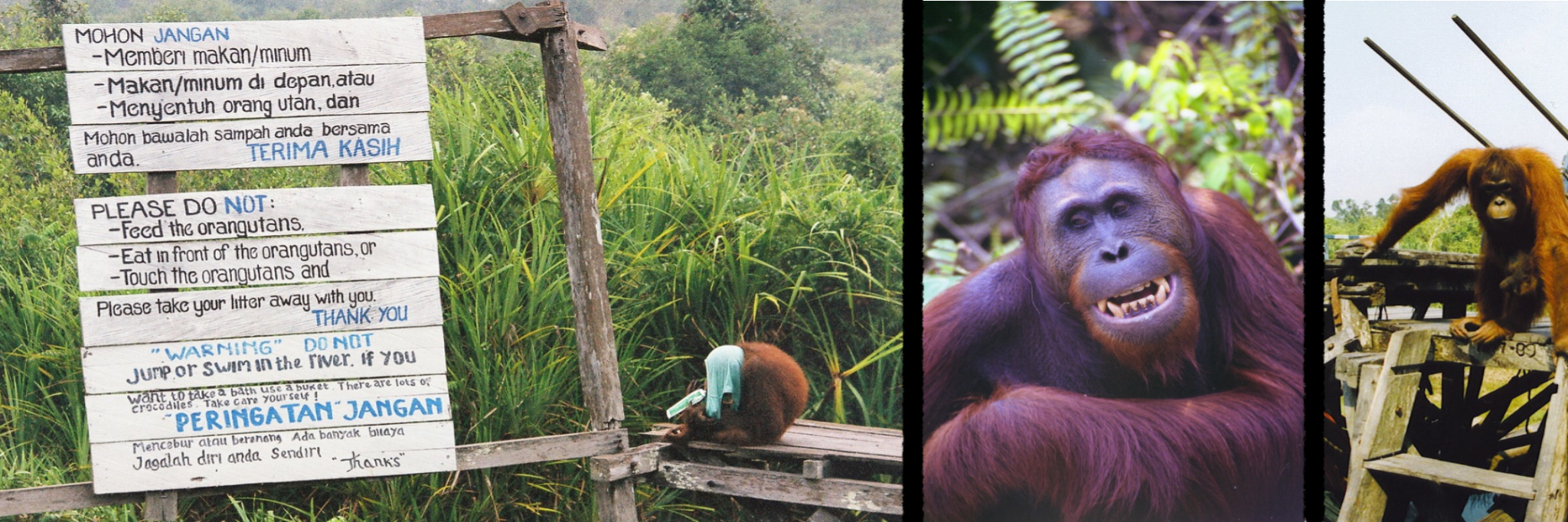
A whale surfacing alongside a boat. An orangutan moving through the rainforest. An elephant crossing a road. A gorilla looking straight through you. A sea turtle disappearing beneath the surface.
Those experiences are powerful precisely because the animal is still wild.
And that's something I want to protect.
Not just because I love wildlife, but because if we travel to experience the natural world, I think we have a responsibility to leave it as wild as we found it.
How to choose a responsible wildlife experience
If wildlife is an important part of your travel plans, there are some simple questions I think are worth asking before you book.
1. Is the animal genuinely wild?
The closer an experience is to observing wildlife behaving naturally, the
better starting point I think it provides.
2. Who benefits from the experience?
Look for evidence that tourism supports conservation, local communities or
meaningful education.
3. Is interaction encouraged?
If you're encouraged to touch, feed, ride, hold or pose with an animal, ask why
that interaction is necessary.
4. What happens when the animal doesn't want to
participate?
A genuinely responsible experience should put the animal's behaviour and
welfare ahead of the visitor's expectations.
5. Can you find out what the organisation actually does?
Don't rely solely on the words "conservation" or
"sanctuary". Look for evidence.
And perhaps the simplest question of all:
Is this experience really for the animal, or is it for me?
That's a question I ask myself whenever I'm looking at a wildlife experience.
Because I don't think responsible wildlife travel means taking wildlife out of travel.
Quite the opposite.
I think wildlife should be one of the reasons we travel.
We just need to make sure that when we enter their world, we remember that we're the visitors.
Planning a wildlife experience?
If you're passionate about wildlife and want to create a world-class wildlife experience, I'd love to talk.
Whether it's your first safari, tracking orangutans in Borneo, whale watching in South Africa or something completely different, I can help you research the experience properly and build it into a trip that works for you, while making sure the wildlife comes first.
Get in touch and let's create an experience that's unforgettable for you, while respecting the wildlife that makes it possible.