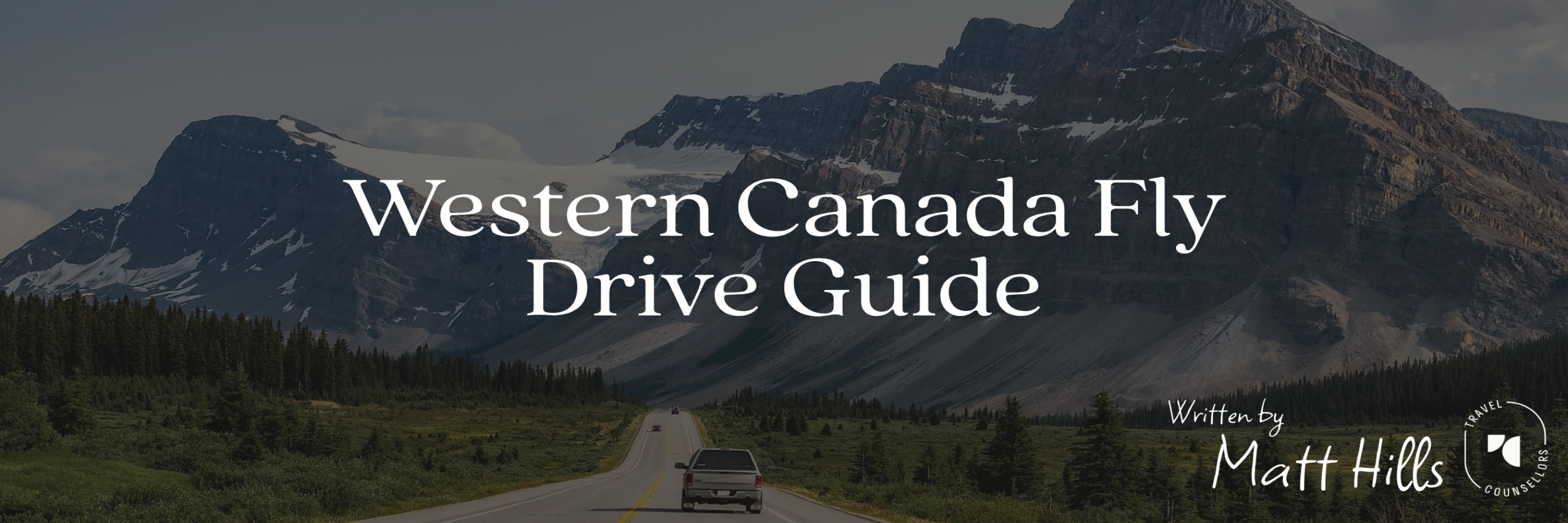
Western Canada Fly Drive Guide
A practical guide to planning a Western Canada fly drive, including Vancouver, Whistler, Banff, Jasper, the best road trip routes, wildlife experiences and useful advice for UK travellers.
If you love spectacular scenery, wildlife and the freedom to explore at your own pace, a Western Canada fly drive should be very high on your list.
We're talking enormous mountains, turquoise lakes, glaciers, forests, dramatic coastlines and wildlife that occasionally brings the traffic to a complete standstill.
I've travelled around Western Canada, including Vancouver, Vancouver Island and the mountain regions, and it's one of those destinations where the scenery really does live up to the photographs.
But it's also somewhere that benefits enormously from proper planning.
Western Canada is huge. Vancouver Island alone can fill an entire holiday, and the drive from Vancouver into the Canadian Rockies isn't something you want to rush through in a day.
The trick is deciding which parts of Canada you want to experience, allowing enough time in the right places and making sure the driving is enjoyable rather than just a way of getting between hotels.
Here's how I'd approach planning a Western Canada fly drive from the UK, including the places I'd prioritise, experiences worth booking and mistakes I'd avoid.
Why Choose a Western Canada Fly Drive?
For me, the biggest appeal of Western Canada is the variety.
You could start the holiday exploring Vancouver's waterfront, spend the next few days hiking or mountain biking in Whistler, kayak across a lake in British Columbia and finish surrounded by glaciers and mountains in Banff and Jasper.
You don't need to be particularly adventurous either. There are mountain gondolas, easy walking trails, scenic boat trips, wildlife excursions and some incredible views that require very little effort beyond finding somewhere sensible to park.
It's also an excellent destination for people who enjoy being active without wanting every day organised for them. You might book a whale-watching trip or glacier excursion in advance, then leave the rest of the day free to explore.
And that's what makes a fly drive such a good way to see this part of Canada. You're not restricted to a fixed tour schedule, and you can spend more time in places you particularly enjoy.
Who would I recommend it to? Couples, families with older children, wildlife enthusiasts, walkers, cyclists and anyone who enjoys a scenic road trip.
Of course, if you'd prefer to leave the driving and planning to someone else, there are some excellent escorted tours of Western Canada too. Get in touch and I'll help you find the right one.
If your ideal holiday involves spending two weeks beside a swimming pool, Western Canada probably isn't the obvious choice.
Where Should You Go on a Western Canada Fly Drive?
There are two main approaches I'd consider for a first visit.
The classic Western Canada road trip: Vancouver to Calgary, travelling through Whistler and British Columbia's interior before crossing into Alberta to explore Jasper, Lake Louise and Banff.
The coastal and wildlife route: Vancouver and Vancouver Island, concentrating on Victoria, Tofino, the Pacific coastline and wildlife experiences.
You can combine both if you've got enough time, but I wouldn't recommend trying to see everything in two weeks.
Vancouver — Where to Start Your Western Canada Road Trip
Vancouver is one of my favourite starting points for a Western Canada holiday.
What surprised me when I first visited was just how many high-rise buildings there were. The city is squeezed between the mountains and the sea, so there's a concentration of towers, but it still feels surprisingly green and outdoorsy.
I'd usually recommend spending two or three nights here before collecting the hire car.
What I'd do in Vancouver:
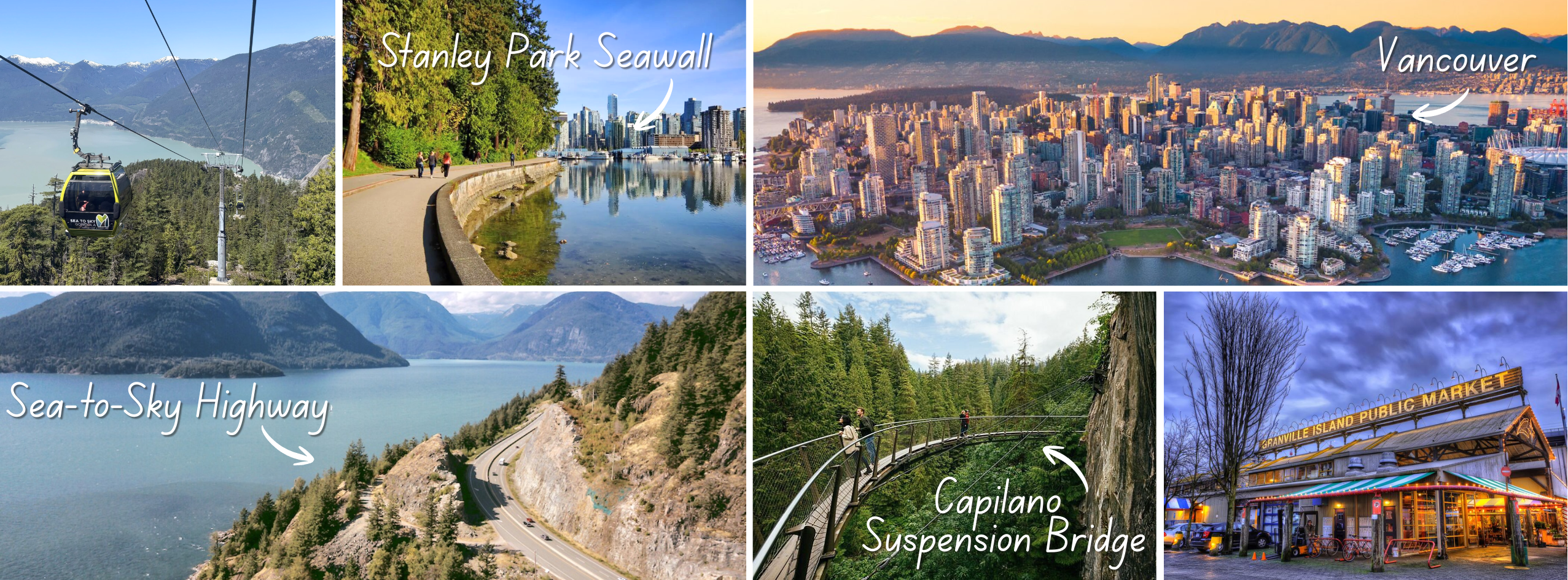
- Explore Stanley Park — walk or cycle around the seawall, enjoy the waterfront views and spend some time among the forests.
- Visit Granville Island — a great place for food, markets, independent shops and a general wander.
- Explore the waterfront — particularly around Coal Harbour and Canada Place.
- Visit Capilano Suspension Bridge — a dramatic suspension bridge surrounded by forest, just north of the city.
- Get up into the mountains — Grouse Mountain offers a completely different perspective of Vancouver and the Pacific coastline.
I particularly like Vancouver because you can get a real city experience without being far from nature.
My advice: Don't rush to collect the hire car as soon as you land. Spend a couple of nights exploring Vancouver first, then collect the car when you're ready to head north. You'll avoid unnecessary parking costs and the hassle of driving around the city.
Whistler — Not Just for Skiing
From Vancouver, I'd head north along the Sea-to-Sky Highway towards Whistler.
It's roughly a two-hour drive without stops, but I'd allow longer because there are some excellent places to pull over and enjoy the scenery.
Whistler is obviously famous for skiing, but I think it's a fantastic summer destination too. The town sits beneath Whistler and Blackcomb mountains, and the ski lifts open up a huge amount of mountain scenery without requiring you to spend several hours climbing uphill.
The PEAK 2 PEAK Gondola connecting the mountains is particularly impressive when operating. Some cabins even have glass floors, if you're into that sort of thing.
Once you're up in the mountains, there are walking trails, viewpoints and opportunities for more challenging hikes.
Experiences I'd consider:
- Taking the gondolas up Whistler and Blackcomb for mountain views.
- Hiking the alpine trails during the summer season.
- Mountain biking, whether you're experienced or want something more introductory.
- Exploring the surrounding lakes and outdoor activities.
- Enjoying the restaurants and atmosphere of Whistler Village.
One of the best things about Whistler is that the village centre is largely pedestrianised and compact making it easy to explore on foot. Once you've arrived, you can leave the car alone.
There are plenty of restaurants, shops and places to spend the evening, which makes it an excellent stop for two or three nights.
My advice: Don't treat Whistler as a quick lunch stop on the way to the Rockies. If you enjoy outdoor activities, it deserves a couple of nights at least.
British Columbia's Interior — Kamloops, Clearwater & Wells Gray
The journey from Whistler towards Jasper takes you through the interior of British Columbia, and this is where the scale of Western Canada really becomes apparent.
There are forests, mountains, rivers and an enormous number of lakes.
You have several options for breaking up the journey, including Kamloops and Clearwater.
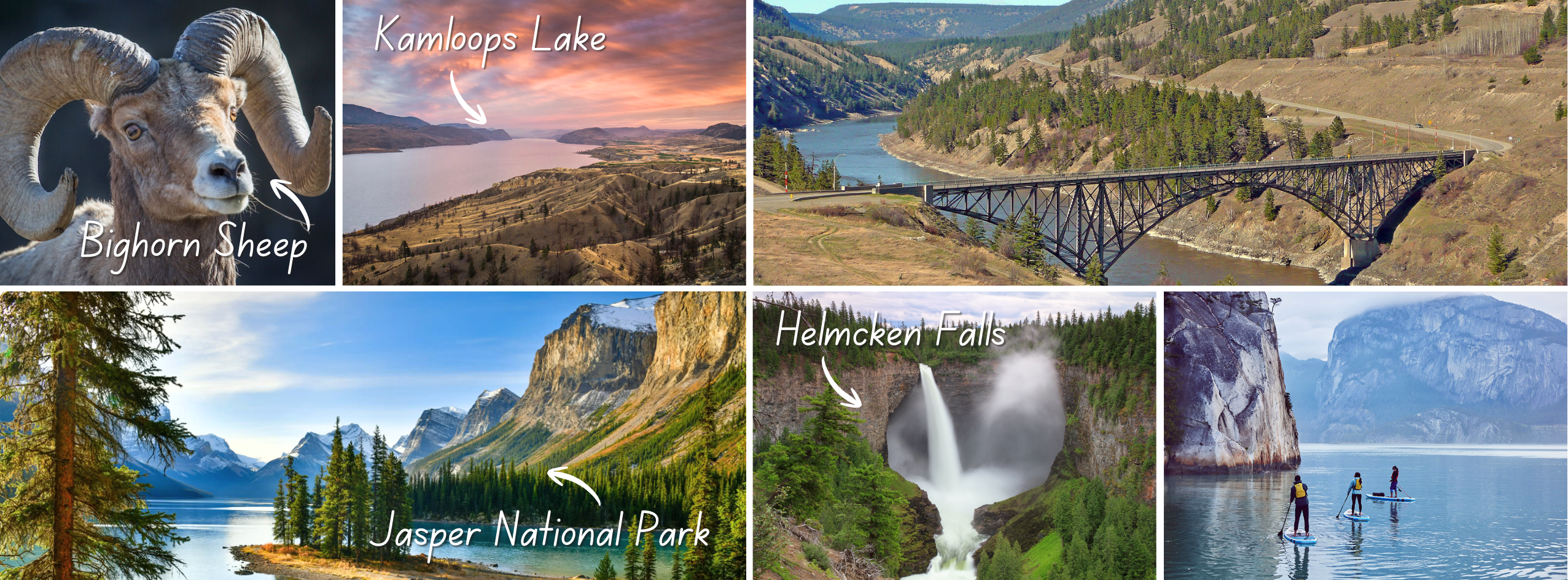
Kamloops and the surrounding lakes are particularly good if you enjoy water-based activities. Depending on where you stay, you could spend time kayaking, paddleboarding, boating, swimming or simply relaxing beside the water.
If you've got a couple of weeks and want to avoid spending every day driving, a lake stop can be a very welcome change of pace.
Clearwater is another option, especially if you're interested in visiting Wells Gray Provincial Park.
The park is known for its waterfalls, particularly Helmcken Falls, along with forest scenery, walking trails and opportunities to get outdoors.
These stops aren't necessarily the places people have heard of before they start researching Canada, but they can be among the most enjoyable parts of the trip.
There are plenty of lesser-known parks and scenic areas throughout British Columbia, so you don't need to spend the entire holiday following the crowds.
My advice: Choose these overnight stops based on what you actually want to do, not simply the shortest route on Google Maps. A couple of nights in the right place can make a long road trip much more enjoyable.
Jasper National Park — Wildlife and Wide-Open Scenery
Jasper is one of the great highlights of a Canadian Rockies road trip. The national park offers mountains, forests, lakes, waterfalls and plenty of opportunities to see wildlife.
Compared with Banff, Jasper generally feels more spread out, and it's somewhere I'd recommend if you want to spend more time surrounded by nature.
You could spend your days exploring scenic drives, walking trails, lakes and viewpoints, or booking organised activities.
Things worth considering include:
- Visiting the lakes and mountain viewpoints around Jasper.
- Exploring waterfalls and scenic walks.
- Taking a boat trip or organised sightseeing excursion where available.
- Looking for wildlife from safe viewing areas.
You might remember seeing Jasper in the news in 2024, when wildfires affected parts of the town and national park. Since then, the region has made significant progress in its recovery, and it remains one of the highlights of a Canadian Rockies road trip.
How long would I stay? Two nights minimum, although three would be preferable if you want a more relaxed visit.
The Icefields Parkway — One of the World's Great Scenic Drives
This is one of the experiences I'd be most reluctant to leave out of a Western Canada fly drive.
The Icefields Parkway connects Jasper and Lake Louise, travelling through around 144 miles of extraordinary mountain scenery.
And this isn't simply a road to get from Jasper to your next hotel. It's an experience in itself. The journey takes you past enormous mountains, glaciers, lakes, waterfalls and viewpoints where you'll want to stop constantly.
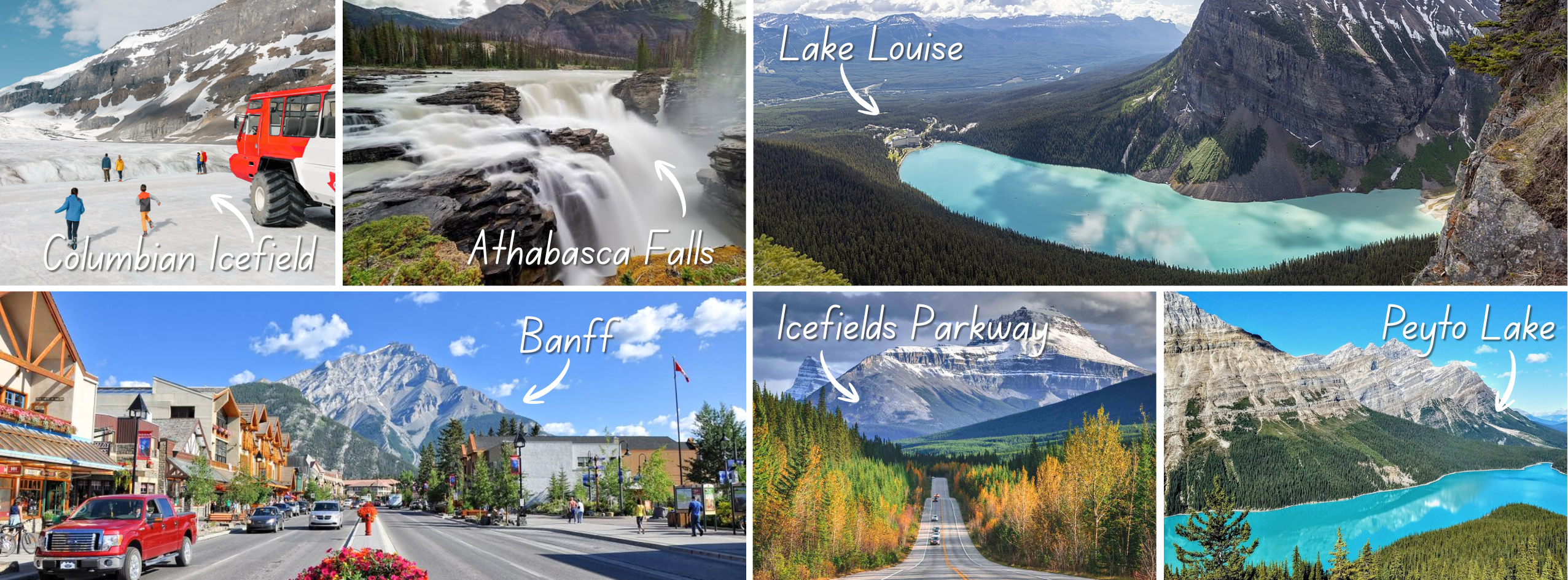
One of the biggest highlights is the Columbia Icefield, where you can arrange an organised excursion onto the glacier in a specially designed vehicle.
These vehicles have enormous wheels and take you out onto the ice for a completely different perspective of the landscape.
The nearby Glacier Skywalk is another experience worth considering if you're comfortable with heights.
I'd also include Athabasca Falls, one of the better-known waterfalls along the route. I've always liked that name. It sounds like something from Harry Potter.
Other stops such as Peyto Lake and Bow Lake add even more scenery along the way.
My advice: Allow a full day for the Icefields Parkway. The actual driving time is much shorter, but you'll want time for photographs, walks, viewpoints and any booked excursions.
If your route doesn't include an overnight stay in Jasper, I'd still look at whether you can travel part of the Parkway from Lake Louise.
It's too good to miss just because your itinerary doesn't happen to pass through it.
Lake Louise and Banff — The Classic Canadian Rockies Experience
Lake Louise is one of the most photographed places in Canada, and it's easy to understand why.
You've got a brilliantly coloured lake surrounded by mountains, with a glacier at the far end.
I'd make time to enjoy the lake itself, but also consider some of the walking trails and viewpoints if you want to escape the busiest areas.
Nearby Moraine Lake is another spectacular location, although access needs planning. You can't simply drive your hire car there, so I'd look at the appropriate shuttle or transport arrangements in advance.
From Lake Louise, it's a relatively short drive to Banff.
Banff is a lively mountain town with restaurants, shops, hotels and plenty of outdoor activities. It's an excellent base for exploring the surrounding area.
You could spend a day visiting Lake Minnewanka, take the Banff Gondola for panoramic views, enjoy a walk or cycle ride, or simply explore the town.
There's also a wide choice of accommodation, from comfortable mountain hotels to luxury properties.
Where would I stay — Banff or Lake Louise?
For a first-time visit, I like the idea of combining them if the budget allows.
Lake Louise is about the scenery and the chance to stay close to the famous lakes. Banff has more of a town atmosphere, with a greater choice of restaurants and things to do in the evenings.
If you're trying to keep hotel changes down, staying in Banff and visiting Lake Louise on a day trip can also work.
My advice: I'd generally allow at least three nights in the Banff and Lake Louise area, preferably more if you're planning activities.
Calgary — More Than Just the Airport
Calgary is a great place to round off your Western Canada road trip, particularly if you have time to explore the city before flying home.
The drive from Banff is relatively straightforward, and Calgary makes a convenient departure point for flights home.
One of the biggest attractions is the Calgary Stampede, held each July. It's famous for rodeo events, music, entertainment and Western Canadian culture.
If the dates work, it could be a very interesting way to finish the trip. Just bear in mind that hotels can be busier and more expensive around major events.
Can You Do the Western Canada Road Trip in Reverse?
Absolutely. Although I've described the route from Vancouver to Calgary, it works just as well in the opposite direction, starting in Calgary and finishing in Vancouver.
In fact, some people argue that the Icefields Parkway is even more spectacular when driven from south to north, travelling from Lake Louise towards Jasper. The scenery becomes increasingly dramatic as you head deeper into the mountains, with some fantastic views opening up along the way.
Personally, I wouldn't choose the direction of the entire holiday based purely on this. Both directions offer incredible scenery, and the better option will often come down to flight schedules, accommodation availability and how the rest of your itinerary fits together.
Vancouver Island — Whale Watching, Wildlife & Coastal Scenery
Vancouver Island deserves more attention than it sometimes gets on Western Canada itineraries.
I visited on a cricket tour, which is a slightly unusual way to discover Canada. But it gave me the opportunity to explore Victoria and experience some fantastic wildlife.
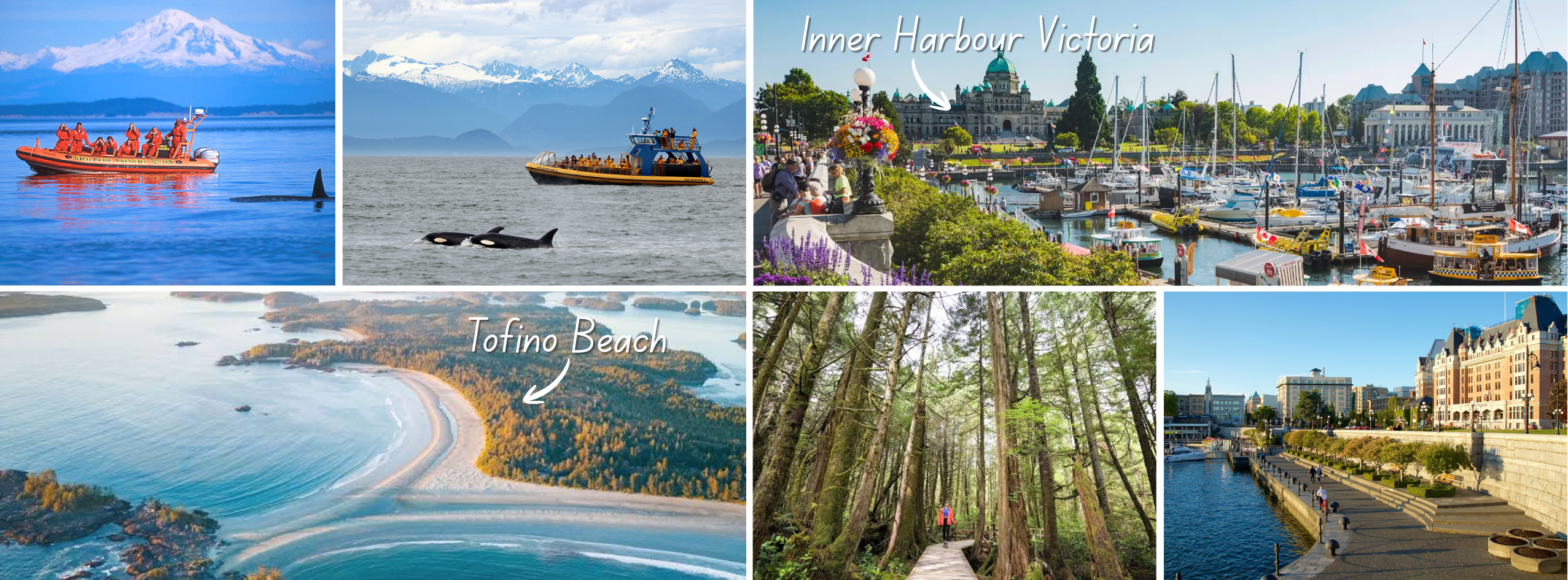
Victoria has a distinctly British feel, with historic buildings, gardens and an attractive waterfront. It's a great place for walking, cycling and exploring the surrounding coastline. One of the best things to do from Victoria is take a whale-watching boat trip, and it's an experience I'd highly recommend from my own visit.
Further across the island, places such as Tofino and Ucluelet offer wild Pacific beaches, rainforest, hiking and more opportunities for whale and bear watching.
The difficulty is deciding how much time to spend here.
Vancouver Island is enormous, and Victoria, Tofino and the northern island are not places you can comfortably cover in a couple of days.
My advice: If you've got two weeks and your priority is the Rockies, I'd probably save Vancouver Island for another trip. With three weeks, it's much easier to include both.
If wildlife and the coast are your main interests, you could just as easily plan an entire holiday around Vancouver and Vancouver Island.
How Long Do You Need for a Western Canada Road Trip?
For a proper Western Canada fly drive, I'd recommend at least two weeks.
Three weeks is better if you want a more relaxed pace or have your heart set on combining Vancouver Island with the Canadian Rockies.
|
Duration |
What I'd Recommend |
|
14 nights |
A classic Vancouver-to-Calgary road trip through Whistler, Jasper and Banff |
|
16–18 nights |
A more relaxed itinerary with extra time in the Rockies and British Columbia |
|
21 nights |
A fuller Western Canada holiday, potentially including Vancouver Island |
For most first-time visitors, I'd recommend flying into Vancouver and returning from Calgary, or doing the same route in reverse. This avoids unnecessarily retracing your steps.
There may be a one-way car hire fee, but I'd rather consider that than add several days of driving simply to return to the original airport.
Trying to squeeze in both the island and the entire Rockies route would make for a very rushed holiday.
Best Time to Visit Western Canada
For a classic Western Canada fly drive, I'd generally recommend travelling between June and September.
But the best month depends on where you want to go and what activities interest you.
June is good for long daylight hours, waterfalls and the start of the main summer touring season, although some higher mountain trails can still have snow.
July and August are excellent for outdoor activities, hiking, mountain sightseeing and lake experiences. They're also the busiest months, so it's important to book accommodation and key excursions early.
September can be a lovely month to travel, particularly if you prefer slightly fewer crowds. Just remember that temperatures can drop significantly in the mountains, especially overnight.
Vancouver and Vancouver Island have a milder coastal climate than the Rockies, while the interior of British Columbia can become surprisingly hot in summer.
You may also need to consider wildfire conditions during the warmer months, particularly if you're travelling through remote areas.
My advice: Don't choose your month based purely on average temperatures in Vancouver. The weather in the mountains can be completely different.
Wildlife in Western Canada
Wildlife is one of the biggest reasons to visit Western Canada, but it's important to understand that not every animal is found in every region.
The Canadian Rockies are particularly good for looking out for elk, deer, bighorn sheep and other mountain wildlife, with bears and moose also present. I've seen bighorn sheep beside the road, close enough that we had to stop the car.
Vancouver Island and the British Columbia coast offer a completely different experience, particularly when it comes to marine wildlife. This is where you can arrange whale-watching trips to look for orcas, humpback whales and other species, depending on the location and season.
Bear-watching excursions are another option, particularly in appropriate coastal and forest habitats. I haven't personally seen a bear in Western Canada, but it's something I'd absolutely consider booking a guided excursion for.
Would I book wildlife trips in advance? Yes, especially if seeing whales or bears is one of your main reasons for visiting.
Wildlife is never guaranteed, but experienced local operators know the areas, conditions and regulations, and can offer a much better experience than simply hoping you'll spot something while driving.
Driving in Western Canada — What UK Travellers Need to Know
Driving in Western Canada is generally manageable, but the distances can be considerable.
The roads are often wide and well maintained on the main touring routes, although mountain driving requires a little more care and attention.
Canadians drive on the right, speed limits are shown in kilometres per hour and road conditions can vary enormously depending on the season.
For most classic summer fly drives, a standard hire car will be sufficient. You don't automatically need a large SUV just because you're visiting the Rockies.
I'd choose the vehicle based on passenger numbers, luggage, comfort and the route.
A few things I'd particularly watch out for:
- Driving distances — allow extra time for viewpoints, walks and stops. You'll make plenty.
- Mountain weather — snow and ice can affect higher roads outside the summer season.
- Wildlife — animals can appear close to the road, so stay alert, particularly in rural areas.
- Fuel and mobile signal — services can be limited on some remote routes, especially the Icefields Parkway.
I'd also recommend downloading offline maps before travelling into the mountains.
And remember, the quickest route isn't necessarily the best route when you're visiting somewhere this scenic.
What About the Rocky Mountaineer?
If you like the idea of Western Canada but aren't particularly interested in driving the entire route, the Rocky Mountaineer is an alternative worth considering.
These luxury scenic rail journeys connect Vancouver with destinations in the Canadian Rockies. You travel through spectacular scenery during the day, with large windows designed for sightseeing, then spend the night in a hotel rather than sleeping on the train.
I've booked this type of holiday for clients, and it's a particularly good option for people who want the scenery without spending every day behind the wheel.
It isn't a fly drive in the traditional sense, but it can work very well as part of a wider Western Canada holiday.
Common Western Canada Fly Drive Mistakes
Western Canada isn't particularly difficult to explore, but there are a few mistakes I'd avoid when putting a route together.
- Trying to include too much — Vancouver Island and the Rockies are both fantastic, but combining them properly takes time.
- Underestimating the distances — the driving times might look reasonable until you start adding stops and activities.
- Rushing the Icefields Parkway — I'd allow a full day rather than treating it as a transfer.
- Booking Banff and Lake Louise too late — accommodation in popular locations can sell out well in advance.
- Forgetting about shuttles and access arrangements — you can't simply drive to every famous lake and viewpoint.
- Not checking the season — mountain roads, activities and wildlife excursions can operate differently throughout the year.
- Leaving wildlife excursions until arrival — if it's something you really want to do, book it ahead.
- Choosing the wrong flight route — flying into and out of Vancouver can mean unnecessary backtracking.
Most of these problems are easily avoided with the right itinerary. The aim is to see Western Canada properly, not spend three weeks checking into hotels and repacking the car.
My Advice
For a first Western Canada fly drive, my preferred starting point would be Vancouver followed by Whistler, British Columbia's interior, Jasper, the Icefields Parkway, Lake Louise and Banff, finishing in Calgary.
It gives you an excellent introduction to the region, with a balance of cities, wildlife, mountains, lakes and outdoor activities.
But I wouldn't recommend exactly the same route to everyone.
If wildlife is your priority, I'd look more closely at Vancouver Island and the coast. If you love hiking, I'd give you longer in Whistler, Banff and Jasper. If you want to travel at a slower pace, I'd reduce the number of overnight stops.
And if you don't fancy driving the whole way, there are options for combining the Rocky Mountaineer with a stay in the Rockies.
That's the benefit of planning a tailor-made Western Canada holiday. We can build it around what you actually want to see and do, rather than following an itinerary that tries to squeeze everything in.
Ready to Start Planning?
If you're thinking about a Western Canada fly drive, get in touch and I'll help plan and book a tailor-made road trip that fits your travel dates, budget and interests.
From flights and car hire to hotels, wildlife excursions, scenic drives and the route through the Rockies, I'll help put everything together properly.
Back to Matt Hills TC Homepage