
Portugal Without a Car: What Actually Works and What Doesn't
Planning a car‑free, accessible trip by train in Portugal: where the network actually works, where it doesn’t, and what that means in real life.
Albufeira is four and a half miles from it's nearest railway station. Nobody tells you that. Every sustainable travel list says take the train, then recommends a town the train doesn't go to. So I spent a while with the Comboios de Portugal network (the CP network), the accessibility documents & the regional timetables, working out where a car-free trip holds up & where it quietly falls apart. If we want to cut car journeys without quietly excluding half our clients, we need to be honest about where the network actually serves people and where it doesn't.
Portugal's main passenger railway is essentially one long line with a few branches. Along that line, it's cheap, frequent and often faster than driving. Off it, you're negotiating taxis.
The main line: where trains beat cars
Porto to Lisbon, then Lisbon south to Faro. That's the whole network in a sentence.
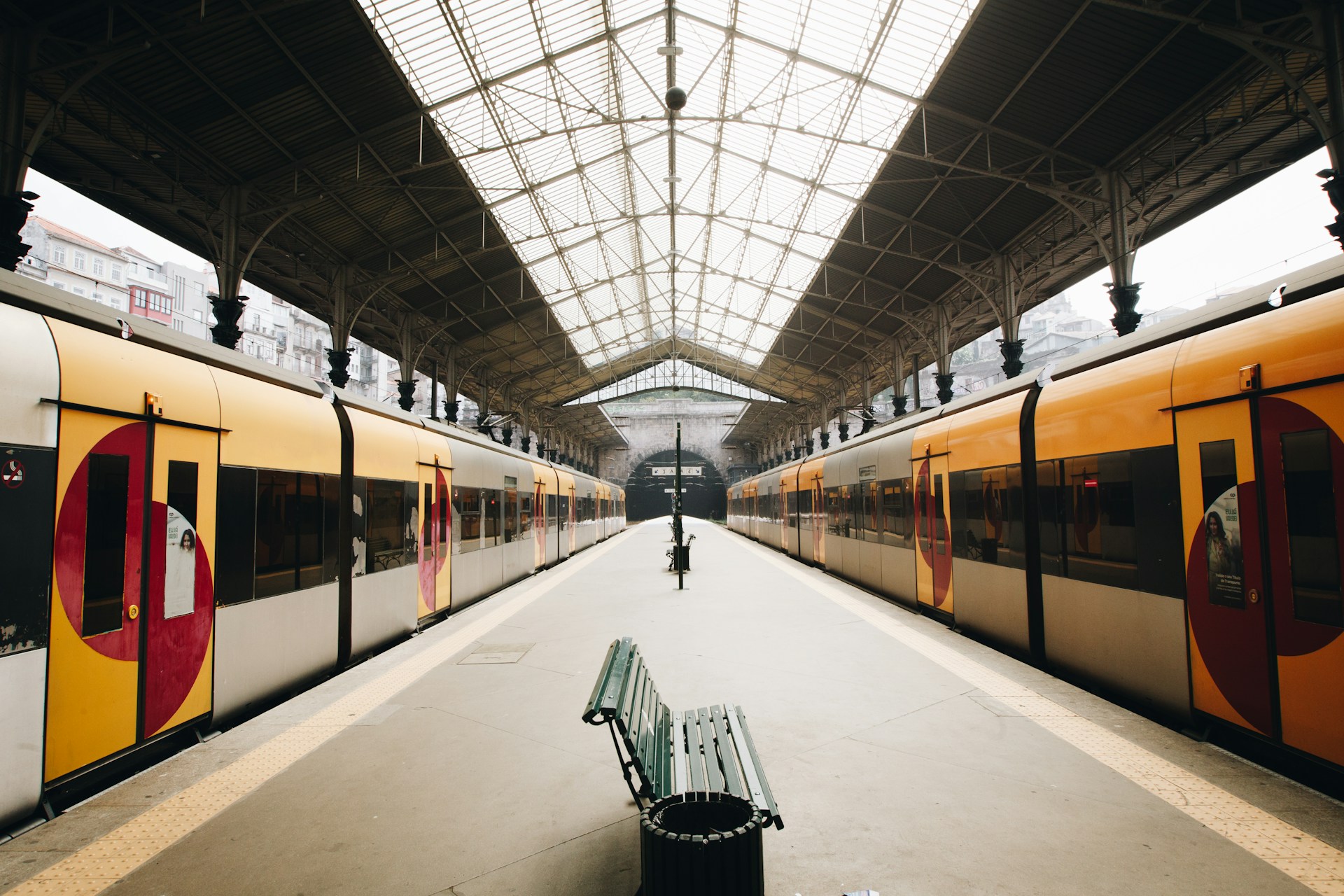
Photo by Claudio Schwarz on Unsplash
Porto to Lisbon takes about 2h45 on the Alfa Pendular, Portugal's tilting express, or a bit over three hours on the cheaper Intercidades. There are fifteen to nineteen departures a day. From Porto Campanhã to Lisbon Oriente or Santa Apolónia, both on the metro, so you arrive in the city rather than forty minutes outside it. Flying takes 55 minutes in the air and about three hours door to door once you've added two airports. The train isn't the worthy option here; it's the better one.
Lisbon to Faro: roughly three hours express, three and a half on the Intercidades, about five departures a day.
Then there's Coimbra, which sits midway between Porto and Lisbon, and it is where the first thing goes wrong. Long-distance trains stop at Coimbra-B, a mile and a quarter out along a busy road, with no decent footpath, uphill to the old town. I wouldn't recommend walking it with bags. That mile-and-a-quarter feels very different if you have dodgy knees, a pushchair or a rollator than it does if you're backpacking at twenty-two.
There's a shuttle train from Coimbra-B to Coimbra-A in the centre, and it's already included in your long-distance ticket. Nobody mentions this; everybody needs it.
Where it stops working
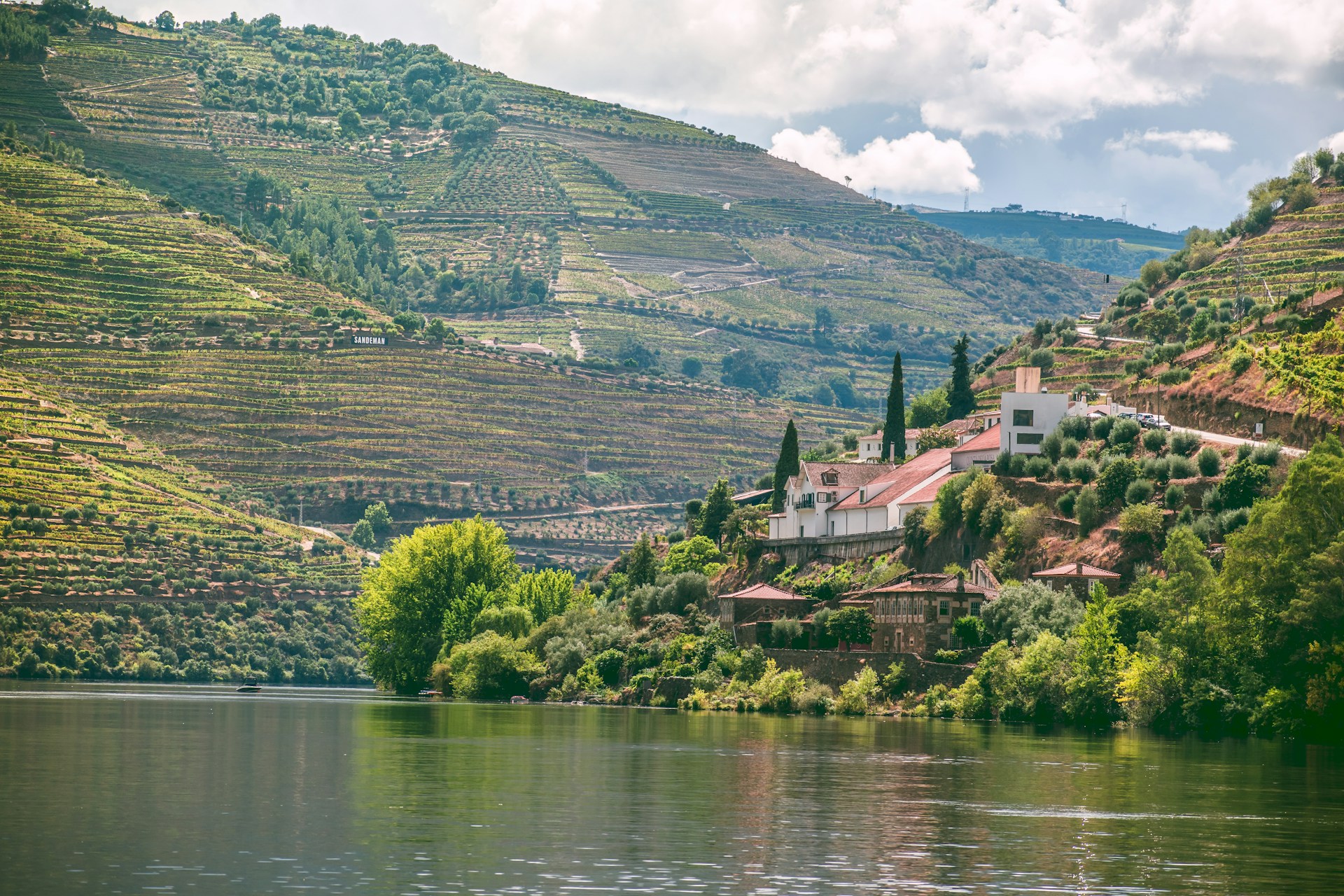
Photo by rach sam on unsplash
The Douro
The Douro first, because it's worth the effort. Trains leave from Porto São Bento and follow the river east to Pocinho. Régua is roughly two hours, Pinhão two and a half, and the stretch past Régua through the terraced vineyards costs under €15. Five or six services a day reach Pinhão. More stop short at Régua. Pinhão if you want to walk to a tasting instead of arranging a lift.
The Alentejo
The Alentejo is harder. Évora is fine, ninety minutes from Lisbon on the Intercidades, with the station a five-minute walk from the medieval wall. But only a handful depart a day, fewer on weekends, and they fill up. Past Évora, the region isn't really served at all. Monsaraz, the cork forests, the Almendres Cromlech, the dark-sky sites at Alqueva: all of it needs a driver. Car-free Alentejo means Évora and nothing else, and you should decide whether that's enough before you book it.
The Algarve
The Algarve catches people out the worst. Express trains reach Faro. Regional services run east to Olhão, Tavira and Vila Real de Santo António, or west through Tunes to Portimão and Lagos. They're timed to meet the expresses, so the connections genuinely work.
The problem is the resort towns:
▣ Albufeira, four and a half miles from Ferreiras station (7km)
▣ Vilamoura, three miles (5km)
▣ Armação de Pêra, five miles (8km)
Those 3-5 mile gaps between stations and resorts are an awkward taxi or transfer for most people and an outright barrier if you cannot manage hills, heat or long walks.

Photo by Tanguy Sauvin on Unsplash
Whereas Tavira, Olhão, Faro and Lagos put you in the town when you stop off the platform. So a car-free Algarve is possible and pleasant, but it's a completely different Algarve from the one in the brochure.
The islands
Madeira & the Azores have no railways at all. Buses are scarce outside the main towns. Just about doable on São Miguel & around Funchal with some planning: much harder once you leave the main hubs.
Accessibility on Portuguese trains (and why I wrote this)
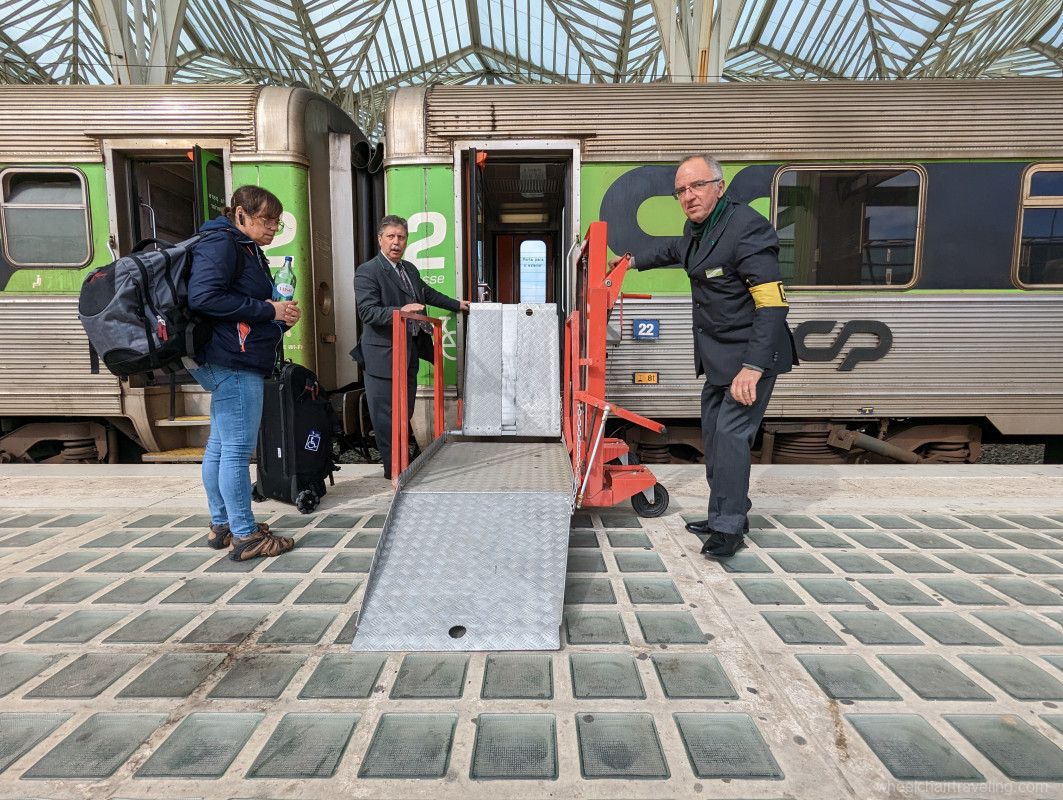
Photo by Wheelchairtravelling.com
I spend part of my week on reception at a university physio clinic. You learn quickly there that "it's only a short walk" means completely different things to different people, and that nobody asks the follow-up question until it's too late to change anything. Booking travel turned out to be the same problem wearing different clothes.
I also plan trips for clients as well as for myself, and I kept seeing "take the train" suggested for places where either the train doesn't go, or isn't accessible. So when a rail operator publishes exactly which of its lines a wheelchair user cannot board, and none of the glossy "sustainable Portugal" articles repeat it, I notice.
The Alfa Pendular is well equipped. It has two dedicated wheelchair spaces, an adapted toilet, and platform lifts for boarding. Intercidades accepts manual folding wheelchairs, using portable lifts at the station.
But entire lines are excluded. The Douro line is not wheelchair-accessible, except for the Porto to Marco de Canaveses commuter section, which is the dull half rather than the scenic half. Nor is the Évora line. Nor is the Oeste line towards Caldas da Rainha, nor the Vouga line, nor the Leste regional services.
Read that again. The Douro & Évora, the two journeys that appear on every slow-travel wish list for Portugal, are the two a wheelchair user can't take. That is the gap between marketing and reality. Better to know that now than at the platform. The problem is not the wheelchair; it is the gaps in the infrastructure and the information.
SIM: planning round assistance
What you do instead is book a SIM, the Serviço Integrado de Mobilidade. It's CP's centralised assistance service & it's mandatory if you use a wheelchair or a scooter. Six hours' notice minimum. For anything departing between 10 PM and midday, you must submit the request by 8 PM the night before. On Alfa Pendular & Intercidades, you buy the ticket first, then request SIM against it, not the other way round. Stations vary, so check the station as well as the train. If they can't provide the assistance, they refund you, which is fair enough and no help whatsoever when you're already at the station.
There's also a fare agreement worth knowing, even if it mostly applies to residents. Certified disability of 80% or more gets 7% off second class, with a companion at a quarter of the full fare. Between 60% and 80%, it's 20%. You need the Portuguese multi-use medical certificate.
Plan the route around the assistance. Not the other way round. If you build your timings around SIM and the accessible lines, Portugal by train can work very well; the problems come when you assume you can improvise.
Booking and local tickets
Photo by edgar on unsplash
Tickets go on sale up to 60 days ahead. You cannot book August in January, however organised you are. Promo fares open at the 60-day mark & disappear fast.
Assigned seats, no standing. When a train's full, it's full, & at Oriente on a summer Saturday that means watching it leave without you.
Buy direct from cp.pt. No booking fees, unlike the resellers. Carry ID that matches the name on the ticket because inspectors do check, & they check harder if you've claimed an age discount. European rail passes are poor value here.
In Lisbon, get a Navegante card. Fifty cents, reusable & loading it with Zapping credit both drops the fare & spares you the ticket queue at Cais do Sodré, which in July has been known to run to half an hour. Sintra trains go from Rossio. Cascais trains go from Cais do Sodré. Opposite sides of the city. Getting between Sintra and Cascais by rail means crossing Lisbon and takes roughly two hours, while the 403 bus does it in about forty minutes.
Getting there overland
Awkward, currently, which matters if you are trying to avoid flying as well as driving. The Sud Express sleeper from the French border into Lisbon was suspended in 2020 and never restored, ending a service that had run for 134 years. What's left is the Celta from Vigo into Porto, or a slow chain of changes via Madrid & Badajoz. Some booking sites still list the Sud Expresso as though it runs. It doesn't, & that's exactly the sort of thing I'd rather catch before someone's built a fortnight around it.
A faster Madrid to Lisbon daytime service is expected when the new high-speed sections open, maybe 2027, maybe 2028, & I'll be watching for it.
Realistically, most people will fly in & go car-free once they land. That still strips out nearly all the road mileage. Perfect is doing a lot of damage to good on this one.
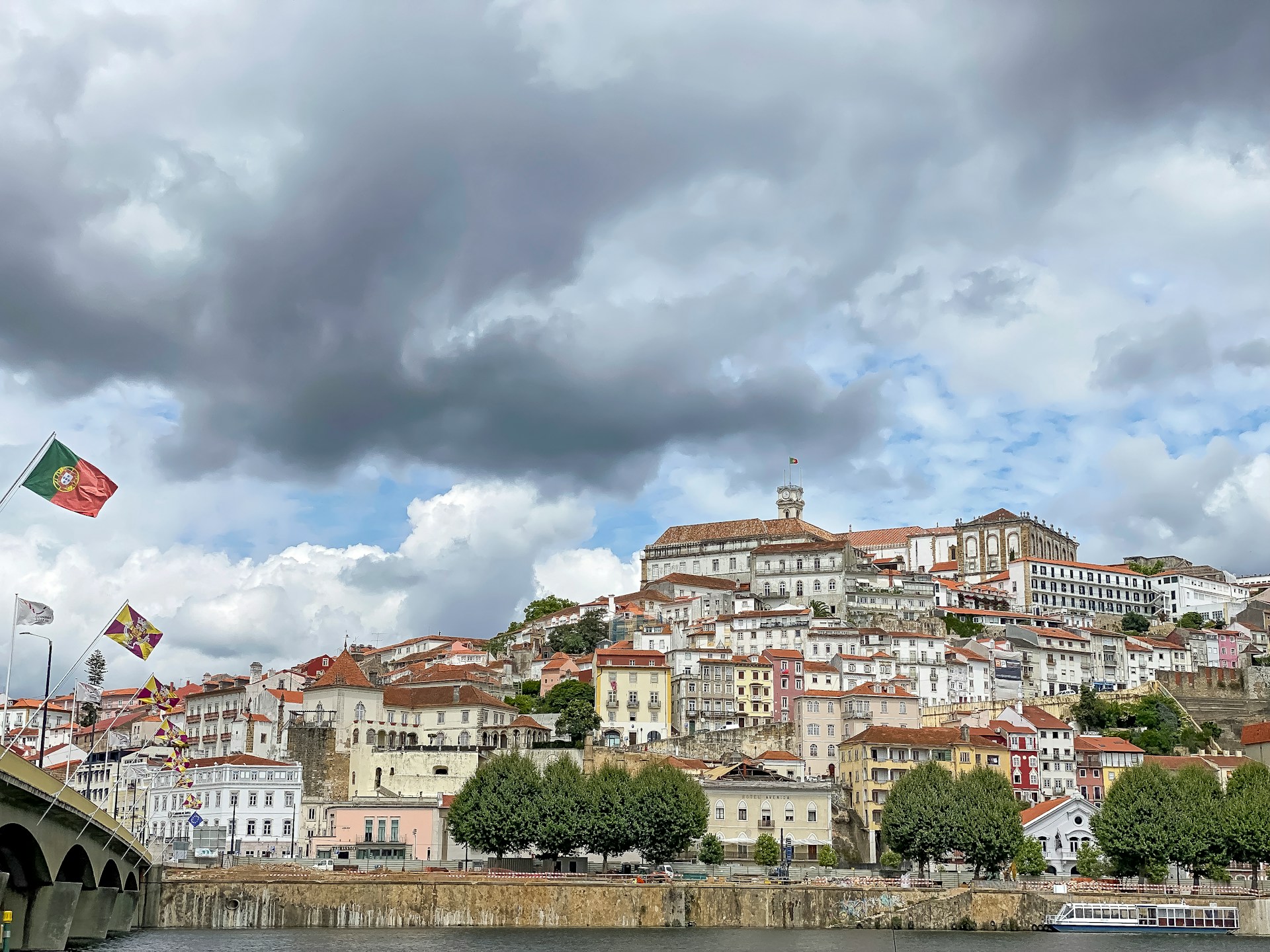
Photo by Etienne Girardet on unsplash
A car-free Portugal itinerary that actually works
What I'd put together for a first-time, no-car trip:
Ten days, first time, no car: three nights Porto with a day out on the Douro line to Pinhão, two nights Coimbra, four nights in Lisbon with Sintra & Cascais by suburban rail. Every stop close enough to its station that you're not arranging onward transport. Every service is frequent enough that missing one costs you an hour, not a day.
Add the Algarve & you're going to Tavira, not Albufeira. I'd explain why before you book, not after.
If we only ever say "take the train" without checking whether the train is reachable or accessible, we push people back into cars by default. Honest, detailed planning is what turns "sustainable" from a slogan into something that actually works for real travellers.
Portugal and mobility, or Portugal and tight connections, is exactly the sort of thing I'd rather sort out at the planning stage. Send me the dates & who's travelling & I'll work the route out properly.
---
Times, fares & accessibility provision all change. All of this was checked against CP's published information & the regional timetables at the time of writing. Check with cp.pt before you travel