Switzerland by Train: Travelling the Swiss Way
Switzerland’s integrated network and iconic panoramic trains turn the country into a seamless, car‑free, premium experience: reliable, scenic, sustainable and surprisingly simple for you to enjoy.
1. One network that reaches almost everywhere
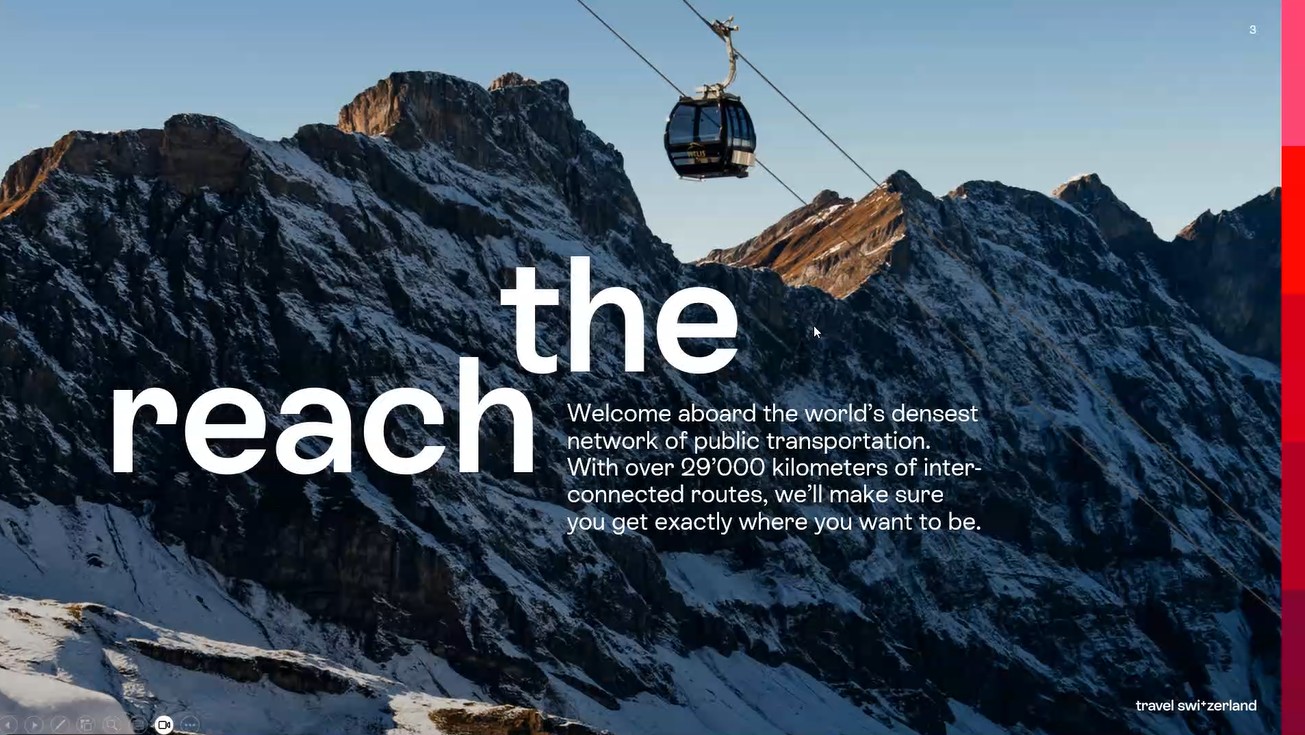
Switzerland has one of the world’s densest public transport networks. Trains, buses, boats and city transport are designed to connect, not compete. When the railway line ends, the bus is waiting outside the station to take travellers on into valleys, villages and meadow‑filled landscapes with those iconic Swiss cows.You can cross the entire country in a matter of hours:Basel in the north to Lugano in the south through the world’s longest rail tunnel in about 3 hours
Trains on main lines run every 30 minutes and at least hourly elsewhere, with rail stations right inside both Geneva and Zurich airports. It is only 8 minutes by train from Zurich Airport into the city.
2. Reliability you can genuinely plan around
Swiss trains are famously punctual, with around 93% running on time. A train is considered delayed only once it is 3 minutes behind schedule. Services run 365 days a year from early morning to late evening, including Sundays and public holidays such as Christmas and New Year’s Eve.Most services are free seating and, outside the weekday rush hour (roughly 6.30–8.30 a.m.), it is usually easy to find a spot.
3. Spectacular views and premium panoramic trains
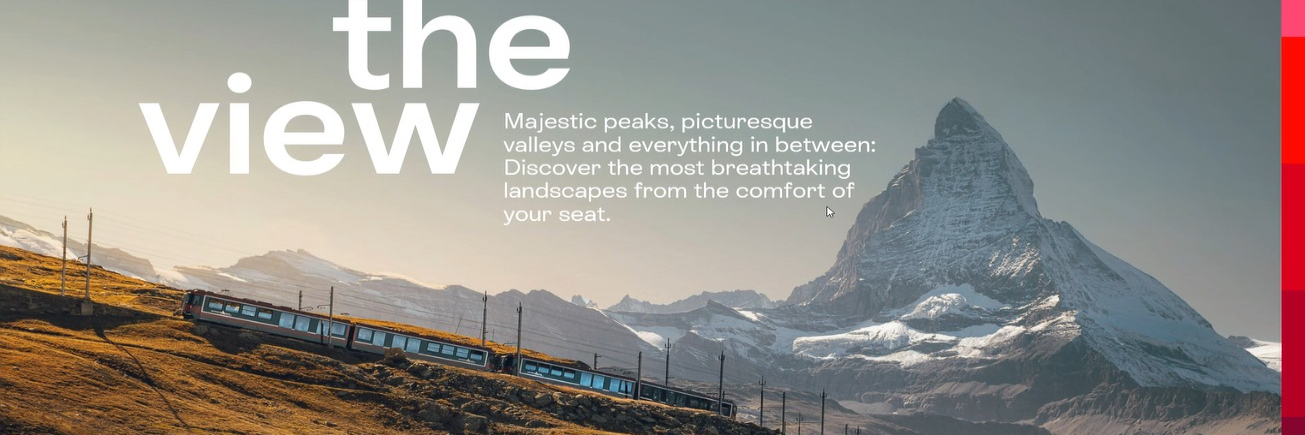
In Switzerland, the journey is part of the experience. Even everyday routes from Zurich to Bern or Interlaken are lined with lakes, mountains and chocolate‑box villages. Many intercity trains are double‑decker: head upstairs for the best unobstructed views.
Plus Switzerland is famous for its premium panoramic trains:
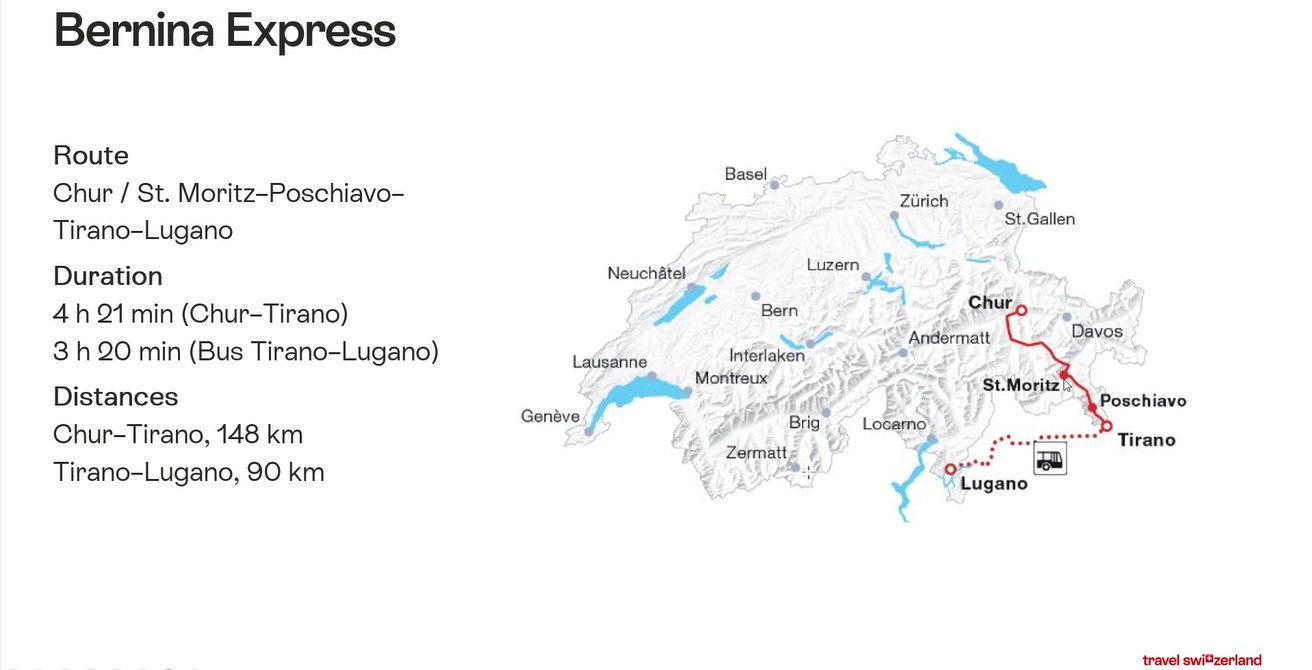
Bernina Express: From eternal snow to palm trees. This line links St Moritz at over 1,800 metres above sea level with Tirano in Italy, dropping more than 2,000 metres in altitude. Travel past glaciers, spiralling tunnels, viaducts and dramatic mountain scenery before reaching a milder, Mediterranean‑style climate with palm trees. Seat reservations are mandatory and it can sell out fast, so advance booking is essential. Open year‑round.
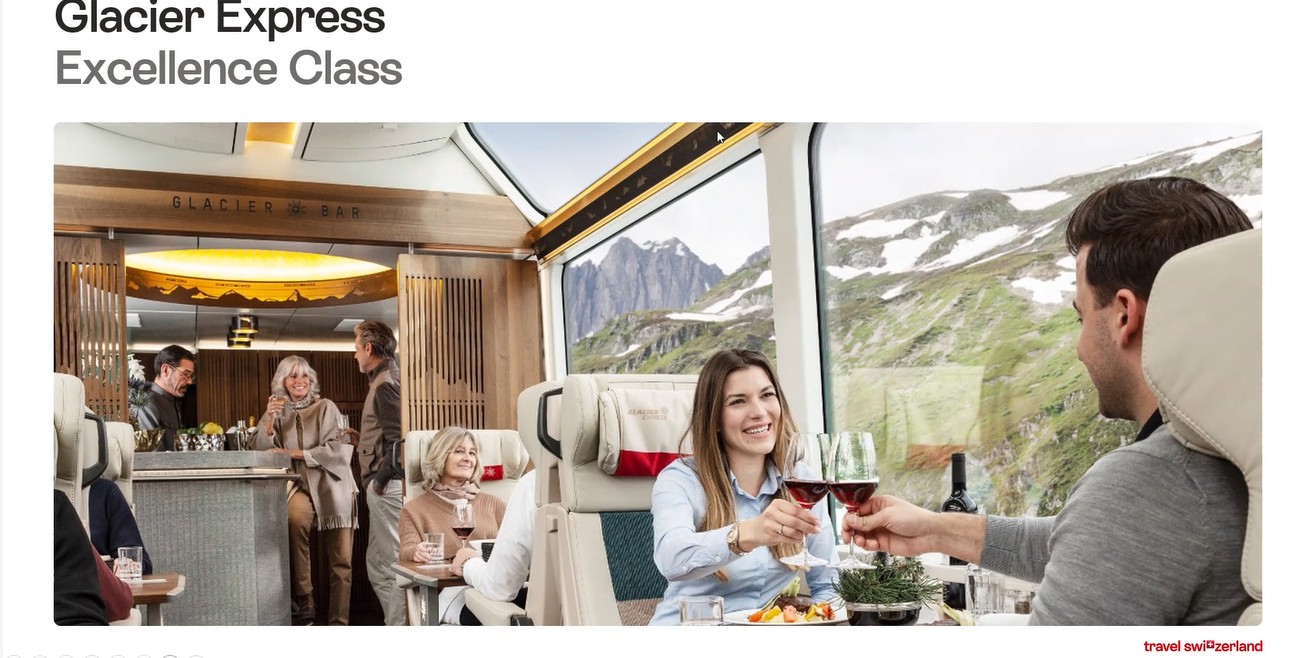
Glacier Express: Often called the slowest express train in the world, this 8‑hour journey between Zermatt and St Moritz is the longest single train ride you can take in Switzerland, with huge panoramic windows and a constantly changing alpine backdrop. A freshly prepared three‑course meal can be served at your seat, with a full kitchen on board. It operates throughout the year except during a seasonal closure in autumn, and reservations are compulsory and very popular. For something truly special, you can upgrade to Excellence Class: just 20 window seats per direction, a 7‑course menu with matched Swiss wines and a very exclusive feel.
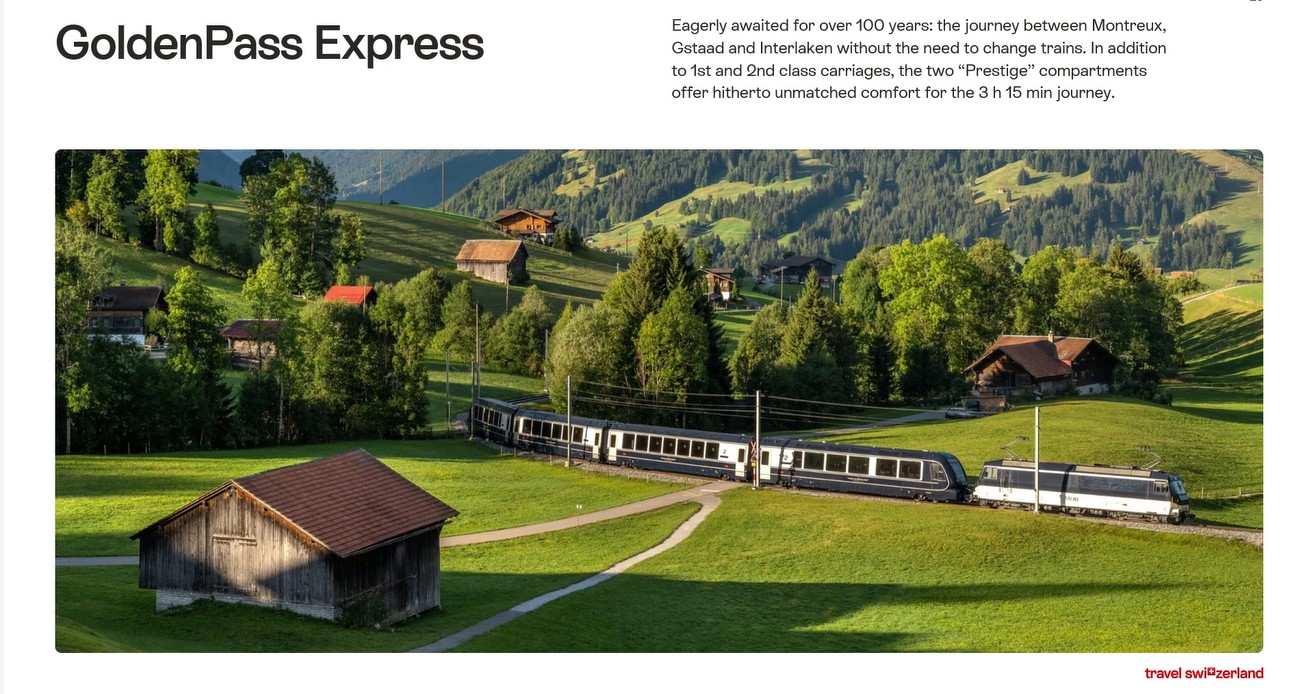
GoldenPass Express: Linking Interlaken in German‑speaking Switzerland with Montreux in the French‑speaking region in just over three hours, this is a journey through rolling green hills, meadows and classic “pre‑Alps” scenery. There are four direct trains per day. Seat reservations are not mandatory but are highly recommended, especially for clients investing in a premium holiday. A highlight is the Prestige Class, with only nine elevated seats per train, heated and angled to give the feeling of floating through the landscape.
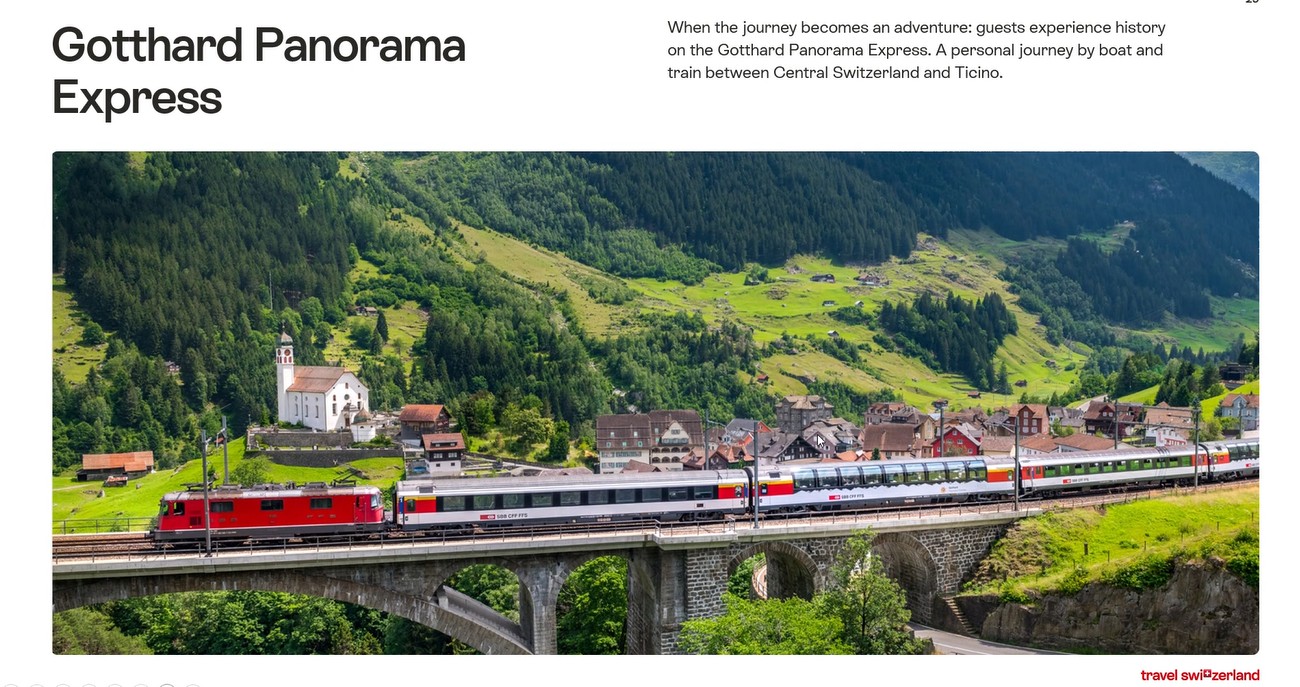
Gotthard Panorama Express: Combining boat and rail, this is one of the country’s most spectacular routes. Begin with a cruise across Lake Lucerne, often on a historic paddle steamer more than 100 years old, then continue by panoramic train through the old Gotthard route. The line climbs in serpentines so that you see landmarks like the white church of Wassen three times: from below, at the same level and from above, before crossing the Alps towards Lugano in Italian‑speaking Switzerland. This experience is first class only and operates seasonally from April to October.
Lucerne–Interlaken Express: A perfect introduction to panoramic trains. This two‑hour journey runs hourly between Lucerne and Interlaken, passing five different lakes, each with its own striking colour. Ideal for clients who want a shorter scenic experience or a “taster” of Swiss panoramas.
4. Sustainability as standard
Public transport in Switzerland is exceptionally sustainable. Trains run on electricity produced primarily from the country’s abundant water resources. There are no regular diesel trains, so rail travel generates significantly lower emissions than flying or driving. In sustainability terms, only walking and cycling beat taking the train, making it a natural choice for eco‑minded travellers.
5. The Swiss Travel Pass: one ticket, huge value
The Swiss Travel Pass is the key to travelling the Swiss way. With a single pass, you can access:
Almost all trains
Local buses and city transport
Boats on many lakes and rivers
Around 500 museums are included, which is a major added value. In Switzerland, many historic buildings and medieval castles count as museums, so you can save significantly on entrance fees while enriching your trip with culture and history.
Passes come in both consecutive and flex formats, with options for 3, 4, 6, 8 and 15 days to suit different itineraries. It is also very family‑friendly: children up to 16 travel free when accompanied by a parent.
6. Hub‑and‑spoke stays with day trips
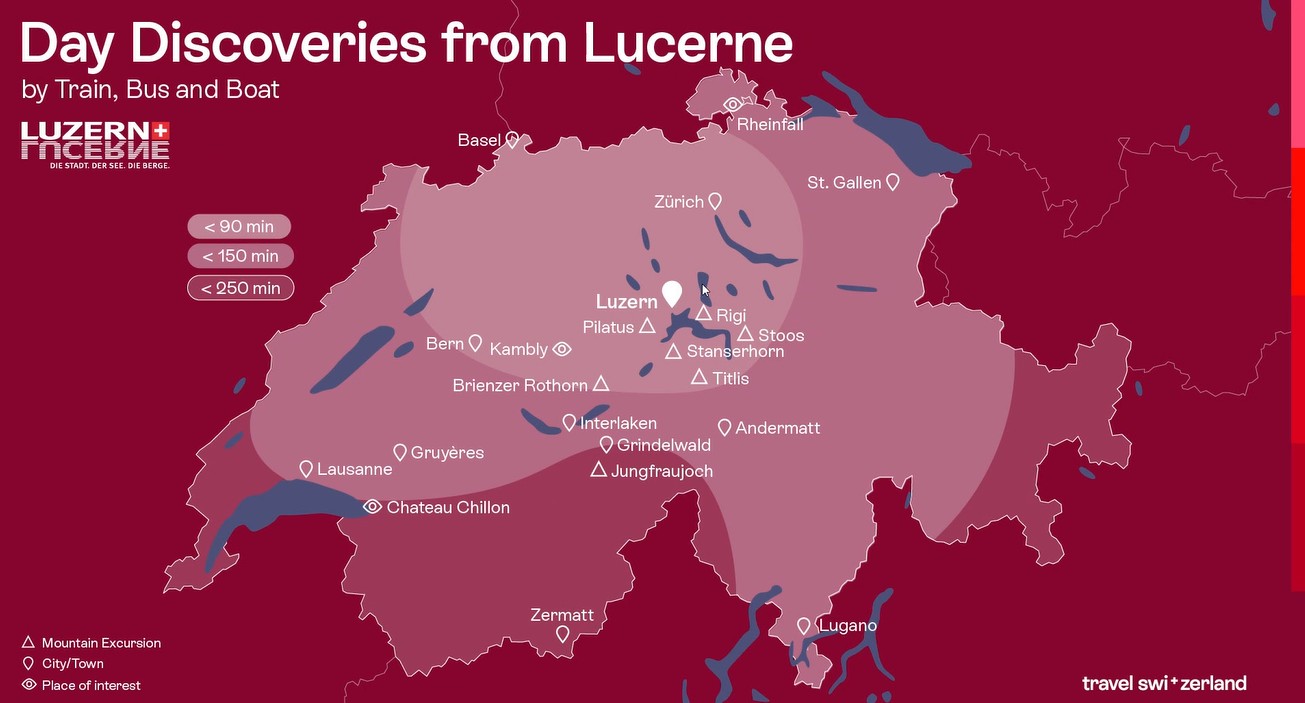
With the Swiss Travel Pass, you do not need to keep changing hotels. Switzerland is ideal for a hub‑and‑spoke approach:Base yourselves in one place for several nights and enjoy better hotel rates and less packing/unpacking.Take easy day trips thanks to short travel times.From Interlaken, for example, more than 10 major attractions can be reached within about 90 minutes, and you can cross the whole country in under four hours. Other excellent bases include Lucerne and Lausanne, which give access to lakes, mountains, cities and panoramic trains without constant hotel changes.