The Journey That Pressed My Reset Button
I travelled to Bhutan expecting mountains, monasteries and incredible hotels. I didn’t expect to come home feeling changed.
I’m 45 years old. Business is good. My family are everything to me. I have a job that allows me to travel to some of the most extraordinary places in the world and, believe me, I know how lucky I am. On paper, there is absolutely nothing wrong. But sometimes life isn’t about what’s written on paper. My son has grown up, moved out and gone to university, which in itself is a huge life change after years of being a mum first and foremost. My mum and dad haven’t been well, and with that comes the constant worry that sits quietly in the back of your mind, even when you’re getting on with everyday life. Somewhere amongst running a business, being a mum, worrying about my parents, travelling, working and simply getting on with life, I’d started to feel a little… lost. Is it perimenopause? Is it a midlife crisis? Is it suddenly having more time to think now that my son has flown the nest? Is it the worry of watching your parents get older? Or is it simply reaching a point in life when you stop, look around and wonder:
What now? I think, without really knowing it, I was yearning to press a reset button. And then I went to Bhutan.
I can honestly say Bhutan came into my life at exactly the right time. I didn’t go there looking to be “fixed”, and I certainly wasn’t expecting a holiday to change how I felt. But somewhere between the mountains, the monasteries, the people, the prayer flags and the silence, something shifted. Bhutan was the reset I didn’t know I needed......The Last Shangri-La.
Before travelling, as always, I did my homework. I knew Bhutan would be beautiful. I’d seen photographs of monasteries clinging to mountainsides, colourful prayer flags dancing in the wind and valleys that looked almost too perfect to be real. But I didn’t really know what to expect. One thing kept appearing in everything I read: Gross National Happiness. Rather than measuring a country’s success purely through economic growth, Bhutan has famously developed around the idea that progress should also consider the wellbeing of its people, preservation of its culture, protection of its environment and good governance. Reading about it at home, it sounded like a wonderful philosophy. Experiencing it in Bhutan made me question how the rest of us live. We spend so much of our lives chasing things. Earn more. Own more. Achieve more. Work harder. Be busier. Move on to the next goal. But what if happiness was part of the equation too? What if the wellbeing of people, communities and the planet mattered as much as economic growth? Bhutan isn’t a perfect country and doesn’t pretend to be, but it does make you wonder how different our world might look if more of us measured success by how well we live rather than simply how much we have.
Flying Into Another World - And then you arrive. Flying into Paro has to be one of the most spectacular arrivals anywhere in the world. The aircraft weaves through the Himalayan mountains before this tiny kingdom suddenly appears beneath you. It genuinely felt as though we were flying into another dimension. Bhutan is often referred to as The Last Shangri-La, and within minutes you understand why. You step off the aircraft and breathe. Properly breathe. Bhutan is famous for being carbon negative, with forests covering around 70% of the country and absorbing more carbon dioxide than the country produces. The mountains. The forests. The clean air. The silence. Everything feels different. But it wasn’t only the air that felt cleaner. My head did too. There was also something about the people that struck me almost immediately. No aggressive selling. No constant pressure to buy something. No begging on every corner. Instead, we met people who were warm, humble, gentle, proud and incredibly welcoming. Even Bhutanese names fascinated me. Traditionally, surnames aren’t used in the same way we use family names, carrying generations of family identity or status. There was something about that which seemed to reflect the sense of equality I felt throughout the country. And then there is Bhutan’s relationship with its monarchy. Successive kings have championed education, healthcare, environmental conservation and the wellbeing of their people, and the affection for the Royal Family felt very genuine. One story stayed with me in particular. When the current King married, despite being able to honeymoon virtually anywhere in the world, he and his new wife chose to travel through their own beautiful country, meeting the Bhutanese people along the way. There was something wonderfully Bhutanese about that.
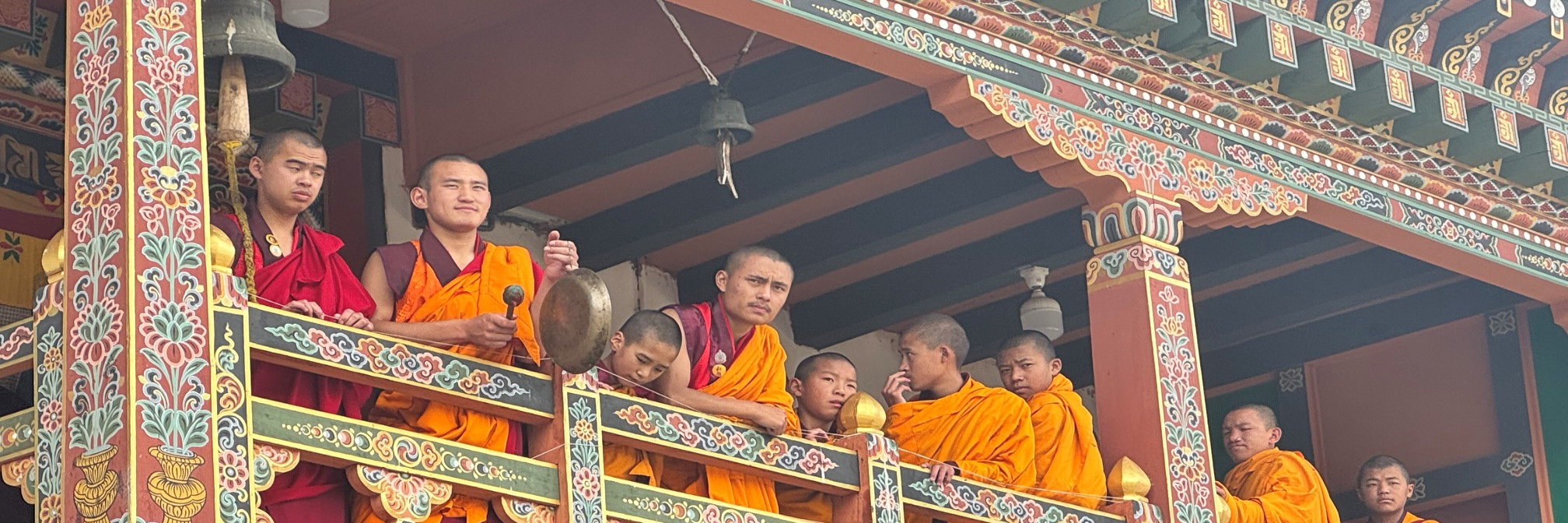
Prayer Flags and Learning to Let Go - I’m not a religious person. But you don’t have to be religious for Bhutan to affect you spiritually. Buddhism isn’t tucked away behind monastery doors here. It’s woven into everyday life. Prayer wheels turn beside rivers. Butter lamps flicker inside temples. Monasteries sit high above valleys. Monks in red robes walk through towns. And everywhere you look, there are prayer flags. They became one of my favourite symbols of Bhutan. Printed with prayers and mantras, they are placed where the wind can carry their blessings out across the mountains and valleys. I loved the thought behind that. You don’t keep the good wishes for yourself. You release them into the world. And perhaps there was a lesson in that for me too. To stop trying to control everything. To stop worrying so much about tomorrow. To accept that there are things in life I cannot change. And to appreciate what I have today.
Motivation. Concentration. Dedication -One of the people who made our experience particularly special was our wonderful guide, Subash. Our days would often begin with him singing on the bus, making us laugh and sharing a positive thought or motivational message for the day ahead. One in particular has stayed with me. MCD. Motivation. Concentration. Dedication. Three simple words. You need the motivation to start. The concentration to remain focused on what matters. And the dedication to keep going. As we travelled through Bhutan and visited monasteries, we saw monks, some incredibly young, dedicating their lives to prayer, study and spiritual practice. Watching them, I couldn’t help thinking about MCD in full effect. Little did I know I was going to need all three myself before the week was over.
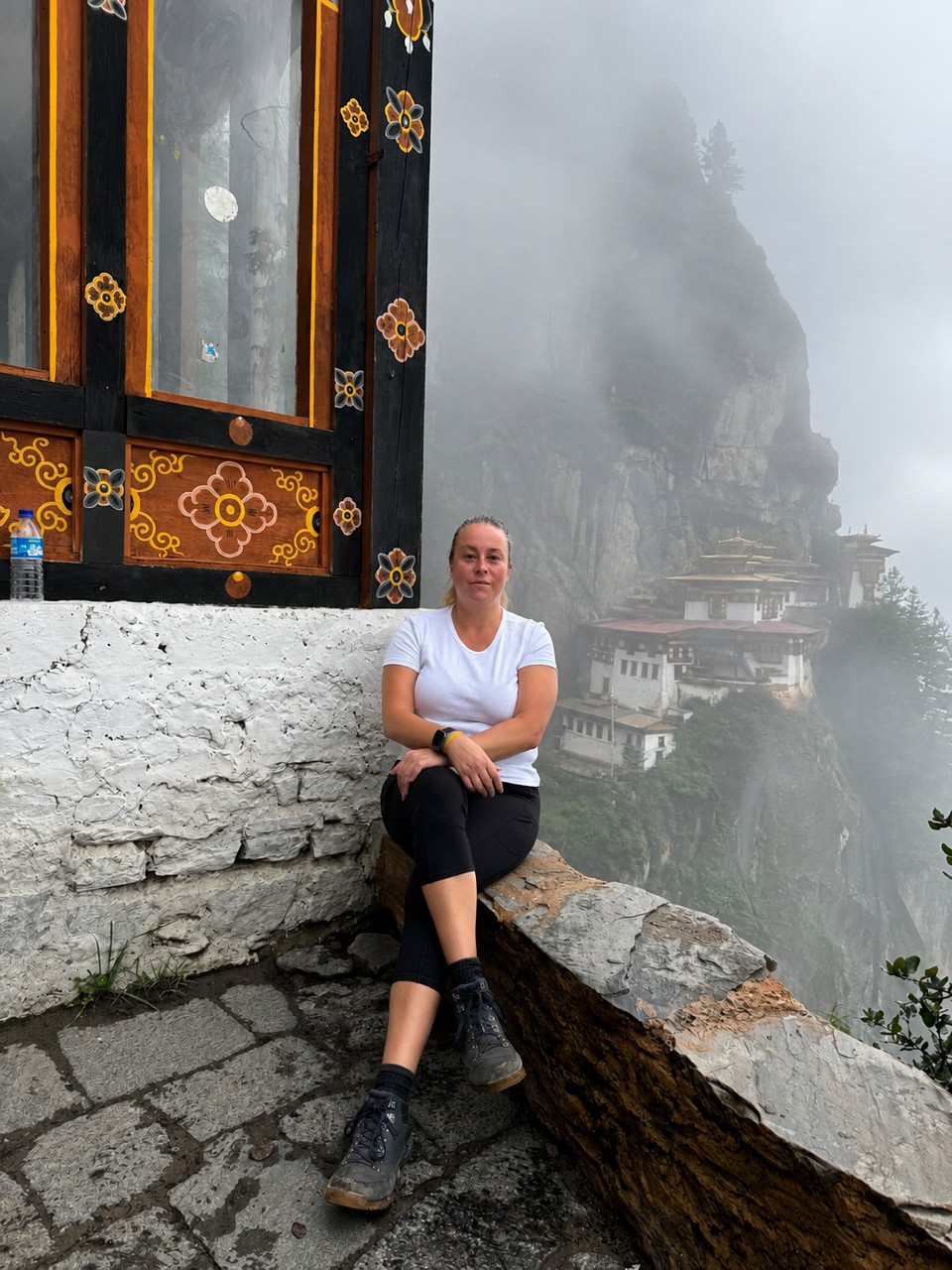
Tiger’s Nest – The Moment I’ll Never Forget - Tiger’s Nest was the experience we’d all been waiting for. Taktsang Monastery clings impossibly to the side of a cliff around 900 metres above the Paro Valley. Our alarms went off at 4.30am. We reached the base at around 5.30 and started climbing at 6am, determined to beat the crowds. Ten minutes in, I was already questioning what on earth I was doing! With bad knees and an ankle I’d sprained the day before, the prospect of climbing for around three hours seemed ridiculous. There was a point when I genuinely thought, I can’t do this. And then Subash’s words came back to me. Motivation. Concentration. Dedication. One foot in front of the other. Keep going. And eventually, we made it. But it wasn’t simply reaching Tiger’s Nest that affected me. It was what happened once we were inside. We were incredibly fortunate to sit quietly for around 15 minutes while the monks chanted their prayers. No phones. No photographs. No emails. No work. No worrying about Mum and Dad. No thinking about tomorrow. For those few precious minutes, there was nothing except that moment. The chanting seemed to vibrate through the room and through you. When we eventually stepped back outside, several of us were in tears. It was emotional, euphoric and incredibly powerful. I don’t think you need to be religious to have a spiritual experience. Perhaps sometimes you simply need to become quiet enough to feel one.
Bhutan Didn’t Fix My Life, It Changed My Perspective - This is perhaps the most important thing I brought home. Bhutan didn’t magically make life’s worries disappear. My son is still at university. Mum and Dad aren’t suddenly younger or free from health worries. My business still needs running. My inbox certainly hasn’t disappeared. The things I worried about before I left were still there when I returned. But somehow, they felt different. Bhutan gave me the space to put things into perspective. To stop worrying quite so much about yesterday or what might happen tomorrow. To recognise how much energy we can spend worrying about things we simply cannot control and to appreciate today. Because life is happening now. Not when everything is perfect. Not when everyone you love is well. Not when you’ve ticked everything off the list. Now.
When the Country Itself Is the Wellness Retreat - Before this trip, if someone had said “wellness holiday”, I probably would have thought of spas, massages, yoga retreats and healthy food. Bhutan can offer all of those things and at an exceptional level. I was fortunate to experience some beautiful hotels, including Six Senses Thimphu, Taj Gangtey and the extraordinary Pemako Punakha, where wellness, nature and a genuine sense of place can become part of your stay. But the biggest revelation for me was that Bhutan itself is the wellness retreat. With around 70% forest cover, nature is everywhere. You can hike through spectacular Himalayan landscapes and along ancient trails that once connected communities and trade routes. You can cycle through valleys, raft or kayak its rivers, practise yoga and meditation, experience traditional healing and spa therapies, or explore mindfulness and mindful movement. But you don’t actually have to do anything. Sometimes the wellness comes from simply walking. Listening. Breathing. Being. Standing in a valley surrounded by mountains. Watching prayer flags move in the breeze. Listening to water rushing through the forest. Sitting quietly inside a monastery. For someone whose head normally runs at 100 miles an hour, Bhutan somehow managed to turn the volume down.
I Think Bhutan Found Me at Exactly the Right Time - People often talk about travelling to “find themselves”. I’ve probably rolled my eyes at that phrase more than once. Now I understand it a little better. I don’t think I was lost. I think I’d just stopped listening to myself. Somewhere along the way, the pressures of work, watching my son grow up and leave home, worrying about Mum and Dad, and all those little uncertainties that seem to creep in during this stage of life had become louder than I realised. Bhutan didn’t make those things disappear. It simply gave me the space to put them into perspective. I returned feeling enriched, calmer, more present, incredibly grateful and, most importantly, reset. My life hadn’t suddenly changed, but somehow, I had.
Could Bhutan Be Your Reset Button? Bhutan isn’t a conventional holiday and nor should it be. The country has deliberately taken a considered approach to tourism to help protect the landscapes, traditions, environment and culture that make this tiny Himalayan kingdom so extraordinary. Yes, a trip to Bhutan costs more than your average holiday, but this isn’t somewhere I’d recommend visiting simply to tick another country off a list. Bhutan is a journey and it’s one that deserves to be planned properly. A trip can combine remote Himalayan valleys, ancient monasteries, traditional villages, incredible hiking, beautiful hotels, wellness and spiritual experiences and those spontaneous moments that no itinerary could ever manufacture. Having now travelled through Bhutan myself, I can help create a journey around what you want to take away from it. Maybe that’s adventure. Maybe it’s culture. Maybe it’s luxury and exceptional hotels. Maybe it’s wellness. Or perhaps, like me, you won’t actually realise what you needed from Bhutan until you get there. I arrived expecting another extraordinary destination that I would be incredibly fortunate to experience through my job. I came home feeling that I’d experienced something far more personal. Bhutan changed me and I genuinely believe it’s somewhere everyone who has the opportunity should experience at least once in their lifetime.
Go with an open mind.
Go with an open heart.
And don’t be surprised if you return with far more than photographs, you might just come home looking at life a little differently.