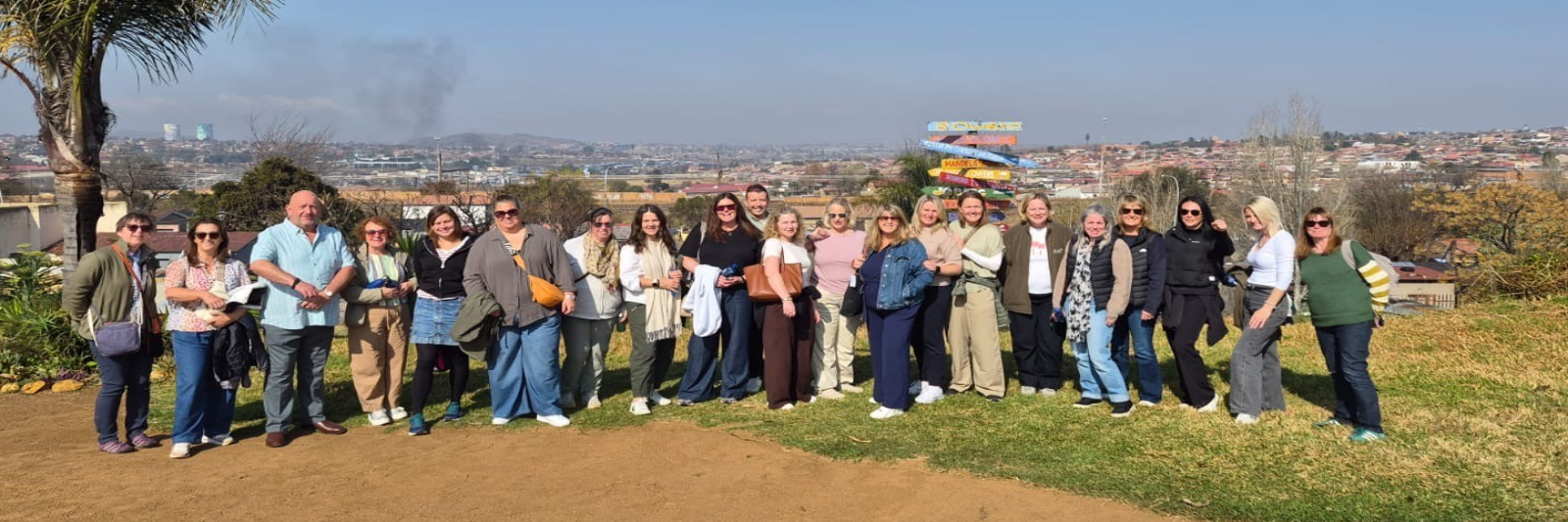
Beyond the Big Five
Why Every Journey Through South Africa Should End in Soweto
Johannesburg is more than just a transit stop.
If someone had asked me before travelling to South Africa what I was most excited about, my answer would almost certainly have been the safari.
Like so many visitors, I dreamed of lions, elephants, leopards and those magical moments that unfold in the African bush. I imagined dramatic sunsets, luxury lodges and waking to the sounds of wildlife just beyond my tent.
And yes, every one of those dreams became a reality.
But if you ask me now what I’ll remember most from my time in South Africa, my answer is a little different.
I’ll remember the people.
After days spent immersed in the wilderness of Kruger National Park, our journey returned us to Johannesburg. It would have been easy to think our adventure had come to an end, but in many ways, it was only just beginning.
Our final morning was spent exploring Soweto with “Lebo’s Soweto Backpackers & Tours”, and I can honestly say I couldn’t imagine a more fitting way to say goodbye to South Africa.
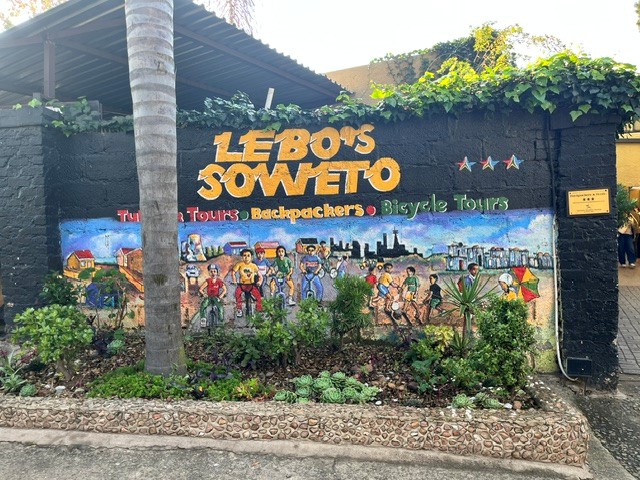
From the moment we arrived, we were welcomed not as tourists, but as guests.
Music filled the courtyard before we’d even stepped out of our vehicle. Smiling faces greeted us with singing and dancing, encouraging everyone to join in. Within minutes, complete strangers were laughing together, clapping along to the rhythm and embracing the infectious warmth that immediately makes you feel at home.
It wasn’t a performance.
It was simply people who were genuinely proud to share their community, their stories and their South Africa.
That warmth stayed with me throughout the entire day.
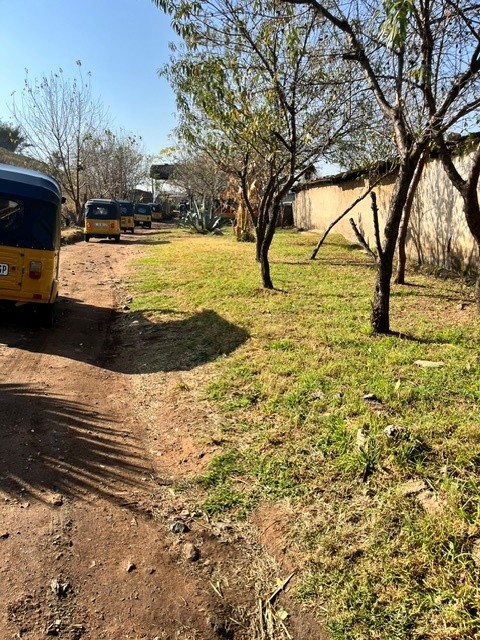
After meeting our guides, we climbed aboard the bright yellow tuk tuks that would become our transport through Soweto. Travelling two to a vehicle meant the experience felt wonderfully personal, giving us time to chat with our driver and begin to understand the community through the eyes of someone who calls it home.
Our first stop was Constitution Hill, where the history of Soweto began to unfold.
Rather than reciting dates and facts, our guide told stories.
Stories of resilience.
Stories of injustice.
Stories of hope.
Listening to the history of how Soweto came into existence and the role it has played in shaping modern South Africa was both fascinating and deeply moving. There was an honesty and passion in the way these stories were shared that made them impossible to forget.
As we continued through the different neighbourhoods, it became clear that Soweto is far more diverse than many visitors imagine. Every district has its own character, its own identity and its own story to tell. Seeing children running happily through the streets, waving enthusiastically as we passed and eagerly offering high fives, was a simple but joyful reminder that travel is often about these unexpected human moments rather than ticking famous landmarks off a list.
One of the things I appreciated most about the tour was that it didn’t shy away from showing the realities of life. It celebrated the incredible sense of community while also helping us understand the inequalities that still exist today. It was honest, respectful and incredibly thought-provoking.
Part of experiencing a country properly is, of course, experiencing its food.
During our tour we stopped to sample a traditional local delicacy. Served on a polenta base with mango chutney alongside beef liver, heart and intestine, it was certainly something outside my comfort zone.
Would I rush to order it again?
Probably not.
Am I glad I tried it?
Absolutely.
Travel isn’t always about finding your new favourite meal. Sometimes it’s about embracing experiences that connect you to local traditions, even if they challenge your own tastes. For me, that willingness to try something completely different became another memorable part of the day.
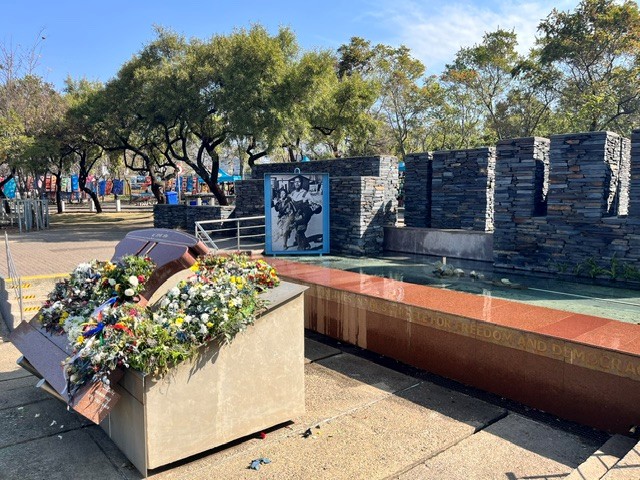
Our journey then brought us to the “Hector Pieterson Memorial” then memorial commemorating the 1976 Soweto Uprising”
This was undoubtedly one of the most emotional moments of the entire trip.
Standing there, listening to the story of the Soweto Uprising and learning about the life of Hector Pieterson, it was impossible not to feel moved. Like so many visitors, I found myself holding back tears as I reflected on the sacrifices made by generations of South Africans in the struggle for equality and freedom.
It’s one thing to read about history in a book.
It’s quite another to stand where it happened.
Those moments stay with you.
Our final historical stop took us to ,“Mandela House” the former home of Nelson Mandela.
Seeing the modest house where Nelson Mandela once lived was fascinating in itself, but once again it was our guide who transformed the experience. One detail I found particularly poignant was learning about the distinctive metal fencing surrounding the property, designed to resemble prison bars as a symbolic reminder of Mandela’s years of imprisonment.
It’s exactly the kind of story you would never notice on your own, and a perfect example of why travelling with knowledgeable local guides adds so much richness to an experience.
Returning to Lebo’s after our tour, we were greeted with a traditional South African boma lunch.
It felt like the perfect finale.
Great food.
Wonderful company.
Plenty of laughter.
And one last opportunity to enjoy the incredible hospitality that had accompanied us throughout the day.
As lunch came to an end, I found myself reflecting on everything I’d experienced over the previous week.
I’d travelled some of the world’s most scenic roads.
Watched lions, elephants and leopards in their natural habitat.
Showered beneath a sky filled with stars.
Stayed in a luxury tent beside a riverbed and slept aboard a beautifully restored train suspended above Kruger National Park.
Yet somehow, it was this final morning in Soweto that completed the picture.
South Africa is often sold through its wildlife.