Taste of Kerala: Food, Atmosphere and the Many Faces of Southern India
A multi-centre journey through Fort Kochi, Munnar, Thekkady, Kumarakom and Mararikulam
My colourful journey through Southern India
Southern India has a way of wrapping itself around your heart, and my recent journey through Kerala did exactly that. From the moment we landed in Kochi and drove into Fort Kochi, I knew this trip would be special: busy city streets gave way to historic buildings, vivid greenery and shimmering water, all layered with birdsong and temple bells. After arriving, a warm welcome, a quick check in and a soothing massage were exactly what was needed to ease into the gentle rhythm of southern India. I felt renewed and ready for the sights, sounds and, most of all, the flavours that would define this trip.
Our first stop was Fort Kochi, a wonderfully atmospheric introduction to Kerala. Days began by the waterfront, watching the iconic Chinese fishing nets in action as fishermen hauled in their catch, with the salty air carrying the scent of the sea and street food from the makeshift stalls along the shore. From there we wandered into the old quarters, strolling along Bastian Street, Princess Street and Rose Street, past colourful houses, market stalls, chai wallahs and little shops selling everything from spices to textiles. It is the kind of place where you can simply wander, browse and people-watch for hours, soaking up the easy smiles and genuine curiosity of the locals. A walking and tuk tuk tour brought Fort Kochi’s history and living culture to life, from St Francis Church, one of the oldest European churches in India, to the evocative Dhoby Khana open-air laundry, the Dutch Palace at Mattancherry and the serene Paradesi Synagogue in Jew Town, where antique chandeliers and hand-painted floor tiles created a calm, timeless atmosphere scented with cardamom and clove. Evenings were just as magical, with a sunset boat ride out on Cochin Harbour, warm air on our faces as fishing boats headed home and the sky shifted through every shade of gold and rose. From the water you really feel the soul of the city, and although we did not spot dolphins this time, the silhouettes of ships and fishing nets against the glowing sky made it unforgettable.
Food quickly became the guiding thread through each day. Mornings started with rich, aromatic coffee and crisp dosas served with coconut chutneys in shades of white, green and red, or comforting idlis and sambar. Lunches and dinners celebrated the diversity of Kerala’s cuisine: light bites overlooking the water one moment, then multi-course menus that showcased local seafood and fragrant spices the next. Fresh fish cooked in coconut gravies bright with curry leaves, delicate prawns, simple but delicious vegetable curries, piles of rice and soft breads all appeared on our plates, each dish carefully explained and tailored to how adventurous we were feeling with spice. What stood out was the balance between homely, comforting food and subtly elevated flavours, always served with warmth and a real pride in sharing local recipes. Even something as simple as high tea on the terrace overlooking the water, with little savouries and sweets, felt special in this setting, as did sunset cocktails on the waterfront as the sky turned golden.
One evening in Fort Kochi was dedicated to storytelling and performance at a traditional Kathakali show. Arriving early meant we watched the transformation of the performers as their intricate makeup was applied: bold colours, sharp lines and expressive eyes that would later tell stories without words. Costumes, music and movement came together in a small theatre to create a powerful, hypnotic experience, another way to understand Kerala’s culture beyond its landscapes and food. These moments of immersion, where you are not just observing but learning and feeling, are what turn a holiday into something deeper.
Leaving the coast behind, we travelled inland from Kochi to the hills of Munnar, and it felt as though each bend in the road introduced a new face of Kerala. The journey took us through a patchwork of banana, mango and coconut plantations, spice gardens and small townships, with glimpses of everyday life unfolding at the roadside. The greenery grew thicker, villages thinned out and soon we were climbing into the Western Ghats, stopping at waterfalls (complete with curious monkeys) and scenic viewpoints along the way. Lunch at a tranquil riverside retreat surrounded by native plants, birds and butterflies was a lovely pause before we continued higher to reach Munnar, around 5,000 feet above sea level, where tea and cardamom plantations roll across the hills as far as the eye can see.
Munnar felt like a different world. Mornings were cool and misty, the air filled with birdsong as we set off on gentle walks to spot red-vented bulbuls, bright green parrots, canary flycatchers and even a giant squirrel darting between the trees. The scenery was jaw-dropping, with peaks rising up to around 8,000 feet, clouds drifting lazily across the slopes and tea bushes sculpting the hills into soft, green waves. We visited the hilltop CSI Church of India for views over the town, then spent time at Sristi Charitable Trust, where local people produce paper, textiles, fruit, vegetables and baked goods, giving us a thoughtful insight into community life and craftsmanship. At Lockhart Tea Factory we traced the journey from leaf to teacup: watching pickers at work on the steep hillsides, then seeing the withering trays, roller machines, fermentation and sorting inside the factory. Back in town, the lively market was a feast for the senses, with stalls piled high with fruits, vegetables, herbs, spices, flowers and colourful clothing. Evenings ended with tea tastings, comparing green, black and delicate white teas; white tea, smooth and subtle, became my favourite and felt like the perfect symbol of Munnar’s gentle charm.
From the hills, our route continued to Thekkady, and once again Kerala shifted character. As we left Munnar, we passed tea pickers at work in the fields, snipping and gathering creating a mesmerising pattern across the slopes. The landscape gradually transformed from tea to cardamom, then to coffee plantations, an endless parade of green. Along the Munnar–Thekkady highway we paused at viewpoints and passed landmarks like the impressive Lord Ganesha statue at Vandanmedu. Closer to Thekkady, spice plantations became the dominant feature, many of them family owned, and our visit to Green Park Spice Farm was like stepping into a living pantry. Cardamom, cloves, peppercorns, nutmeg, curry leaves, cocoa, cinnamon, jackfruit, coffee, betel leaf, turmeric and vanilla all thrived side by side. Tasting, smelling and touching the raw ingredients that bring Indian cooking and natural medicine to life made us appreciate every future cup of chai and every curry on our plates. Watching women carefully harvesting cardamom by hand was a powerful reminder of the craftsmanship behind the flavours we often take for granted.
Thekkady is also where nature truly takes centre stage. An early start took us into the Periyar Tiger Reserve at Vallakadavu, a vast protected area of forest wrapped around a man-made lake. Pulling on our leech socks (not glamorous but definitely essential), we boarded a bamboo raft and glided across the still water, surrounded by lush jungle and birdsong. On our trek we spotted a towering banyan tree, a Neelgiri langur high in the branches, spiders, ladybirds, jewel-bright damselflies, grey herons and kingfishers, along with tiger and sambar deer footprints in the mud. While we did not see elephants face to face, their presence was evident in the stories of the guides and the sheer scale of the landscape. Evenings in Thekkady brought further cultural immersion, from traditional martial arts performances, where agility and discipline were on display in a small arena-style theatre, to relaxed time back at our nature-focused accommodation, surrounded by spice plants, trees and birds. Sustainability, local sourcing and community projects were an integral part of the stay, and days were easily filled with yoga, nature walks, visits to Periyar and simple pleasures under the trees.
From Thekkady, we continued to Kumarakom, driving through yet another set of changing scenes: tea and coffee plantations giving way to rubber trees, pineapple fields, wide rice paddies and ponds dotted with delicate water lilies that open and close with the light. We passed villages and towns where men wore traditional dhotis and kurtas, women in colourful saris went about their day and children in neat uniforms headed to school. A stop at Pattumala Velankanni Matha Church added a peaceful, reflective pause before we finally transferred by boat along narrow canals to our next hotel on the backwaters. Arriving in Kumarakom felt magical: crossing the lake by boat, gliding along mirror-still waterways lined with palms and water lilies, then stepping ashore to the warmest of welcomes.
Life in Kumarakom is all about slowing down and tuning into the rhythm of the backwaters. Days unfolded gently, filled with yoga, birdwatching, cycling, canoeing and cooking demonstrations, or simply doing very little by the pool while dragonflies hovered nearby. Sustainability and organic farming played a big role here, and there was a real sense of harmony between the property and its natural surroundings. The food was a delicious celebration of local flavours, and one of my favourite rituals was afternoon tea by the water. As the sun dipped lower, a “tea lady” would arrive by boat with her little mobile stall, pouring fragrant chai and sharing a smile with everyone gathered to watch the day turn to dusk. Golden hour on the backwaters was pure magic: complimentary shikara cruises took us along canals lined with rice fields and lilies, past families doing their washing, children playing in the water, village houses tucked under the palms and birds pausing on branches and boats. As lanterns flickered on traditional houseboats and the sky flushed pink and gold, it felt like the world had slowed to the pace of the paddles in the water.
Our journey through Kerala would not have been complete without a classic houseboat experience. We travelled slowly from Kumarakom towards Mararikulam, cruising across vast Vembanad Lake, which is so large it feels like the ocean, and through quieter canals where life unfolded just metres from the deck. Houseboats here come in all shapes and sizes, from intimate one-bedroom vessels perfect for couples to larger boats suited for families or groups, and you can choose anything from a gentle day cruise with lunch to one or two nights on board. The pace is slow, and there is something incredibly calming about watching the scenery drift past while you savour freshly cooked meals and endless cups of chai.
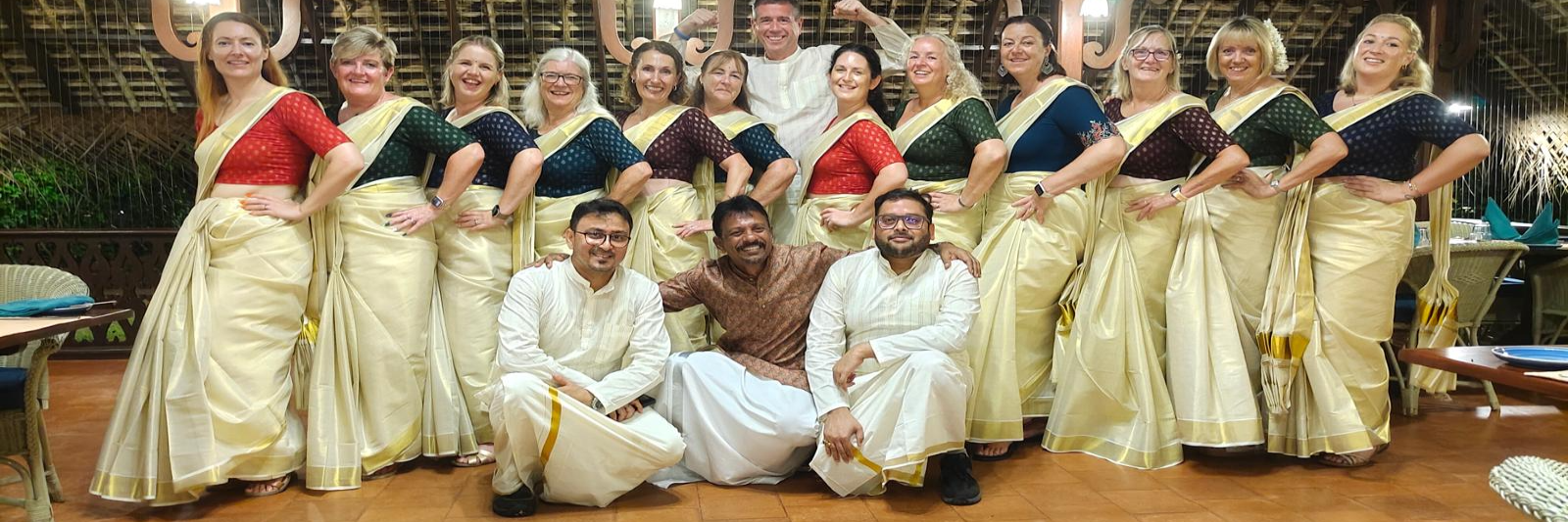
The final chapter of this multi-centre adventure brought us to Mararikulam on the coast, where the focus shifted to sand, sea and complete relaxation. After the colours, flavours and travel of the previous days, arriving at a peaceful beach retreat felt like exhaling. Think lazy hours by the pool, strolls along a wide sandy local beach and spa treatments that ease away the last of any tension. Activities were gentle and nature-focused, from owl spotting and nature walks to cooking demonstrations with local ladies who shared their recipes and stories with quiet pride. It was the perfect soft landing at the end of our itinerary, giving us time to process everything we had seen and tasted. Our final night in Kerala was particularly special: we wore traditional Kerala saris, shared memories and laughter over a wonderful dinner, and thanked the teams and guides who had looked after us so well throughout. It felt like a fitting farewell to a place that had truly got under my skin.
What tied all five locations together was the warmth of the people, the incredible variety of landscapes and the way every day was anchored by food and simple, authentic experiences. From heritage-filled Fort Kochi and the misty tea hills of Munnar to the wildlife and spices of Thekkady, the slow backwaters of Kumarakom and the restful pool and beach of Mararikulam, each stop felt distinct yet beautifully connected. Southern India is vibrant and colourful, yet deeply calming; full of flavour and life, yet grounded in nature and tradition. If you are dreaming of a journey that blends culture and coast, hills and backwaters, street life and quiet moments, I would love to help you design your own Kerala multi-centre adventure, tailored around the kind of food, atmosphere and pace that you love most.