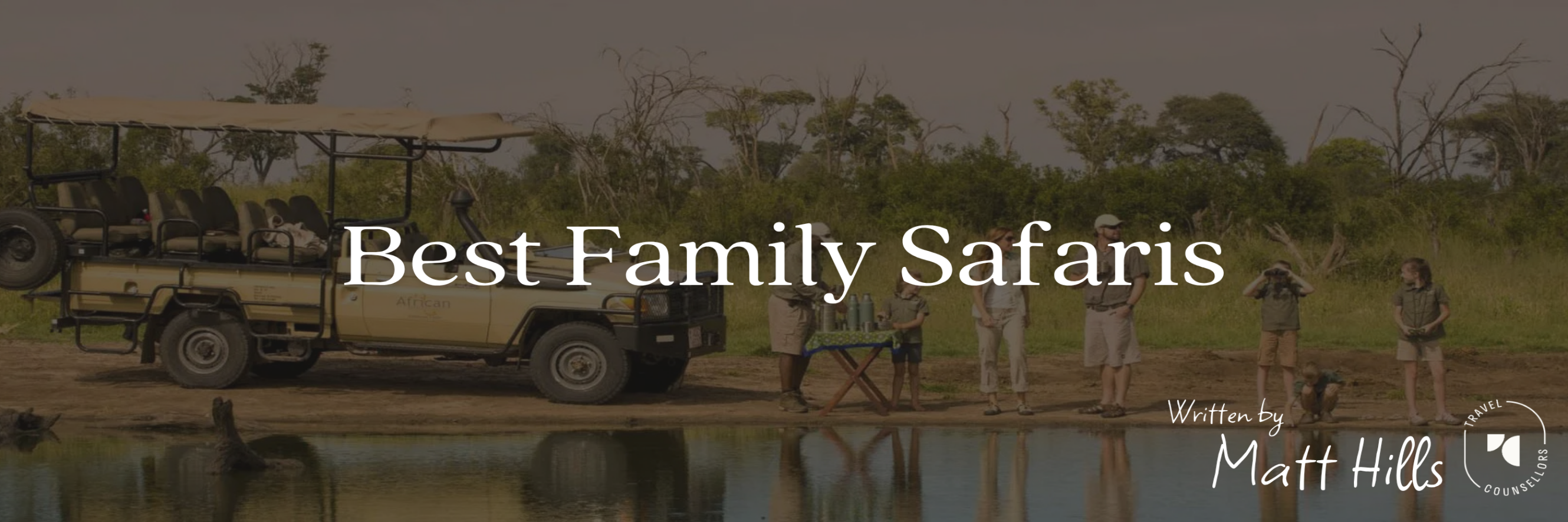
Best Family Safaris in Africa: Where to Go, When to Travel and How to Plan
A practical guide to planning the best family safari holiday, including where to go, when to travel, child-friendly lodges, malaria-free options and how to choose the right safari for your family.
A family safari is one of those holidays that sounds slightly ambitious at first. Early mornings. Wild animals. Long flights. Small children with opinions. What could possibly go wrong?
But planned properly, a family safari can be wonderful. The key phrase is planned properly.
For a wider overview of destinations, lodge styles, safari costs, wildlife, seasons and itinerary ideas, my Complete Luxury Safari Guide brings the whole planning process together in one place.
A family safari is not just a normal safari with smaller clothes packed in the suitcase. You need to think carefully about destination, lodge choice, malaria risk, transfer times, room types, game drive lengths, child ages, meal flexibility and whether the lodge genuinely welcomes families rather than simply tolerating them.
If you’re planning your first safari as a family, I’d recommend reading my Complete Beginner’s Guide to Going on Safari first. It covers the basics of how safaris work, what a typical day looks like and what to expect before you start narrowing down destinations.
Are Safaris Good for Families?
A safari can be brilliant for families, especially if your children enjoy animals, nature, photography, being outdoors or asking roughly 400 questions before breakfast. More importantly, it can be one of the most eye-opening holidays you can take with children.
A family safari holiday helps them understand wildlife, conservation, different landscapes, animal behaviour and the importance of protecting natural habitats. They’re not just reading about lions, giraffes and elephants in a book — they’re watching them behave naturally in the wild.
It can also spark a proper love of animals and the outdoors. Game drives encourage children to look closely, listen carefully, ask questions and notice the smaller details: tracks in the sand, birds in the trees, dung on the road.
If your children are already asking about lions, leopards, elephants, rhino and buffalo, my Big Five Explained guide covers why these animals became so famous and where you are most likely to see them.
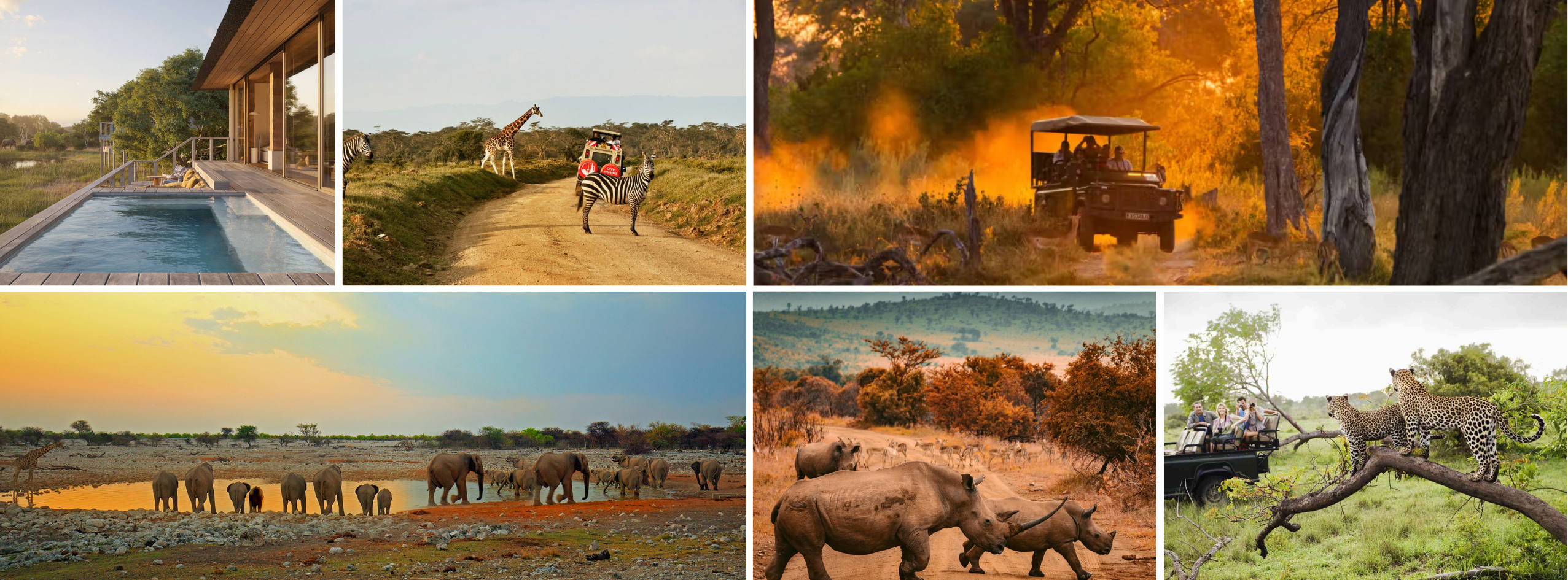
What Makes a Safari Family-Friendly?
The best family safari lodges usually offer:
- Family suites or interconnecting rooms
- Flexible meal times
- Child-friendly menus
- Shorter game drives where needed
- Swimming pools
- Private vehicles or family vehicles
- Junior ranger programmes
- Guides who are good with children
- Safe lodge layouts
- Malaria-free options in some destinations
- Sensible transfer times
- Activities between game drives
You want enough wildlife to keep the trip exciting, enough downtime to avoid complete exhaustion, and enough flexibility that nobody is having a meltdown halfway through a four-hour game drive.
Best Safari Destinations for Families
There isn’t one single best family safari destination.
It depends on your children’s ages, your budget, your appetite for adventure and how much travelling you want to do. That said, some destinations are definitely easier than others.
South Africa Family Safari
South Africa is one of the easiest, most practical and best-value safari destinations for families and offers:
- Malaria-free safari reserves
- Excellent family-friendly lodges
- Big Five wildlife
- Easier travel logistics
- Good roads
- Shorter transfers in many areas
- Cape Town and beach combinations
- Private game reserves
- Strong value compared with some other safari destinations
For younger families, the malaria-free options are a huge advantage.
Places such as Madikwe, the Eastern Cape reserves and parts of the Waterberg can work very well for families who want the safari experience without the added worry of travelling to a malaria-risk area.
The private reserves around Kruger can also be excellent for families, especially with older children. You’ll often get superb guiding, luxury lodges, Big Five wildlife and a much more exclusive safari experience.
South Africa is also brilliant because the safari can be part of a wider family holiday. You could combine a few nights on safari with Cape Town, the Winelands, the Garden Route, beaches, whale watching or even a bit of golf if someone has behaved well.
For a deeper look at Kruger, private reserves, malaria-free safari options, Cape Town combinations and why South Africa is often the easiest first safari for families, read my South Africa Safari Guide.
Kenya Family Safari
Kenya is a fantastic choice for families who want the classic safari experience. If your family is drawn to classic safari scenery, big cats and the Maasai Mara, my Kenya Safari Guide covers the main safari areas, Great Migration timing, camps and safari-and-beach combinations.
A Kenya family safari works especially well for:
- Older children and teenagers
- Wildlife-mad families
- Big cat sightings
- The Great Migration
- Hot air balloon safaris
- Safari and beach holidays
- Families wanting a classic tented camp experience
The Maasai Mara is one of the best places in Africa for big cats and dramatic wildlife scenes. If your children have watched endless wildlife documentaries, Kenya is likely to feel instantly familiar.
It also combines beautifully with the Indian Ocean. After a few early mornings on safari, finishing with a beach stay in Zanzibar, Mauritius, Seychelles or on Kenya’s coast could be just what the doctor ordered.
Kenya can involve more complex logistics than South Africa, so it is important to choose the right camps, transfers and itinerary. Some camps are better suited to families than others, and child policies can vary.
If Kenya is on your shortlist, get in touch and I’ll help match the right camp, season and beach combination to your family.
Tanzania Family Safari
Tanzania is one of Africa’s greatest safari destinations, and it can work brilliantly for families with older children or teenagers.
The Serengeti, Ngorongoro Crater, Tarangire and Lake Manyara all offer incredible wildlife and scenery, especially on Tanzania’s famous Northern Circuit. A Tanzania family safari is best for:
- Older children
- Families wanting iconic wildlife areas
- The Serengeti
- Ngorongoro Crater
- The Great Migration
- Safari and Zanzibar combinations
- Families comfortable with a more adventurous itinerary
The Ngorongoro Crater can be especially good for families because the wildlife density is extraordinary. You can see a huge amount in a single day, which is useful if attention spans are not quite at Attenborough levels.
Tanzania also pairs beautifully with Zanzibar, making it one of the classic safari and beach combinations. If Tanzania sounds like the right fit, my Tanzania Safari Guide explains the Serengeti, Ngorongoro Crater, Northern Circuit safaris and how to combine safari with Zanzibar.
Botswana Family Safari
Botswana is one of Africa’s most exclusive safari destinations. It is famous for superb guiding, smaller camps, remote wilderness areas and incredible wildlife in places such as the Okavango Delta, Chobe and Moremi.
For families, Botswana can be absolutely superb, but it is not always the easiest first choice. A Botswana family safari works best for:
- Older children and teenagers
- Families with a higher budget
- Wildlife enthusiasts
- Families wanting fewer vehicles
- Water-based safari experiences
- Remote camps and excellent guiding
- Adventurous travellers
The big advantage of Botswana is exclusivity. Smaller camps, excellent guides and fewer vehicles can make for a very special safari experience. Children who are genuinely interested in wildlife can get a huge amount from it.
The challenge is that Botswana can be expensive, and many itineraries involve light aircraft flights between remote camps. Some lodges also have age restrictions for walking safaris, mokoro trips or certain activities.
Namibia Family Safari
Namibia is very different from the classic Big Five safari destinations. It is less about dense wildlife everywhere and more about landscapes, vast open spaces, desert scenery, self-drive adventure and the feeling of a proper journey. A Namibia family safari can work well for:
- Families
with older children
- Self-drive travellers
- Photography lovers
- Desert landscapes
- Etosha National Park
- Sossusvlei, Damaraland and the Skeleton Coast
Etosha National Park offers excellent wildlife viewing, often around waterholes, and Namibia’s roads and scenery make the journey a big part of the experience.
Swakopmund is also a brilliant stop for families who want to break up the driving with something more active. Set between the desert and the Atlantic coast, it’s known for adventure activities such as sandboarding, quad biking, scenic flights, kayaking, boat trips and desert excursions. In other words, a useful place to let teenagers burn off some energy.
That said, distances can be long and the landscapes are huge, so I would usually recommend Namibia for families who are comfortable with road trips and older children who can cope with longer travel days.
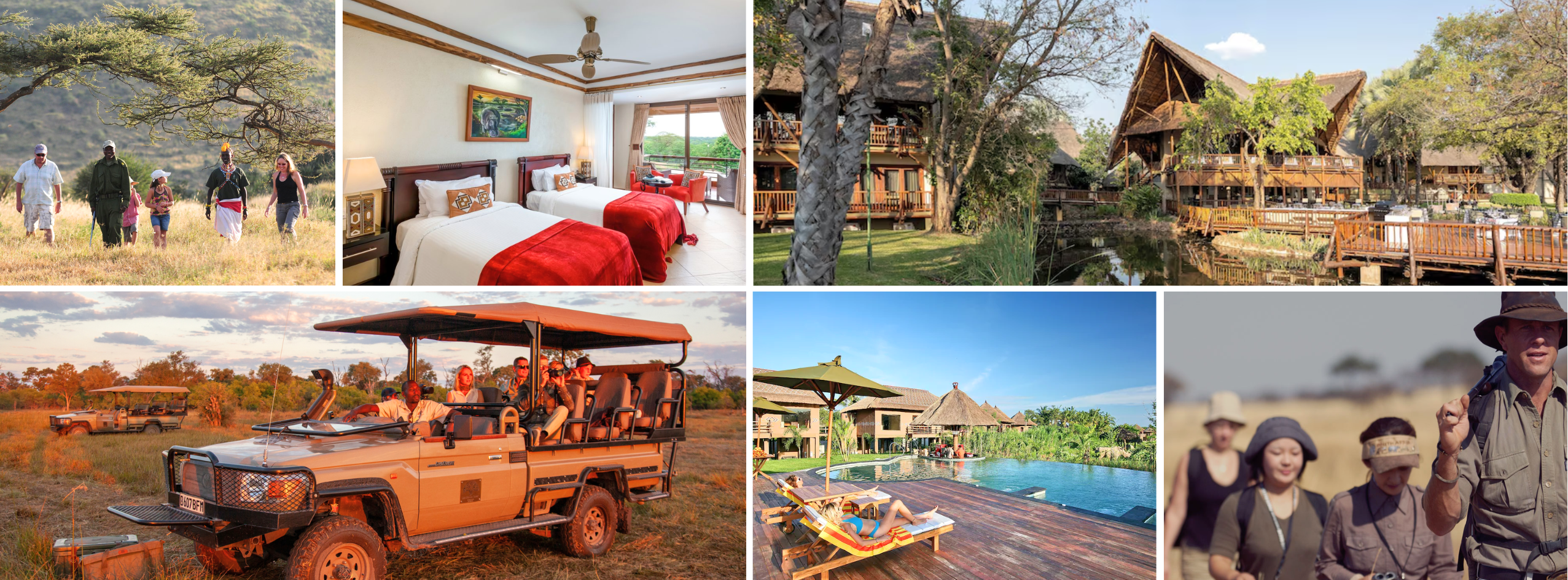
Best Malaria-Free Family Safaris
A malaria-free safari for families can be one of the easiest and most reassuring ways to plan a first African safari with children.
For many families, especially those travelling with younger children, malaria risk is one of the biggest considerations. The good news is that there are excellent malaria-free safari options, particularly in South Africa including:
- Madikwe Game Reserve
- Eastern Cape private reserves
- Waterberg region
- Some Garden Route safari areas
A malaria-free South Africa safari can be a brilliant first safari for families because it removes one of the main worries parents often have. It also makes packing and preparation simpler. There are still sensible health precautions to take, of course, but for many families, this is a very reassuring way to start.
If malaria-free is a priority, let me know at the start and I’ll focus on the reserves and lodges that fit properly.
What Age Is Best for a Family Safari?
There is no perfect age, but some ages work better than others.
Very young children can go on safari, but there may be restrictions. Some lodges have minimum age limits for game drives, walking safaris or unfenced camps.
As a rough guide:
- Under 5s — possible, but choose very carefully
- Ages 6–8 — can work well with the right lodge and shorter drives
- Ages 9–12 — an all-round brilliant age
- Teenagers — usually excellent, especially if they enjoy wildlife, photography or adventure
For younger children, I’d usually focus on South Africa, malaria-free reserves, family-friendly lodges and shorter transfer times.
For older children and teenagers, Kenya, Tanzania, Botswana and Namibia all open up more possibilities.
Are Game Drives Suitable for Children?
Yes, but it depends on the child, the lodge and the length of the drive.
Game drives often last around three hours, sometimes longer. They can involve early starts, bumpy tracks, quiet waiting and occasional periods where not much happens. Some children love it. Some need a little help.
Family-friendly lodges may offer shorter drives, private vehicles, children’s activities or guides who are particularly good at engaging younger guests. They won’t just point at a lion and move on. They’ll explain tracks, dung, birds, insects, trees, animal behaviour and all the little things that make the bush come alive.
If you want to picture the rhythm of safari before travelling with children, my What Happens on a Typical Safari Day? guide explains the usual routine from early morning game drives to evening meals back at the lodge.
Should You Book a Private Safari Vehicle?
For families, a private vehicle can be worth considering. It gives you more flexibility over:
- Drive lengths, timings and stops
- Wildlife priorities
- Toilet breaks
- Snacks
- Photography
- How much patience everyone has left
A private vehicle is especially useful with younger children, larger families or multi-generational groups. It usually adds cost, but it can also make the safari much more relaxed and enjoyable.
Not every family needs one, though. Older children and teenagers may be perfectly happy on shared game drives. This is something I’ll usually talk through when quoting, because it depends on the lodge, children’s ages and overall budget.
Family Safari Lodges: What to Look For
The right lodge makes all the difference. When choosing a family safari lodge, look at:
- Room layout
- Child policies and minimum ages for game drives
- Whether private vehicles are available
- Swimming pool safety
- Meal flexibility
- Family activities
- Transfer times
- Malaria risk
- Whether the camp is fenced or unfenced
This is where I can save you a lot of time. I’ll help find lodges that fit your actual family rather than sending you down an endless rabbit hole of safari websites and room categories.
Family safari costs vary hugely depending on destination, lodge style, room setup, private vehicles, flights and school-holiday dates. My How Much Does an African Safari Cost? guide explains realistic budgets and what is usually included.
What Should Children Pack for Safari?
You don’t need to buy an entirely new wardrobe. For children, I’d keep it simple:
- Neutral-coloured clothes
- Warm layer for early mornings
- Comfortable shoes
- Hat and sunglasses
- Sun cream and insect repellent
- Reusable water bottle
- Binoculars if possible
- Camera or phone for photos
- A book or quiet activity for downtime
- Small backpack for all of the above
Avoid bright colours where possible, and pack layers. Early morning game drives can be surprisingly cold, especially during the African winter.
For a fuller checklist covering clothing, layers, luggage, camera gear, cash, insect repellent and light aircraft baggage rules, read my Safari Packing Guide.
Best Family Safari and Beach Holidays
A safari and beach holiday can work brilliantly for families. After a few days of early starts and game drives, ending with a beach stay gives everyone time to relax.
Popular combinations include:
- South Africa safari + Cape Town or Garden Route
- Kenya safari + Diani Beach, Zanzibar or Mauritius
- Tanzania safari + Zanzibar
- South Africa safari + Mauritius
- Kenya safari + Seychelles
The right combination depends on your budget, flight routes, children’s ages and how much travelling you want to do.
When Is the Best Time for a Family Safari?
The best time for a family safari depends on where you go, what you want to see and when you’re able to travel. For many destinations, the dry season offers the easiest wildlife viewing because animals gather around water sources and vegetation is thinner.
As a rough guide:
- South Africa — May to September for strong
wildlife viewing
- Kenya — July to October for the Great Migration in the Maasai Mara
- Tanzania — June to October for general wildlife, with migration timing
depending on region
- Botswana — June to October for peak wildlife and Okavango Delta experiences
- Namibia — May to October for Etosha and dry season wildlife
That said, family safaris are absolutely possible during the Christmas holidays too. December can be a brilliant time for some destinations, with greener landscapes, warm weather, newborn animals in certain areas and a completely different feel to the dry season. It may not always be the “classic” peak wildlife season everywhere, but it can still be a fantastic family safari if you choose the right destination and lodge.
School holidays will affect availability and price, whether you’re looking at summer, Easter, October half term or Christmas, so it is worth planning early if you’re tied to specific dates. If you have flexibility, travelling just outside peak periods can sometimes offer better value without dramatically changing the experience.
My Best Time to Go on Safari guide covers the seasons in more detail.
Common Family Safari Mistakes
- Choosing the wrong lodge - check room layout, child policies, age restrictions, fencing, drive lengths and whether the lodge is genuinely family-friendly.
- Trying to do too much - moving lodges every night or building in too many flights can make a family safari feel exhausting.
- Underestimating transfer times - long drives, small aircraft flights and multiple transfers can be exciting or tiring depending on your children’s ages.
- Booking too late - family rooms, interconnecting suites and private vehicles can be limited. If you’re travelling in school holidays, book early.
My Advice
If you’re planning your first family safari, I’d usually start with South Africa.
It offers the easiest logistics, superb family-friendly lodges, excellent value, Big Five wildlife and some very useful malaria-free options.
For older children and teenagers, Kenya and Tanzania are fantastic if you want the classic safari landscapes, Great Migration possibilities and a beach finish afterwards.
Botswana is superb for families who want something exclusive and wildlife-focused, while Namibia is brilliant for adventurous families who love scenery, space and a proper road trip.
Tell me your children’s ages, your rough budget, your ideal travel dates and whether you want classic wildlife, malaria-free reserves, a beach finish, luxury lodges or something more adventurous, and I’ll build a family safari quote around you.
Ready to start planning?
Get in touch and I’ll help create a tailor-made family safari holiday that suits your children’s ages, your budget and the kind of adventure you want to share.
Continue Planning Your Safari
If you’re still researching family safari holidays, these guides will help:
- Complete Beginner’s Guide to Going on Safari – ideal if this is your first safari and you want to understand how safari actually works.
- Complete Luxury Safari Guide – compare the best safari destinations, lodge styles, costs, wildlife and itinerary ideas.
- South Africa Safari Guide – a deeper look at Kruger, private reserves, malaria-free options and Cape Town combinations.
- Kenya Safari Guide – everything you need to know about the Maasai Mara, Great Migration and luxury Kenya safaris.
- Best Time to Go on Safari – month-by-month advice on safari seasons, wildlife viewing and when to travel.
- How Much Does an African Safari Cost? – realistic budgets, what’s included, tipping, spending money and where your money goes.
- Safari Packing Guide – what to pack for game drives, lodge stays and light aircraft flights.
Back to Matt Hills TC Homepage