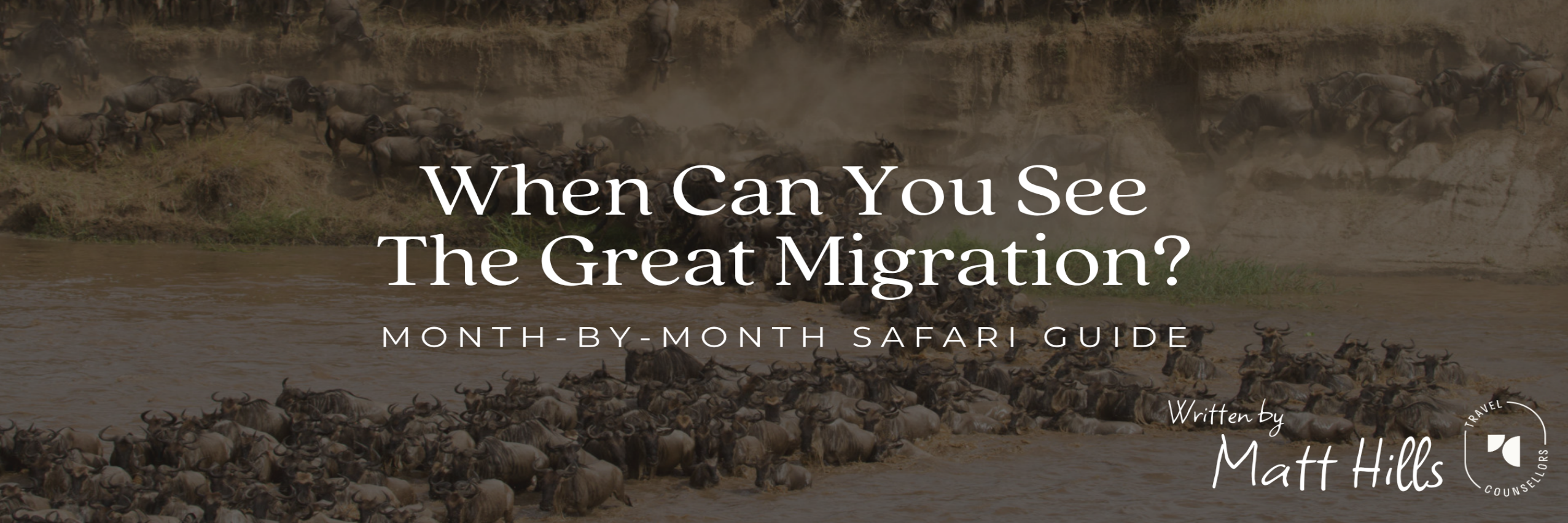
When Can You See the Great Migration? Month-by-Month Safari Guide
A practical guide to when and where to see the Great Migration, including the Serengeti, Maasai Mara, river crossings, calving season and how to plan the right safari from the UK.
The Great Migration is one of the most famous wildlife spectacles in the world.
Millions of wildebeest, along with zebra and gazelle, move in a huge circular journey through Tanzania’s Serengeti and Kenya’s Maasai Mara in search of fresh grazing.
It is dramatic, unpredictable, occasionally brutal and genuinely one of the most extraordinary things you can witness on safari.
It is also one of the most misunderstood. People often talk about “the migration” as if it happens on one set date, in one place, at a convenient time between breakfast and a sundowner.
In reality, the Great Migration is a year-round movement. The herds are always somewhere. The question is not simply when can you see the Great Migration? It is which part of the migration do you want to see, and where should you be at that time of year?
If you’re planning your first safari, I’d recommend reading my Complete Beginner’s Guide to Going on Safari first. It explains how safaris work, what a typical day looks like and how to start choosing the right destination.
For a wider look at safari destinations, luxury lodges, safari styles, wildlife, costs and itinerary ideas, my Complete Luxury Safari Guide brings the whole planning process together.
What Is the Great Migration?
The Great Migration is the movement of huge herds of wildebeest, zebra and gazelle between Tanzania’s Serengeti National Park and Kenya’s Maasai Mara.
The animals follow rainfall and fresh grass, moving in a roughly circular route across the Serengeti ecosystem before some herds cross north into Kenya.
Expect:
- Vast herds of wildebeest
- Zebra and gazelle moving with them
- Big cat sightings
- Crocodile-filled river crossings
- Newborn calves during calving season
- Dramatic predator-prey encounters
- Huge open landscapes
- Incredible photography opportunities
But it is important to understand that the migration is not a single event.
When Is the Best Time to See the Great Migration?
The best time to see the Great Migration depends on what you want to experience. If you’re planning a Great Migration safari from the UK, the most important thing is matching your travel dates to the right area, rather than assuming the herds will be exactly where you hoped.
As a rough guide:
- January to March — calving season in the southern Serengeti
- April to May — herds begin moving north through the Serengeti
- June to July — movement towards the western and northern Serengeti
- July to October — river crossings and Maasai Mara season
- November to December — herds begin moving south again as the rains return
If people are dreaming of the famous river crossings, the usual window is July to October.
If you want newborn animals and predator activity, January to March in the southern Serengeti can be fantastic.
If you want fewer people and excellent value, the shoulder months can work well, but the exact experience will depend on rainfall and herd movement.
For a wider month-by-month guide to safari seasons across Africa, including how the migration fits alongside dry season and green season travel, read my Best Time to Go on Safari guide.
Is the Great Migration Guaranteed?
No. And this is really important.
The Great Migration is natural, which means it is unpredictable. The movement of the herds depends on rainfall, grass, water levels and instinct. Rainfall in particular is becoming increasingly unpredictable due to climate change.
You can be in the right area at the right time and still need patience. You can also be sitting in your vehicle wondering whether anything is going to happen, then suddenly find yourself in the middle of one of the greatest wildlife scenes you’ll ever witness.
A good safari plan gives you the best possible chance, but it should never rely on one exact sighting on one exact day.
Is Kenya or Tanzania Better for the Great Migration?
Both Kenya and Tanzania can be excellent for the Great Migration.
The right choice depends on the time of year and the type of safari you want.
Great Migration in Tanzania
Tanzania is where the migration spends much of the year.
The Serengeti offers different migration experiences depending on the season:
- Southern Serengeti and Ndutu for calving season
- Central Serengeti for general wildlife and transitional movement
- Western Serengeti for Grumeti River activity
- Northern Serengeti for Mara River crossings
If you're combining the Serengeti with Ngorongoro Crater, read The Best Safari I've Ever Been On for my own experience of one of Tanzania's most unforgettable safari days.
Tanzania is ideal if you want:
- A longer migration window
- Great Migration and Ngorongoro Crater combination
- Safari and Zanzibar afterwards
- A classic Northern Circuit safari
My Tanzania Safari Guide covers the Serengeti, Ngorongoro Crater, Tarangire and safari and beach combinations in more detail.
Great Migration in Kenya
Kenya is best known for the Maasai Mara stage of the migration.
The Maasai Mara is usually at its migration peak between July and October, when many of the herds cross from Tanzania into Kenya.
Kenya is ideal if you want:
- Maasai Mara river crossings
- Big cats
- Wide-open plains
- Hot air balloon safaris
- Classic safari scenery
- Safari and beach combinations
- A shorter, high-impact safari itinerary
My Kenya Safari Guide explains the Maasai Mara, Amboseli, Samburu and beach combinations in more detail.
Are River Crossings Guaranteed?
No. River crossings are the most famous part of the Great Migration, but they are also the least predictable.
You can be in the right place at the right time of year and still not see a crossing. The herds may gather, wait, move away, cross somewhere else, or cross when you are not there.
The best way to improve your chances is to:
- Travel during the right season
- Stay in the right area for long enough
- Use well-located camps
- Work with experienced guides
If the river crossings are your absolute dream, I’d usually suggest staying several nights in the northern Serengeti or Maasai Mara during the key period, rather than trying to squeeze it into a very short stop.
What Animals Follow the Migration?
The migration is mostly associated with wildebeest, but they are not alone.
You may also see:
- Zebra
- Gazelle
- Eland
- Lions
- Cheetah
- Leopard
- Hyena
- Crocodiles
- Vultures and other birds of prey
Zebra often move with the wildebeest because they graze differently and can benefit from travelling together.
Predators follow the herds because, well, lunch.
Best Places to Stay for the Great Migration
Choosing where to stay is one of the most important parts of planning a Great Migration safari. The right lodge or camp depends on the month, the region and what you’re hoping to see.
Options may include:
- Permanent lodges
- Luxury tented camps
- Mobile migration camps
- Seasonal camps
- Private conservancy camps
- Camps close to key river crossing points
- Camps positioned for calving season
A mobile or seasonal camp can be a brilliant choice because it is often positioned to follow the likely movement of the herds. That does not guarantee sightings, but it improves your chances of being in the right place at the right time.
My Luxury Safari Lodges Explained guide covers the difference between safari lodges, tented camps, mobile camps and exclusive-use accommodation.
How Many Nights Do You Need?
If the Great Migration is a major reason for your safari, don’t rush it.
I’d usually recommend at least three or four nights in the key migration area, ideally more if your budget allows. Two nights gives you very little room for wildlife being wildlife.
As a rough guide:
- 2 nights — possible, but limited
- 3 nights — better, especially as part of a longer itinerary
- 4 nights — a good target for migration-focused areas
- 5+ nights — ideal if the migration is the main reason for the trip
You can then combine this with other safari areas such as Ngorongoro Crater, Tarangire, Amboseli, Samburu, or a beach stay in Zanzibar, Kenya’s coast, Mauritius or The Seychelles.
If the Great Migration is part of a honeymoon or special occasion trip, my Best Honeymoon Safaris guide compares the most romantic safari destinations and beach combinations.
Is the Great Migration Good for First-Time Safari Travellers?
Yes, but it needs planning properly. The Great Migration can be incredible for a first safari, especially if you already know this is the experience you want.
However, it can also make the planning more complicated. You need to think about timing, camp location, regional movement, availability, budget and how much time you want to spend focusing on the herds.
For some first-time safari travellers, South Africa may still be the easiest introduction. My South Africa Safari Guide explains Kruger, private reserves, malaria-free options and Cape Town combinations.
For others, the Serengeti or Maasai Mara is exactly what they have always imagined.
There is no one right answer. It depends on whether your priority is the migration itself, classic safari scenery, Big Five sightings, luxury lodges, ease of travel, family-friendly options or a beach finish afterwards. If you're planning to see the migration as a family, my Best Family Safaris guide explains which destinations, lodges and safari styles work best with children and teenagers.
If Big Five sightings are high on your wish list as well as the migration, my Big Five Explained guide covers what the Big Five are, where to see them and why they became so famous.
How Much Does a Great Migration Safari Cost?
A Great Migration safari is rarely the cheapest safari option, especially during peak river crossing months. Peak migration months, especially July to October, can book up early and command higher prices.
Calving season can also be popular because it offers excellent wildlife viewing and a different style of migration experience.
For a full breakdown of safari pricing, read my How Much Does an African Safari Cost? guide.
Common Great Migration Safari Mistakes
- Thinking it happens on one date - The Great Migration is not a one-day event. It is a year-round movement.
- Only focusing on river crossings - River crossings are famous, but calving season and general herd movement can be just as rewarding.
- Staying in the wrong place - The Serengeti is vast. Being “in the Serengeti” does not automatically mean being near the migration.
- Not allowing enough nights - If you only stay for one or two nights, you reduce your chances of being in the right place at the right time.
- Forgetting the rest of the safari - The migration is amazing, but don’t ignore everything else: big cats, elephants, giraffe, landscapes, and the general safari experience.
My Advice
If you want to see the Great Migration, start with the experience you’re hoping for.
- Do you want the drama of river crossings?
- Do you want newborn animals, predator activity and fewer crowds than peak crossing season?
- Do you want a wider Tanzania safari with the Serengeti, Ngorongoro Crater and Zanzibar?
- Do you want the classic Kenya safari image?
The most important thing is not simply choosing Kenya or Tanzania. It is choosing the right area, camp and month. That’s where I can help.
Tell me your travel dates, budget, preferred comfort level and whether you want river crossings, calving season, big cats, luxury lodges, safari and beach or a first-time safari that happens to include the migration, and I’ll help build the right itinerary around you.
Ready to start planning?
Get in touch and I’ll help create a tailor-made Great Migration safari with the right destination, camps, season and itinerary for the wildlife experience you’re hoping for.
Continue Planning Your Safari
If you’re still researching safari holidays, these guides will help:
- Complete Beginner’s Guide to Going on Safari – ideal if this is your first safari and you want to understand how safari actually works.
- Complete Luxury African Safari Guide – compare the best safari destinations, lodge styles, costs, wildlife and itinerary ideas.
- Kenya Safari Guide – everything you need to know about the Maasai Mara, Great Migration and luxury Kenya safaris.
- Tanzania Safari Guide – Serengeti, Ngorongoro Crater, Northern Circuit safaris and Zanzibar combinations.
- Best Time to Go on Safari – month-by-month advice on safari seasons, wildlife viewing and when to travel.
- How Much Does an African Safari Cost? – realistic budgets, what’s included, tipping, spending money and where your money goes.
- Luxury Safari Lodges Explained – compare luxury safari lodges, tented camps, mobile camps and exclusive-use safari accommodation.
- The Big Five Explained – what the Big Five are, where to see them and why they matter.