Safari FAQs
50+ Questions Answered Before Your First Safari
A practical guide answering the most common first safari questions, including game drives, safety, clothing, tipping, malaria, safari lodges, families, honeymoons, luggage, what to expect on safari and much much more.
Planning your first safari usually comes with quite a lot of questions.
How early do you get up? Is it safe? What do you wear? Do you need binoculars? Are the animals actually close? What happens if you need the toilet on a game drive?
All very fair questions.
If you're still at the very early planning stage, my Complete Luxury African Safari Guide brings the main destinations, lodge styles, costs and safari options together in one place.
A safari is one of those holidays that can feel slightly mysterious before you’ve done it. Once you understand how the days work, what’s included and what actually matters, it becomes much easier to plan.
These are the questions I get asked most often.
Safari Day & Game Drives
What
Actually Happens on Safari?
Most safari days follow a fairly simple rhythm: an early morning game drive, breakfast back at the lodge, downtime during the middle of the day, then another game drive in the late afternoon.
Depending on where you’re staying, you might also have walking safaris, boat trips, night drives, bush breakfasts or sundowners. The exact routine changes by destination and lodge, but it is generally far more relaxed than people expect.
My What Happens on a Typical Safari Day? guide explains the full routine in more detail.
If wildlife is driving the decision, my Best Places to See African Wildlife guide compares destinations by the animals you most want to see.
How Early Do Safari Days Start?
Quite early.
Wake-up calls are often around 5am to 5:30am, depending on the season and lodge.
That sounds brutal. It is less brutal when someone hands you coffee and you’re out looking for lions ten minutes later.
Wildlife is usually more active in the cooler parts of the day, which is why morning and late afternoon game drives are so important.
How Long Does a Game Drive Last?
Most game drives last around two-and-a-half to four hours, depending on the lodge, reserve and what is happening with the wildlife. If your guide finds something particularly interesting, dinner may have to wait.
Do You Stay Out on Safari All Day?
Usually not. Most lodges bring you back during the middle of the day when it is hotter and wildlife is less active.
That gives you time for breakfast, lunch, pool time, a nap, spa treatment, photography sorting or doing absolutely nothing.
Some destinations use full-day game drives instead, particularly where distances are larger or where a specific area is worth spending longer in.
How Many Nights Do You Need on Safari?
I would normally recommend at least three nights, and ideally four if safari is the main focus of the trip.
My Complete Beginner’s Guide to Going on Safari covers how long to stay, how safari itineraries work and what to think about when planning your first trip.
Do Animals Come Close to the Vehicle?
Sometimes very close. Close enough to touch. Don’t.
Safari vehicles are generally designed to let you see wildlife without disturbing it, and many animals are used to vehicles in well-managed safari areas.
You may have elephants walk past the vehicle, lions lie beside the track, giraffes cross the road in front of you or even monkeys jumping on the bonnet. All good harmless fun.
Can Animals Come Into Camp?
Yes, especially in unfenced camps.
Elephants, antelope, monkeys, warthogs and other wildlife may move through camp. In some areas, predators can also pass nearby. That is why camps have rules about walking around after dark. A man with a big stick suddenly feels very reassuring.
What Happens If You Need the Toilet on a Game Drive?
A very common question. If you are close to camp, the guide may return. If you are further out, the guide will usually find a safe place for a bush stop.
There is also a certain amount of safari etiquette involved. The group collectively agrees not to make eye contact. In some groups, it can also become a very practical boys-one-side, girls-the-other arrangement.
What Are Sundowners?
Sundowners are drinks served in the bush around sunset.
You normally stop during the afternoon game drive, get out somewhere safe and have a drink while the light changes. It is one of the nicest safari traditions.
What to Wear, Pack & Safari Lodge Basics
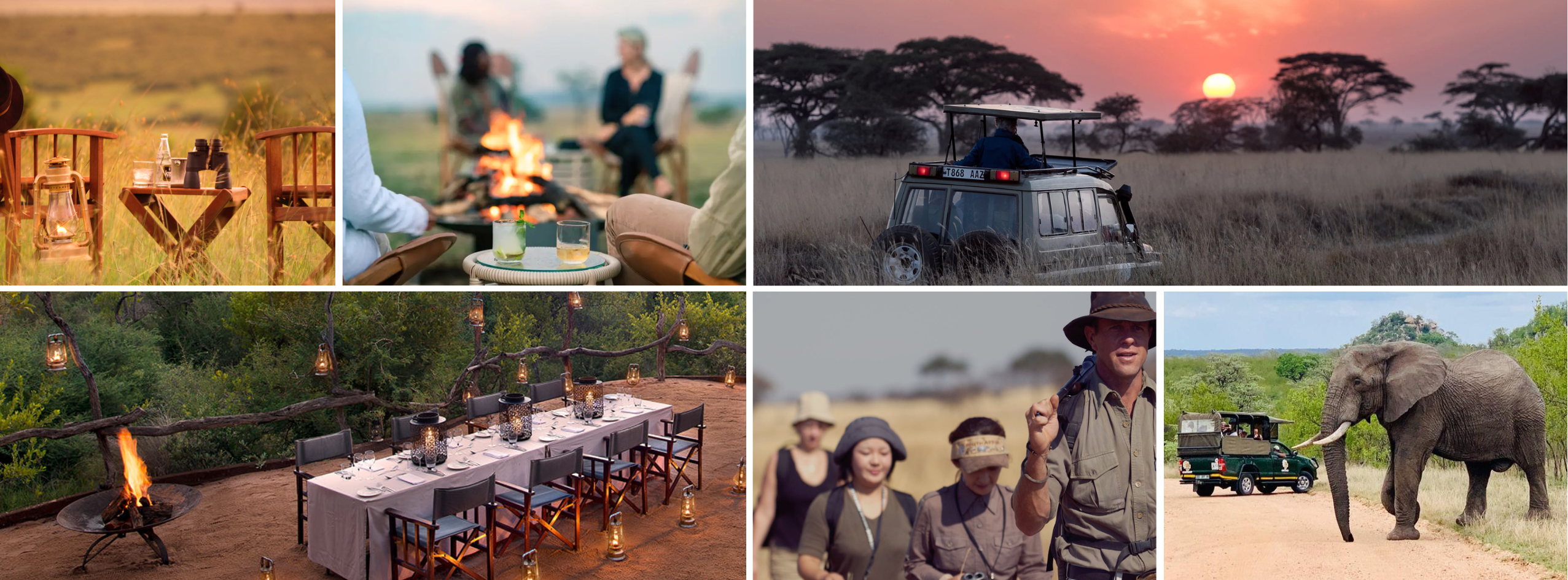
What Should You Wear on Safari?
Keep it simple. Comfortable, neutral-coloured clothing works best. You do not need to arrive dressed like you are leading an expedition up Kilimanjaro.
For most game drives, I’d suggest:
- Lightweight shirts or T-shirts
- Comfortable trousers or shorts
- Fleece or warm layer
- Light waterproof jacket
- Comfortable shoes or trainers
- Hat and sunglasses
Early mornings can be surprisingly cold, especially in open vehicles.
My Safari Packing Guide covers this in much more detail.
Do You Have to Wear Beige on Safari?
No. You do not need a wardrobe made entirely of khaki.
Neutral colours are useful because they are practical and easy to wear, but olive, brown, grey, navy and muted colours are absolutely fine.
Avoid anything too bright on walking safaris and anything too precious on dusty game drives.
Do You Need Special Shoes?
Usually not. For game drives, comfortable trainers or closed shoes are normally enough.
You only need proper walking boots if your itinerary includes walking safari or more serious trekking.
Do You Need Binoculars?
They are useful, but not essential. Many lodges provide binoculars in the vehicle or room, but I still like having my own.
They are particularly useful for birds, distant cats and anything your guide has somehow spotted 400 metres away behind three bushes.
Check whether your lodge provides them before buying a pair.
What Camera Do You Need for Safari?
Whatever you are comfortable using. A good phone can take excellent photos, especially for landscapes and closer sightings.
If photography matters a lot, a camera with a decent zoom lens makes a big difference.
What Should You Pack in Your Day Bag?
Keep it light.
Useful things include:
- Camera
- Phone
- Binoculars
- Sunglasses
- Hat
- Sun cream
- Lip balm
- Water
- Warm layer
- Light waterproof
- Small power bank
You do not need to take half your suitcase on every game drive.
Will There Be Bugs?
Yes. You are in Africa.
Some areas and seasons have more insects than others.
Use repellent, keep doors or screens closed where appropriate and follow lodge advice. It is usually much less dramatic than people imagine.
It’s one of the few places in the world where it’s socially acceptable to wear socks in sandals (my dad would’ve loved it). Also horrifyingly, tucking your trousers into your socks does actually work to protect your ankles from creepy-crawlies.
Is There Wi-Fi on Safari?
Safari lodges now offer Wi-Fi in rooms or main areas, although speeds can vary. Obviously you won’t get Wi-Fi out in the bush.
Some more remote camps have limited connection. Personally, I would not choose a safari lodge based on Wi-Fi speed.
What Food Is Included on Safari?
Usually a lot.
Many safari lodges include:
- Breakfast
- Lunch
- Afternoon tea
- Dinner
- Snacks
Are Drinks Included?
It depends on the lodge. Some include house wines, beers, spirits and soft drinks. Others include only certain drinks or charge separately. Premium wines and spirits are often extra.
Are There Toilets at Safari Lodges?
Yes. Proper ones.
A luxury safari does not normally involve digging a hole behind your room.
Rooms usually have private bathrooms, hot water and often much more luxury than people expect.
What Is a Private Game Reserve?
A private game reserve is privately managed land used for conservation and safari.
Private reserves may offer more flexible rules than national parks, including off-road driving, night drives and fewer vehicles around sightings. Not every private reserve works the same way.
My National Parks vs Private Game Reserves guide explains the differences properly.
What Is the Difference Between a Safari Lodge and a Tented Camp?
A safari lodge usually has more permanent buildings, while a tented camp uses canvas accommodation.
That does not mean tented camps are basic. Some are extremely luxurious.
If you are imagining a campsite with a sleeping bag and a zip that no longer works, you can relax.
My Luxury Safari Lodges Explained guide compares the main accommodation styles.
Are Tented Safari Camps Safe?
Yes, in a properly managed camp. Luxury safari tents are designed for wildlife areas and staff will explain the safety procedures.
You still need to follow camp rules, particularly after dark. Canvas does not mean unsafe. It just means you can hear more of what is happening outside.
Safety, Health, Families & Honeymoons
Is an African Safari Safe?
Yes, when done properly. Good lodges and camps have clear safety procedures, experienced guides and strict rules around wildlife.
If a camp is unfenced, you may be escorted to and from your room after dark. On game drives, you stay in the vehicle unless your guide says otherwise. On walking safaris, you follow the guide’s instructions.
The most important thing is simple: listen to the people who do this every day.
Do You Need Malaria Tablets for Safari?
That depends on where you are going. Some safari areas are in malaria-risk regions. Others are malaria-free.
You should get current medical advice based on your exact destination and travel dates. South Africa has several strong malaria-free safari options, which is one reason it works particularly well for families. My Best Family Safaris in Africa and South Africa Safari Guide both cover those options in more detail.
Are Vaccinations Required for Safari?
It depends on the country, your route and your medical history.
Requirements and recommendations can change, so this is something to check with a travel health professional before you go.
You can also check requirements here: https://nathnac.net/
Are There Snakes on Safari?
Yes, but sightings are relatively uncommon for most guests. Snakes generally avoid people.
Your lodge and guides know how to manage wildlife around camp.
Can You Take Children on Safari?
Yes, with the right lodge and destination.
Some lodges are excellent for families and offer shorter drives, junior ranger programmes, family rooms, child-friendly meals and flexible schedules.
Others are much more adult-focused.
My Best Family Safaris in Africa guide covers this in more detail.
What Is the Best Age for a Child to Go on Safari?
There is no single answer.
Older children usually get more out of longer game drives and early starts, but younger children can still have a brilliant safari if the lodge is set up properly.
Age restrictions vary by lodge and activity, especially for walking safaris.
Is a Safari Good for a Honeymoon?
Absolutely perfect. My Best Honeymoon Safaris in Africa guide covers the main combinations.
Safari works brilliantly for honeymoons because it feels special, private and completely different from a normal beach holiday.
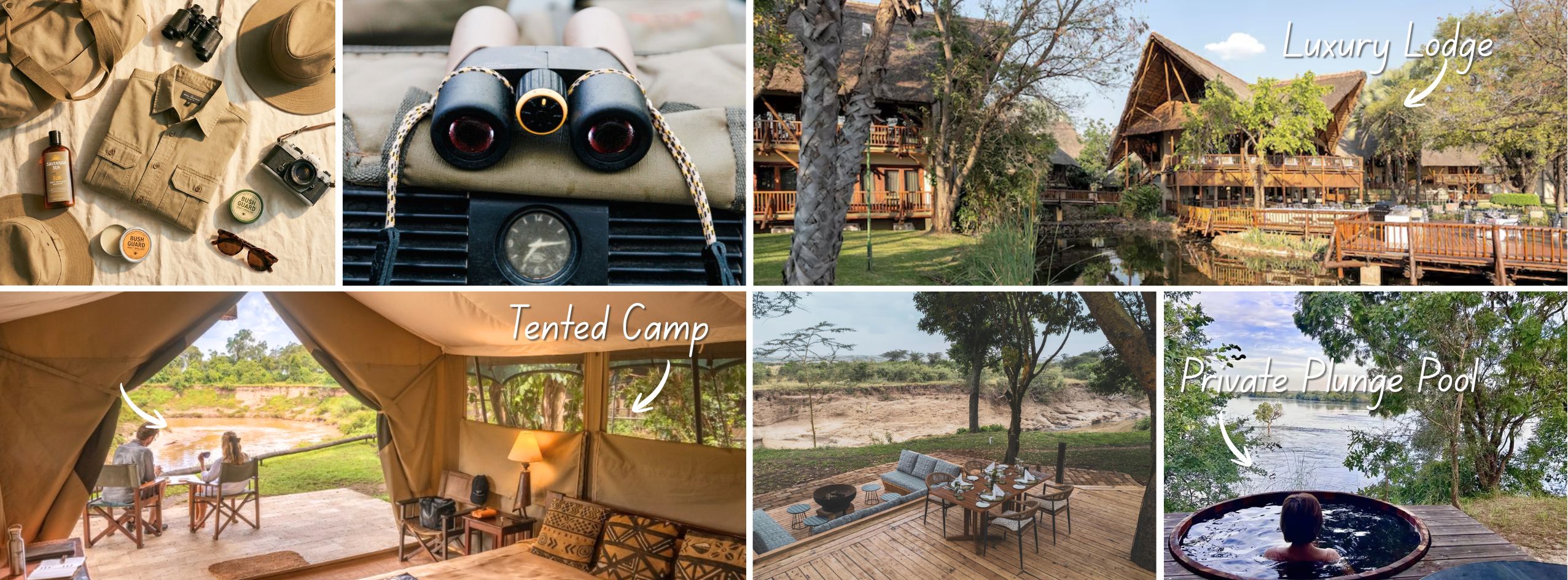
Luxury lodges can include private decks, plunge pools, spa treatments, private dining and excellent food.
Combining safari with Mauritius, Seychelles, Mozambique or Zanzibar gives you the picture perfect beach escape to finish. If you like the idea of safari first and beach afterwards, my Safari and Mauritius Itinerary explains how to combine the two properly.
Is Safari Romantic?
Yes, despite the 5am alarm.
Private lodges, sundowners, fireside dinners and huge open landscapes do most of the work.
The early start sounds less romantic than it actually feels once you are sitting beside a waterhole watching elephants at sunrise.
Is Safari Suitable for Older Travellers?
Absolutely, provided the itinerary is chosen properly.
The main things to consider are:
- Vehicle access
- Steps
- Walking distances
- Small aircraft
- Lodge layout
- Heat
- Early starts
- Length of transfers
There is a big difference between a comfortable lodge safari and a more physical walking or mobile safari.
Is Safari Physically Demanding?
Not usually. A standard lodge safari involves a lot of sitting in a vehicle.
Walking safaris, gorilla trekking, chimp trekking and more adventurous itineraries can be much more physical.
You do not need to be especially fit for a normal game-drive safari. You do need to be able to get into the vehicle.
Do You Need Travel Insurance for Safari?
Yes.
Good travel insurance is important for any long-haul holiday, but particularly for safari because of the cost of the trip, remote locations and internal flights. Make sure the policy covers your destination and planned activities.
Safari Vehicles, Activities & Different Safari Styles
Are Safari Vehicles Comfortable?
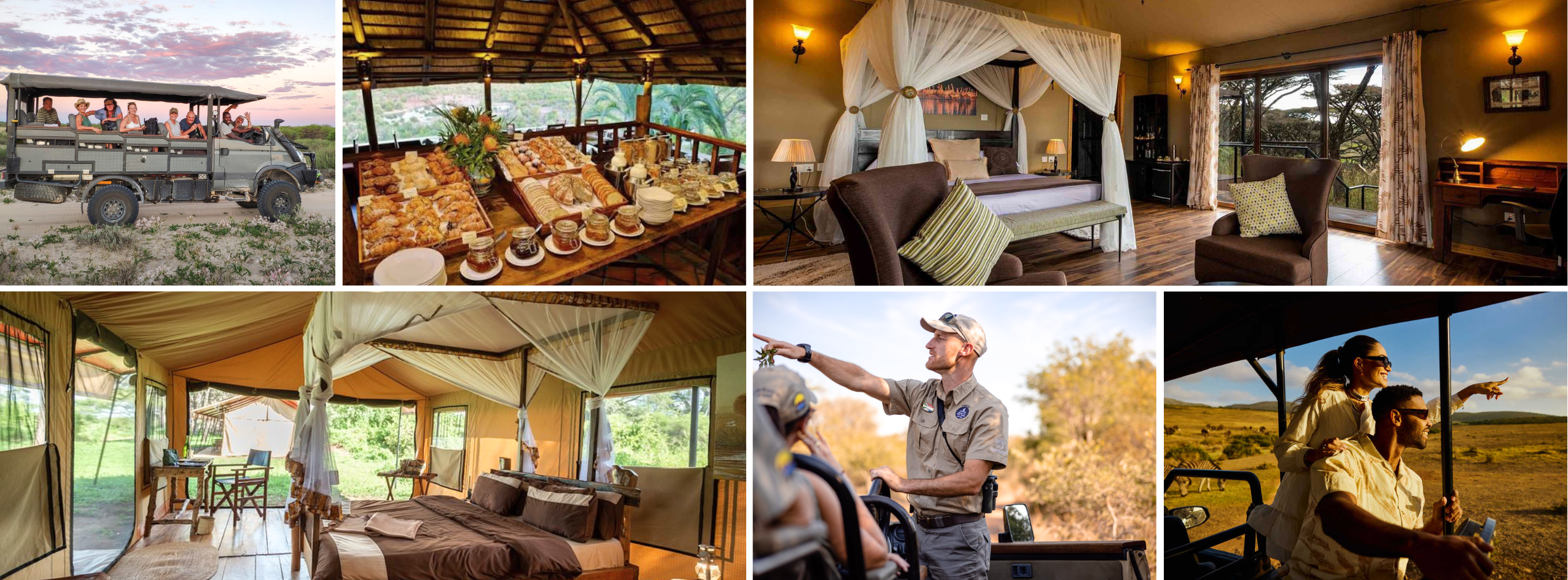
Usually, yes. Most vehicles have elevated seats and open sides for good visibility.
Some luxury reserves use smaller vehicles with fewer guests. Others may carry more people. Roads can be rough, so it is not always smooth.
How Many People Are in a Safari Vehicle?
It varies. Some vehicles take six guests. Others may take nine or more. Private vehicles can also be arranged at many lodges.
If space, photography or flexibility matters, vehicle size is worth checking before booking.
Do You Get Out of the Vehicle on Safari?
Usually only at designated safe areas or when your guide says it is safe.
Coffee stops and sundowners may involve getting out. Walking safaris obviously do too.
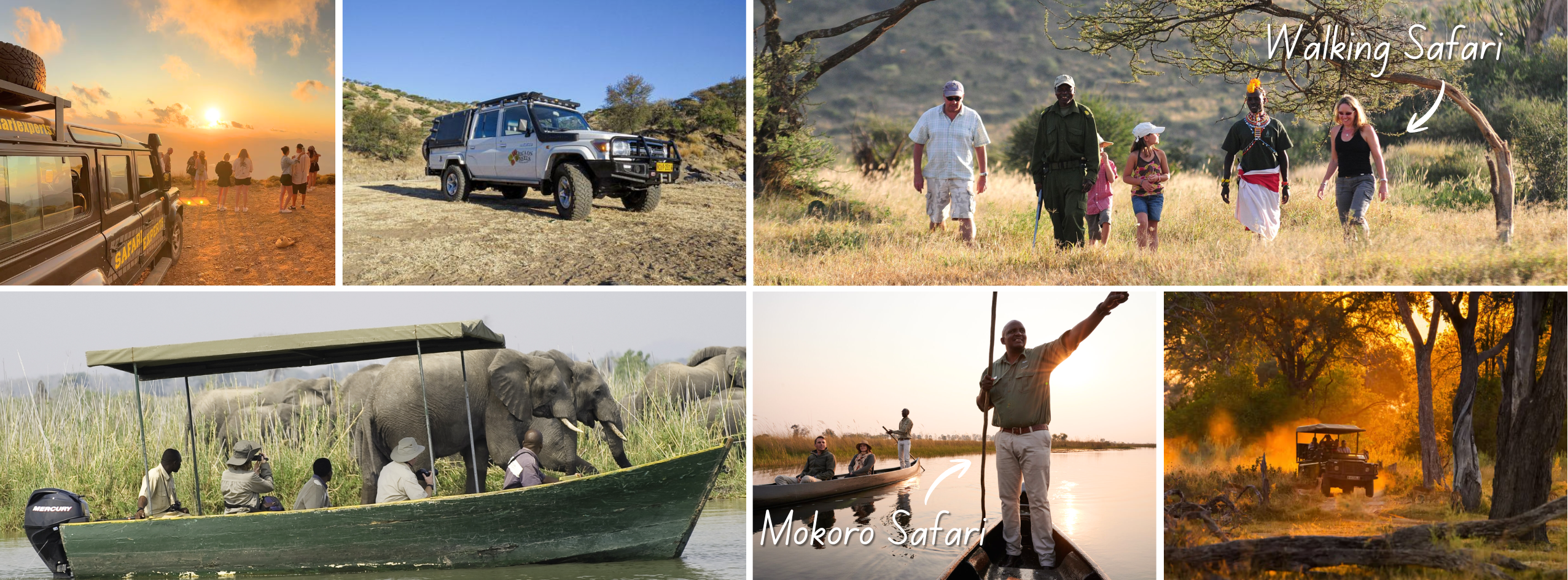
Can You Walk on Safari?
Yes, in the right places. And only when you’re told it’s okay. Please, for the love of god, don’t just wander off on your own personal (and possibly terminal) safari.
Walking safaris are available in many destinations and can be one of the best ways to understand the smaller details of the bush.
You focus more on tracks, plants, insects, sounds and animal behaviour. It is not usually about walking up to lions.
What Happens on a Night Drive?
Night drives usually begin after sunset and use a spotlight to look for nocturnal wildlife.
Some night prowlers are:
- Hyena
- Leopard
- Genet
- Civet
- Owl
- Bushbaby
- Porcupine
Night drives are more common in private reserves and concessions. They can feel completely different from daytime safari. You will be extremely impressed by the guide’s ability to identify an animal based on the reflection from its eyes.
My National Parks vs Private Game Reserves guide explains why night drives are more common in private reserves and concessions.
What Is a Mokoro Safari?
A mokoro is a traditional-style dugout canoe used in the Okavango Delta in Botswana.
You sit low in the boat while a poler guides you through shallow channels and reeds. It is quiet, slow and completely different from a game drive.
My Botswana Safari Guide explains mokoro trips and water-based safari in more detail.
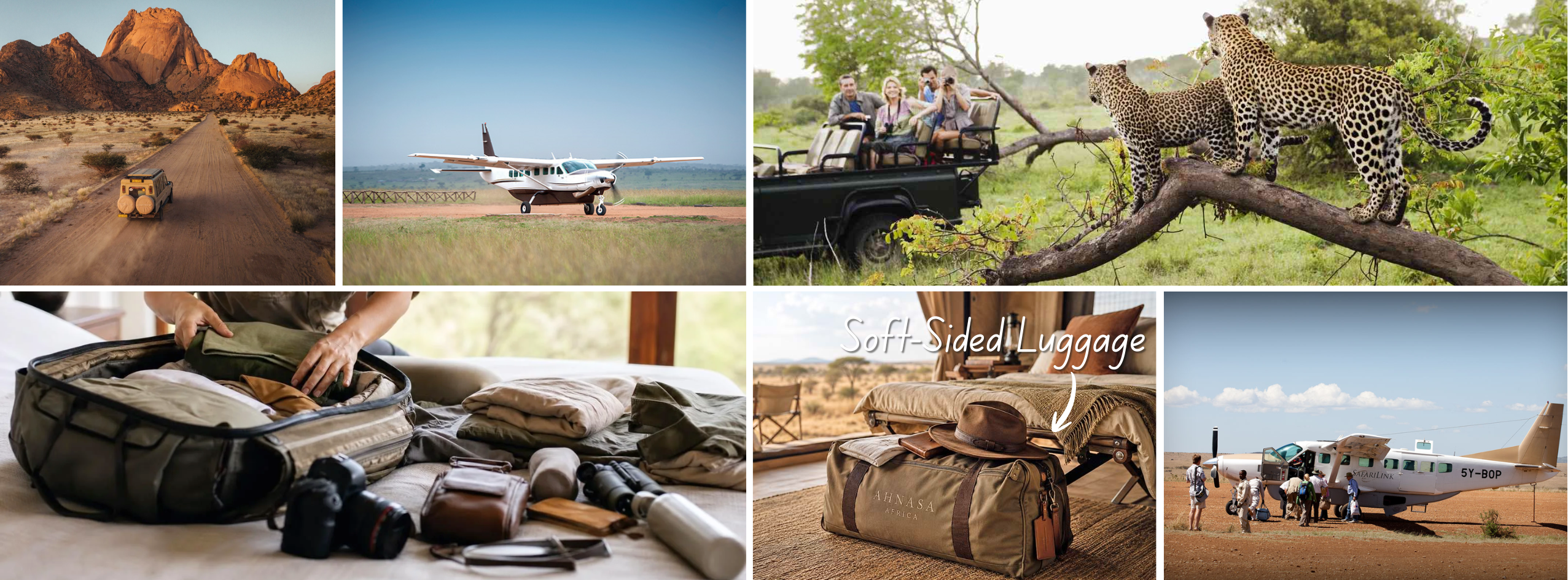
What Is a Fly-In Safari?
A fly-in safari uses small aircraft to connect remote camps and safari areas.
This is common in places like Botswana and parts of Tanzania and Kenya. It reduces long road transfers and lets you reach more remote areas.
It can cost more, but it often makes the itinerary much smoother.
Can You Self-Drive on Safari?
In some destinations, yes.
South Africa and Namibia are particularly good for self-drive safari. Other areas are much better suited to guided or fly-in safari.
If self-driving appeals, my Namibia Fly Drive and Safari guide shows what a full African road-trip safari looks like in practice.
Flights, Luggage, Money & Tipping
How Much Luggage Can You Take on Safari Flights?
Usually less than on a standard airline. Soft-sided luggage is often required, and weight limits can be strict. 20Kg is standard.
Hard suitcases may not be accepted on some light aircraft. Check this before packing.
How Much Should You Tip on Safari?
Tipping varies by country and lodge.
You may want to tip:
- Your guide
- Your tracker
- Lodge staff
- Porters
- Drivers
Some lodges have a central tip box, while guides and trackers may be tipped separately. I usually suggest checking the lodge guidance before travelling because expectations differ by destination.
My How Much Does an African Safari Cost? guide gives a full breakdown of the costs and tipping expectations for safari.
Do You Need Cash on Safari?
A small amount can be useful for tips, local purchases and emergencies. Many lodges accept cards, but remote camps may have limited facilities.
I would not rely entirely on cash or entirely on cards. A mix is sensible.
How Much Does an African Safari Cost?
A safari is not a cheap holiday. The price depends on the country, lodge, season, flights, park fees, transfers and level of luxury.
Safari lodges often include far more than a normal hotel stay, including meals, game drives, guiding and sometimes drinks and transfers.
My How Much Does an African Safari Cost? guide breaks down realistic budgets and what is usually included.
Is a Safari Worth the Money?
100% absolutely. It is one of those trips where the experience is difficult to compare with anything else. It is a once in a lifetime experience (I keep going back for more).
You are not just paying for a room. You are paying for guiding, conservation areas, vehicles, staff, food, logistics and access to wildlife in extraordinary places.
My Complete Luxury African Safari Guide explains what you are actually paying for at different levels of safari and how lodge style, location and guiding affect the experience.
How Far in Advance Should You Book a Safari?
Earlier is better. The best lodges can have very limited room numbers, and peak periods fill quickly.
For honeymoons, school holidays, Great Migration dates and Christmas travel, I would plan well ahead.
Wildlife, Timing & Choosing the Right Safari
What Is the Best Time to Go on Safari?
There is no single best month for the whole of Africa. The best time depends on the destination and what you want to see.
As a broad rule, dry season is often good for wildlife viewing because animals gather around water and vegetation is thinner.
Green season can offer beautiful landscapes, fewer visitors, newborn animals and lower prices.
My Best Time to Go on Safari guide covers this month by month.
When Is the Best Time to See the Great Migration?
The Great Migration moves throughout the year between Tanzania and Kenya. My When Can You See the Great Migration? guide explains the timing in detail.
Different months suit different stages, including calving season, movement through the Serengeti and river crossings. My Kenya Safari Guide and Tanzania Safari Guide cover the Maasai Mara and Serengeti in more detail.
Can You Guarantee the Big Five?
No. You can choose reserves with excellent Big Five populations and strong guiding, but wildlife is never guaranteed. That is literally the point.
My Big Five Explained guide covers where to see lion, leopard, elephant, rhino and buffalo.
What Are the Best Safari Destinations for First-Timers?
South Africa, Kenya, Tanzania and Botswana are all strong options, but for different reasons.
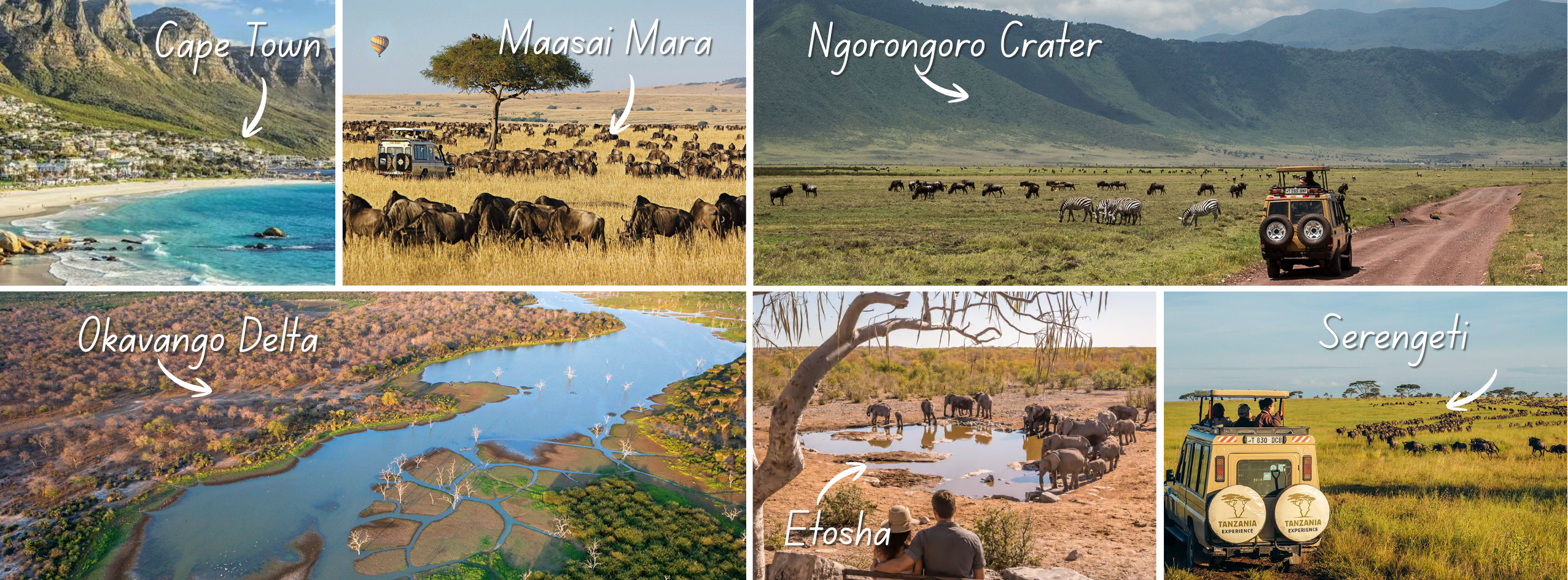
South Africa is easy to combine with Cape Town and has excellent private reserves and malaria-free options.
Kenya offers classic safari scenery and the Maasai Mara.
Tanzania has the Serengeti and Ngorongoro Crater.
Botswana is superb for exclusivity, wilderness and water-based safari.
If you’re deciding between them, my South Africa Safari Guide, Kenya Safari Guide, Tanzania Safari Guide and Botswana Safari Guide go into each destination in much more detail.
Can Safari Be Combined with a Beach Holiday?
Very easily.
Popular combinations include:
- Safari and Mauritius
- Safari and Zanzibar
- Safari and Seychelles
- Safari and Mozambique
- Safari and Kenya coast
- Safari and South Africa coast
Safari first and beach second usually gives the trip the best flow.
Do the 5am alarms first. Then lie down.
Mauritius is one of the easiest options to plan properly, and my Safari and Mauritius Itinerary covers which safari destinations combine best, how long to spend in each place and when to travel.
Can You Combine Cape Town and Safari?
Yes, and it is one of the best first-time Africa combinations.
Cape Town gives you food, scenery, coastline and the Winelands, followed by a proper Big Five safari.
My Cape Town and Safari Itinerary guide explains how to put the route together.
Ready to start planning?
Get in touch and I’ll help create a tailor-made African safari with the right destination, lodge, wildlife areas and pace for you.
Continue Planning Your Safari
If you’re still researching safari holidays, these guides will help:
- Complete Beginner’s Guide to Going on Safari – everything you need to know before your first safari.
- Complete Luxury African Safari Guide – compare destinations, lodges, costs and safari styles.
- Best Time to Go on Safari – month-by-month advice on when to travel.
- How Much Does an African Safari Cost? – realistic safari budgets and what is included.
- Safari Packing Guide – what to wear and what to pack.
- Best Family Safaris in Africa – family-friendly safari destinations and lodges.
- Best Honeymoon Safaris in Africa – safari honeymoon ideas and beach combinations